




If your fixed asset register still shows equipment that was scrapped two years ago, or laptops that walked out the door with an employee who left last quarter, you're not alone. These are called ghost assets items that exist on your books but not in reality and they quietly inflate your asset value, distort depreciation, and put every ghost assets audit at risk of failing.
For finance teams, auditors, and asset managers, ghost assets aren't a minor bookkeeping nuisance. They're a compliance risk, a tax liability, and a sign that your asset tracking process has a visibility gap. This guide breaks down what ghost assets are, how to identify ghost assets before your auditor does, how to remove them for good, and how to make sure they never pile up again.
What Are Ghost Assets?
A ghost asset is any item recorded in your fixed asset register that no longer physically exists, can't be located, or is no longer in use but is still being tracked, depreciated, and reported as if it were active. Common examples include:
- Equipment that was disposed of, scrapped, or sold without updating records
- IT hardware that left the building with a former employee
- Machinery that was written off in an insurance claim but never removed from the register
- Duplicate entries created during a system migration or manual data entry error
- Assets transferred between departments or locations without updating ownership
The opposite problem zombie assets, physical items in use but missing from your records is just as damaging, but ghost assets are the ones that typically trigger audit findings, because they represent value your organization is claiming that simply isn't there.
Why Ghost Assets Are a Bigger Problem Than You Think
Industry estimates suggest that ghost assets can account for 10–30% of a company's fixed asset register, especially in organizations still relying on spreadsheets or infrequent manual audits. That percentage translates directly into:
1. Inflated insurance premiums. You're paying to insure equipment that doesn't exist.
2. Incorrect tax filings. Depreciation on assets that are no longer in service overstates deductions and creates exposure during a tax audit.
3. Failed compliance and financial audits. External auditors flag discrepancies between book value and physical reality, which can delay sign-off and damage credibility with stakeholders.
4. Poor capital planning. If leadership believes 200 machines are available for production but only 160 actually exist, procurement and operations decisions are being made on false information.
5. Wasted maintenance budgets. Maintenance schedules and service contracts sometimes continue for assets that no longer exist, quietly draining budget every cycle.
The longer ghost assets sit unaddressed, the more expensive and disruptive they become to fix which is exactly why identifying them before your next scheduled audit is so much cheaper than discovering them during one.
How to Identify Ghost Assets
Knowing how to identify ghost assets starts with comparing what your books say against what physically exists. Here's a practical, repeatable process:
1. Pull a Complete Fixed Asset Register
Start with an up-to-date export of every asset currently on the books, including acquisition date, location, assigned owner, and current book value.
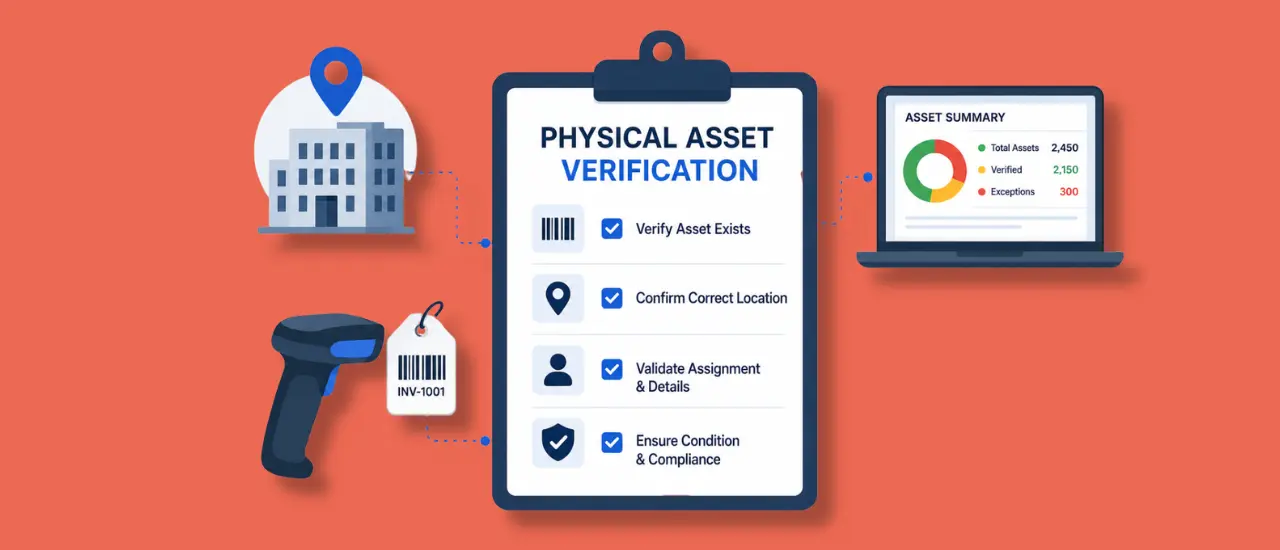
2. Conduct a Physical Verification Count
Walk each location and scan or manually check every asset against the register using barcodes, QR codes, or RFID tags. Anything on the register that can't be found during this walkthrough is a ghost asset candidate.
3. Cross-Check Against Disposal and Transfer Records
Compare the register against procurement, disposal, and transfer logs. Assets marked "disposed" in one system but still "active" in another are a red flag.
4. Flag Assets With No Recent Activity
Items with no maintenance history, no check-in/check-out activity, and no location updates for an extended period are strong candidates for ghost status.
5. Interview Department and Location Owners
Frontline managers often know before the system does. A quick department-by-department confirmation can surface discrepancies that a purely data-driven review misses.
6. Reconcile Serial Numbers and Asset Tags
Duplicate serial numbers, missing tags, or tags that don't match the recorded asset description usually point to a data entry error or an asset that was never properly retired.
Running this process manually across dozens of locations is time-consuming and error-prone which is why most mid-size and enterprise organizations move this workflow into dedicated software rather than spreadsheets.
How to Achieve Ghost Asset Elimination
Once you've identified your ghost assets, elimination needs to happen in a structured, auditable way not a quiet bulk deletion that leaves no paper trail.
Step 1: Document Before You Remove: Record why each asset is being written off disposed, lost, stolen, transferred, or duplicated with supporting evidence (photos, disposal certificates, transfer approvals).
Step 2: Get Formal Sign-Off: Route each write-off through an approval workflow, typically involving the asset owner, finance, and a manager. This protects you if the removal is ever questioned during a financial audit.
Step 3: Update Depreciation and Book Value: Once approved, adjust the asset register and financial statements accordingly so depreciation schedules and tax filings reflect reality going forward.
Step 4: Retag and Reconcile Remaining Assets: Use the clean-up as an opportunity to standardize tagging (QR codes, barcodes, or RFID) on the assets that remain, so future verification cycles are faster and more accurate.
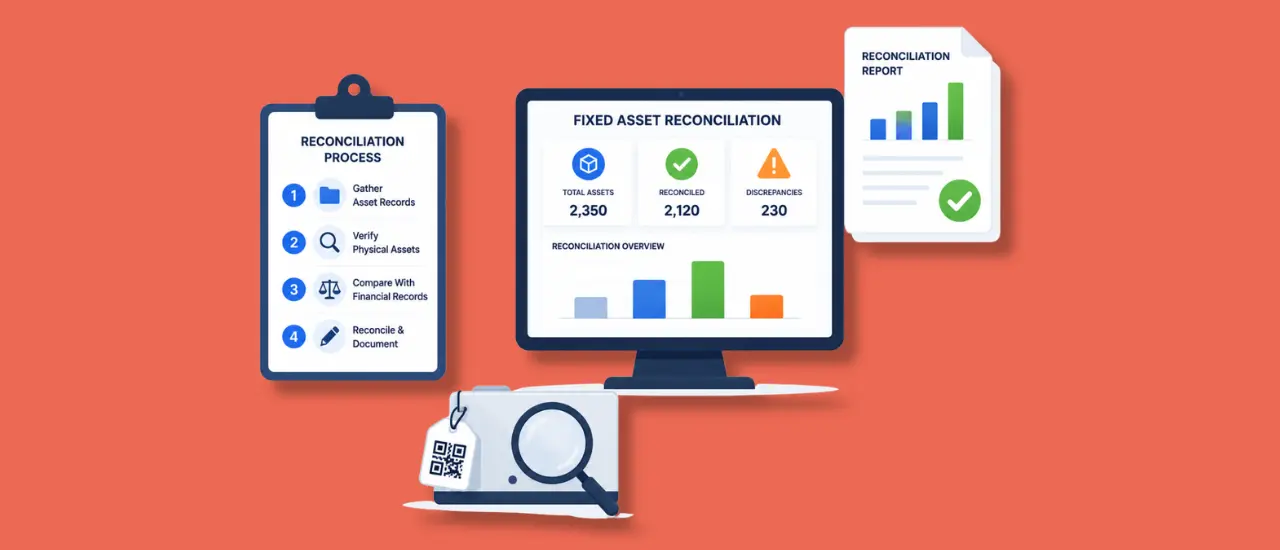
Step 5: Close the Loop With a Reconciliation Report: Generate a before-and-after reconciliation report showing the number of assets removed, their combined book value, and the reason codes this is exactly what auditors want to see.
How Ghost Asset Management Software Helps
Manual ghost asset elimination works for a one-time clean-up, but it doesn't stop new ghost assets from forming. This is where ghost asset management software changes the equation.
Purpose-built asset tracking platforms address the root causes of ghost assets by:
- Automating physical verification with barcode, QR code, or RFID scanning instead of manual spot-checks
- Triggering check-in/check-out workflows so every asset movement, transfer, or disposal is logged in real time
- Sending automated alerts when an asset hasn't been scanned or updated within a defined period
- Centralizing disposal approvals so write-offs always follow a documented, auditable workflow
- Generating audit-ready reports on demand instead of during a scramble before year-end
Instead of discovering ghost assets once a year during a scheduled count, software gives you continuous visibility — so ghost assets are caught within weeks of appearing, not years later.
Preventing Ghost Assets Before Your Next Audit
Elimination solves today's problem. Prevention protects you going forward. A few practices worth building into your standard operating procedure:
- Tag every asset at the point of acquisition never let untagged equipment enter circulation.
- Mandate check-out/check-in for all mobile or high-value assets, especially IT equipment and tools.
- Automate disposal workflows so retiring an asset updates the register the same day, not the same quarter.
- Run quarterly spot audits instead of relying solely on an annual count.
- Assign clear asset ownership at the department or individual level so accountability isn't ambiguous.
- Integrate procurement, maintenance, and finance systems so an asset's status is consistent everywhere it's recorded.
Final Thoughts
Ghost assets are one of the most preventable and most commonly ignored risks in fixed asset management. A structured approach to identification, a documented elimination process, and the right ghost asset management software can turn your next audit from a stressful scramble into a routine formality.
If your organization is still relying on spreadsheets and annual manual counts, it may be time to see how automated asset tracking can close these gaps for good. Schedule a free demo with Asset Infinity to see how real-time verification, automated alerts, and audit-ready reporting can keep ghost assets off your books permanently.
1. What is a ghost asset in accounting?
A ghost asset is an item still listed in a company's fixed asset register and still being depreciated even though it no longer physically exists, has been disposed of, or can't be located.
2. How do you find ghost assets during an audit?
Compare your fixed asset register against a physical verification count using barcode, QR code, or RFID scanning, then cross-check the results against disposal, transfer, and procurement records to flag any mismatches.
3. What causes ghost assets to build up?
Common causes include equipment disposed of without updating records, assets that leave with departing employees, undocumented transfers between locations, and duplicate entries from manual data entry or system migrations.
4. How often should a company run a ghost asset audit?
Most organizations run a full physical verification annually, but quarterly spot-checks on high-value or high-mobility assets (like IT equipment and tools) catch ghost assets far earlier and reduce audit-day surprises.
5. Can asset management software prevent ghost assets automatically?
Yes. Ghost asset management software automates check-in/check-out tracking, flags assets that haven't been scanned in a set period, and enforces documented disposal workflows closing the gaps that let ghost assets form in the first place.