
.webp)
.webp)
.webp)
.webp)



.webp)

.webp)
Picture this. It's the end of the financial year. Your audit team is clipboard in hand, walking floor to floor, cross-referencing serial numbers against a spreadsheet that was last updated six months ago. Three days in, two people are still checking warehouses, and someone has already found a printer that the system says was disposed of in 2022.
This is how most enterprises still run their physical asset audits in 2026. And it is costing them in time, accuracy, and money they don't even know they're losing.
The shift to AI-powered asset verification is not a future trend. It is happening right now, and the gap between organisations that have made the switch and those still relying on manual processes is widening fast.
This blog explains why that gap exists, what AI-driven audits actually look like in practice, what it costs you to keep doing things the old way, and the exact steps to make the switch without disrupting your operations.
The Real Problem With Manual Physical Verification
Manual physical verification sounds simple enough. You send someone to check whether an asset exists, confirm its condition, and update the register. In reality, the process is far messier.
It Eats More Time Than Anyone Budgets For
A mid-sized organisation with 5,000 fixed assets might spend anywhere from two to four weeks on a full physical audit. That's not just the field team walking around with scanners. It includes pre-audit preparation, reconciling spreadsheets, resolving discrepancies, chasing department heads for clarifications, and generating a final report. By the time the report lands on the CFO's desk, some of the data is already out of date.
Human Error Is Baked Into the Process
When you rely on people to manually read serial numbers, match them to records, and update logs, mistakes happen. A transposed digit here, a missed scan there. One study found that manual data entry carries an error rate of roughly 1% per field which doesn't sound alarming until you multiply it across thousands of asset records.
Those errors compound over time. They create ghost assets.
Ghost Assets Are Draining Your Balance Sheet Right Now
Ghost assets are items that appear on your books but no longer physically exist. They may have been lost, stolen, scrapped, or transferred without proper documentation. The problem is far more common than most finance teams realize.
Industry reports suggest that between 10% and 30% of the fixed assets of an average company are ghosts. In IT specifically, up to 25% of IT budgets are wasted on ghost assets- laptops, software licences, and equipment that is on the books but provides no real value.
The financial consequences are immediate. You overpay taxes on assets you don't own. You maintain insurance on equipment that doesn't exist. You depreciate items that were written off years ago. And when an auditor or regulator asks for a current, verified asset register, you scramble.
Annual Audits Create a False Sense of Control
Here's the deeper issue with manual verification: it gives you a snapshot, not a system. You do a thorough audit in Q4, generate a clean report, and assume your records are accurate. But assets move, get damaged, get loaned to other departments, or quietly disappear throughout the year. By the time your next audit rolls around, you're starting from scratch again.
What AI-Powered Asset Audits Actually Look Like
When most people hear "AI audit," they imagine something expensive and technically complex. The reality is considerably more practical.
Modern AI-powered asset verification works primarily through your smartphone or tablet camera, combined with computer vision and your existing Fixed Asset Register (FAR). There's no drone, no specialist hardware required in most cases, and no six-month implementation project.
Step 1: Walk-Through Scanning
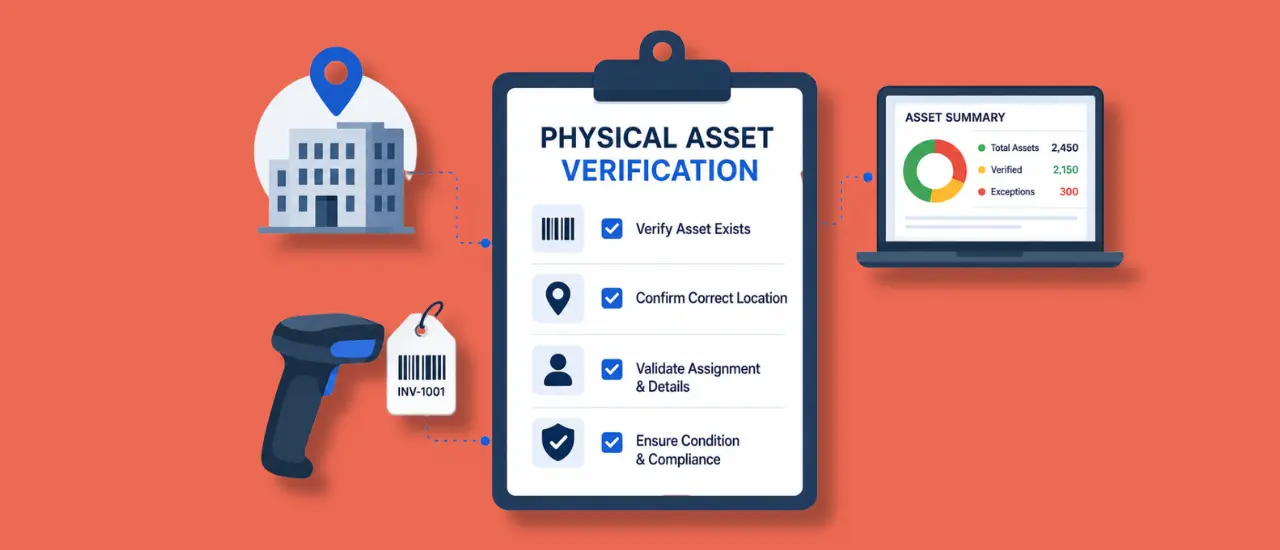
Instead of manually reading each asset tag, an auditor simply walks through a space with a mobile device running the software. The camera captures assets in real time. AI identifies items reading barcodes, QR codes, serial number plates, and in some cases recognizing equipment type visually and cross-references each one against the FAR automatically.
A room that would take a manual team half a day to audit can be covered in minutes.
Step 2: Real-Time Reconciliation
As the auditor walks, the system is simultaneously reconciling. It flags assets that appear in the space but aren't in the register (zombie assets). It identifies items in the register that haven't been scanned (potential ghost assets). It notes condition changes. All of this happens live, not in a post-processing batch the following morning.
Step 3: Instant Variance Reports
When the walkthrough is complete, the system generates a structured variance report. Discrepancies are categorized and prioritised. Assets with high-value mismatches surface at the top. The audit team doesn't need to spend hours manually comparing spreadsheets the work is already done.
Step 4: Audit-Ready Logs With Zero Manual Effort
Every scan is timestamped, geotagged, and stored automatically. This creates an immutable audit trail that satisfies both internal audit requirements and external regulatory standards. No manual write-up, no risk of the log getting lost or modified.
The future of asset verification is moving from manual audits to intelligent, always-on systems powered by AI. CFOs, audit heads, and IT asset managers can expect a shift from infrequent manual checks to continuous, automated asset tracking that improves compliance and reduces costs.
.webp)
Manual vs AI-Powered Audit: A Side-by-Side Comparison
The Hidden Costs You're Not Measuring
Most operations teams calculate the cost of an asset audit as: team hours × hourly rate × number of days. That's the visible cost. The invisible costs are usually much larger.
Overpayment on taxes and insurance. Every ghost asset on your register means you're paying taxes and insurance premiums on something that doesn't exist. For a company with 500 ghost assets averaging ₹50,000 in book value each, that's a significant annual drain.
Procurement duplication. According to Gartner, companies without a precise asset tracking system spend up to 30% more in their annual procurement budgets on equipment and tools they already own but cannot find. When teams can't locate an asset, they raise a purchase requisition for a new one. AI audits eliminate this by keeping location and status current.
Compliance penalties. Regulatory audits in sectors like healthcare, pharmaceuticals, banking, and government have strict requirements around asset records. An inaccurate FAR isn't just embarrassing it can result in fines or failed certifications.
Staff time diverted from productive work. Transitioning to automated systems reduces the time spent on manual audits and searching for assets by up to 40%. That time redirected back to the business has a real dollar value.
Why Organizations Are Making the Switch Now
The adoption curve for AI in physical operations has accelerated significantly. Over 58% of companies now use some form of AI for physical operations, and this is expected to reach 80% within two years.
Several specific pressures are driving this shift:
Multi-location complexity: Organizations managing assets across 10, 20, or 100+ sites cannot realistically maintain accurate records through manual processes. AI audit tools scale horizontally the same process works whether you're auditing one warehouse or fifty.
Regulatory pressure: ESG reporting, IFRS 16 lease asset tracking, and sector-specific compliance frameworks all demand accurate, timely asset data. Regulators are not impressed by "we do an annual audit" as a governance response.
The shift from reactive to proactive: Finance and operations teams increasingly understand that an annual snapshot isn't sufficient. Continuous or quarterly AI-assisted verification keeps the register live, so the organization is always audit-ready rather than scrambling when one is called.
Audit team capacity constraints: Hiring more auditors to match asset growth isn't sustainable. AI multiplies the effectiveness of the team you already have.
How Asset Infinity's AI Audit Feature Works in Practice
Asset Infinity's AI-powered verification is built specifically for the way asset audits actually happen on the ground not how they look in a product demo.
Walkthrough Scanning via Mobile: Your audit team uses the Asset Infinity mobile app. They walk through a space, scanning assets with the camera. AI reads QR codes, barcodes, and asset tags in real time and matches each one against your FAR automatically. There's no manual typing, no clipboard, no post-scan data entry session.
Bulk Verification at Scale: Because scanning is continuous rather than individual, a single auditor can cover hundreds of assets in the time it previously took to manually verify dozens. This is especially impactful for large warehouses, data centers, or multi-floor facilities.
Instant Variance Reports: The moment a walkthrough is complete, Asset Infinity generates a structured discrepancy report. It tells you exactly what was found, what's missing, and what appears to have moved. The report is exportable and ready to share with finance or compliance teams immediately.
Audit-Ready Logs: Every verification event is logged with timestamp, location, user, and asset status. This creates the kind of evidence trail that satisfies both internal audit teams and external regulators — without a single piece of additional paperwork.
Multi-Location Support. Whether your assets are across three floors or thirty sites, the same process applies. Central visibility means your HQ team always has a live view of verification status across the organization.
How to Switch From Manual to AI-Powered Audits: A Practical 5-Step Process
The transition doesn't need to be a major project. Most organizations that make this shift do it incrementally, starting with one department or location and expanding from there.
Step 1: Clean Up Your Current Asset Register
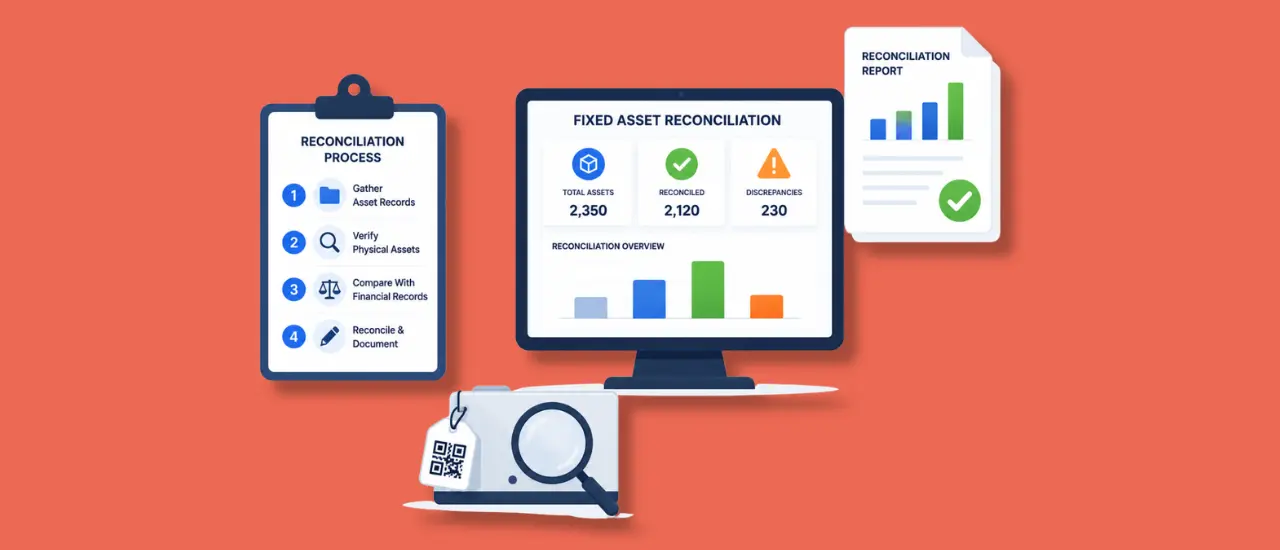
Before AI can verify assets against your FAR, your FAR needs to be reasonably accurate. This doesn't mean it has to be perfect that's what the first AI audit will help you fix but obvious duplicates, retired assets, and records with missing serial numbers should be addressed.
Run one final manual or semi-automated reconciliation to get your baseline in order. Think of this as setting the starting line.
Step 2: Tag All Physical Assets Consistently
AI-powered verification works best when every asset has a scannable identifier QR code, barcode, or RFID tag. If your assets aren't consistently tagged, now is the time to do it.
Asset Infinity's QR code and barcode designer lets you generate and print labels in bulk. For high-value assets or large inventory spaces, RFID tags with handheld readers offer even faster bulk scanning.
Step 3: Run a Pilot Audit on One Location or Department
Start with a single site or department. Have your team complete an AI-assisted walkthrough using Asset Infinity's mobile app. Compare the variance report against your manual records.
This step does two things: it validates the process before you scale it, and it immediately surfaces ghost assets and discrepancies in your most visible location, giving you a quick win to show stakeholders.
Step 4: Establish an Audit Frequency That Makes Sense for Your Business
Manual audits happen annually because they're expensive and time-consuming. AI audits can happen quarterly, monthly, or even more frequently without proportional increase in cost. Decide on a schedule that matches your risk profile.
For high-turnover environments like warehouses or IT departments, monthly spot-check audits keep records accurate continuously. For stable fixed asset environments like office equipment or machinery, quarterly full verification is usually sufficient.
Step 5: Integrate Audit Data With Your Fixed Asset Register and Finance Systems
The real value of AI audit data isn't just the audit report it's keeping your FAR live. Configure Asset Infinity so that verified audit data automatically updates asset records. Disposals, location changes, and condition updates flow directly into the register without manual processing.
This is where the compounding benefit appears: each audit makes the next one faster and more accurate, because the register stays current between cycles.
.webp)
Common Concerns: Answered Honestly
"Our team isn't technical enough to use AI tools." The Asset Infinity mobile app is designed for field use, not IT teams. If your team can use a smartphone camera, they can run an AI-powered audit. The learning curve is typically less than an hour.
"What if the AI misses something?" AI audit accuracy is typically above 95% in standard environments considerably better than manual verification, which is subject to fatigue, distraction, and data entry error. For high-value assets in complex environments, accuracy improves further with multiple walkthrough passes.
"We have assets in difficult-to-reach locations." The AI camera system handles assets on high shelves, inside cabinets, and in low-light environments with appropriate tagging. For very remote or inaccessible locations, RFID fixed readers can automate tracking without any walkthrough required.
"Is our data secure?" All data processed through Asset Infinity is encrypted in transit and at rest. The platform is SOC and ISO 27001 certified. Only the information needed for AI processing (images, scan data) is analyzed, and you retain full ownership of your asset data at all times.
The Bottom Line
Manual physical verification had its place when there was no better option. In 2026, that is no longer the case.
The evidence is clear: manual audits are slow, error-prone, and generate a point-in-time view that becomes stale before the ink on the report is dry. Ghost assets silently drain budgets. Compliance teams struggle to stay ahead of regulations with infrequent, inaccurate records. Procurement teams buy equipment they already own because they can't find what they have.
AI-powered asset verification solves all of these problems simultaneously and the transition is far simpler than most operations leaders expect.
The organizations making the switch aren't doing it because AI is fashionable. They're doing it because the numbers make it an obvious decision.








.png)

