
.webp)
.webp)
.webp)
.webp)



.webp)

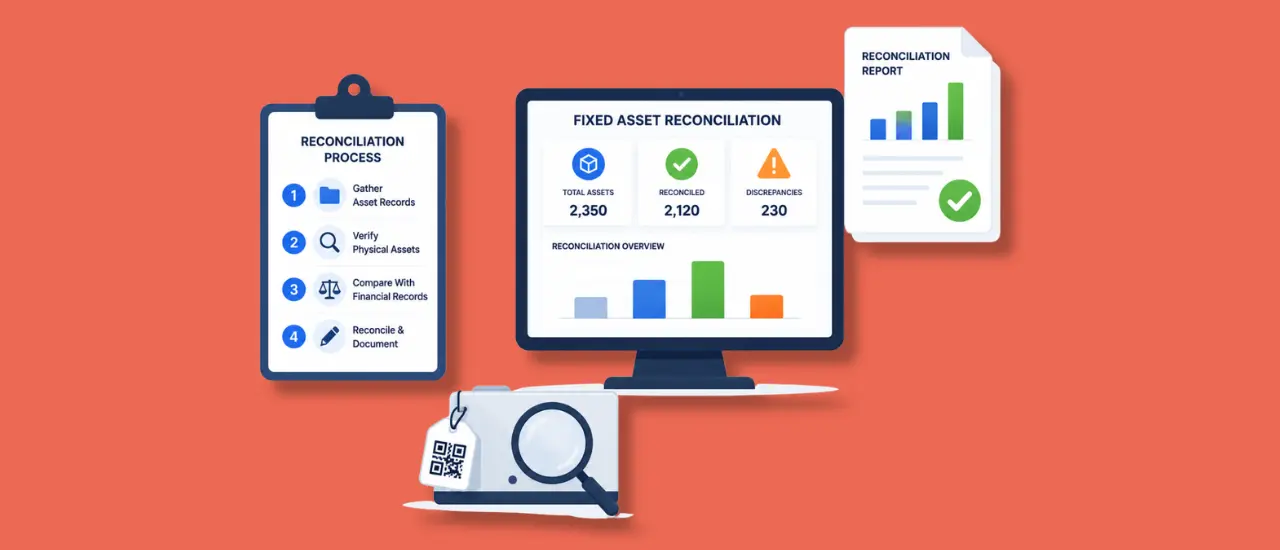
Accurate financial records are the foundation of effective business management. Yet many organizations struggle with discrepancies between their fixed asset records and the assets that actually exist within the business. Over time, assets may be transferred, disposed of, misplaced, or incorrectly recorded, creating gaps between financial statements and physical reality.
This is where fixed asset reconciliation becomes essential.
For finance teams, fixed asset reconciliation is more than an accounting exercise. It is a critical process that helps maintain accurate books, improve compliance, reduce audit risks, and ensure informed decision making. Whether your organization manages hundreds or thousands of assets, regular reconciliation helps establish confidence in asset records and financial reporting.
In this guide, we will explore what fixed asset reconciliation is, why it matters, the challenges organizations face, and a practical step by step process that finance teams can follow to improve accuracy and control.
What Is Fixed Asset Reconciliation?
Fixed asset reconciliation is the process of comparing an organization's fixed asset register with accounting records and physical assets to ensure all information is accurate and consistent.
The goal is to identify and resolve discrepancies between:
- Physical assets
- Fixed asset registers
- Accounting records
- Depreciation schedules
- Asset management systems
The reconciliation process ensures that every asset listed in financial records actually exists, is correctly valued, and is accounted for in the appropriate location or department.
Without proper reconciliation, businesses risk overstating or understating asset values, which can impact financial statements, audits, tax reporting, and overall operational efficiency.
Why Fixed Asset Reconciliation Is Important
Many organizations perform asset purchases, transfers, disposals, and write offs throughout the year. If these transactions are not properly recorded, asset data can quickly become unreliable.
Here are some key reasons why finance teams should prioritize fixed asset reconciliation.
Improves Financial Accuracy
Financial statements rely on accurate asset values. Reconciliation ensures that asset records reflect the true value and status of assets across the organization.
Supports Audit Readiness
Auditors often review asset records as part of financial audits. Maintaining reconciled records reduces audit findings and simplifies verification processes.
Identifies Ghost Assets
Ghost assets are items that appear in accounting records but no longer exist physically. These assets can distort financial reporting and increase unnecessary depreciation expenses.
Prevents Asset Loss
Regular reconciliation helps organizations identify missing, misplaced, or unauthorized assets before they become major issues.
Enhances Compliance
Many industries require businesses to maintain accurate asset records for regulatory and tax purposes. Reconciliation helps meet these compliance requirements.
Common Causes of Asset Record Discrepancies
Before conducting reconciliation, it is important to understand why discrepancies occur in the first place.
Unrecorded Asset Transfers
Assets moved between locations or departments may not be updated in the asset register.
Missing Disposal Records
Assets that have been discarded or sold may still remain in financial records.
Manual Data Entry Errors
Spreadsheet based asset tracking often leads to duplicate records, incorrect values, and outdated information.
Incomplete Asset Verification
Organizations that do not conduct regular physical verification may overlook missing or damaged assets.
Poor Communication Between Departments
Finance, administration, operations, and IT teams may maintain separate records, leading to inconsistencies.
Understanding these issues helps finance teams develop a more effective reconciliation strategy.
The Fixed Asset Reconciliation Process
A structured approach helps ensure accurate and efficient reconciliation.
Step 1: Gather Asset Records
Start by collecting all relevant documentation.
This may include:
- Fixed asset register
- General ledger records
- Depreciation schedules
- Purchase invoices
- Asset disposal records
- Asset transfer records
Having complete information reduces the likelihood of missing critical details during reconciliation.
Step 2: Review Asset Register Data
Examine the asset register for completeness and accuracy.
Verify details such as:
- Asset identification numbers
- Asset descriptions
- Purchase dates
- Asset locations
- Assigned departments
- Depreciation information
Any obvious inconsistencies should be addressed before proceeding.
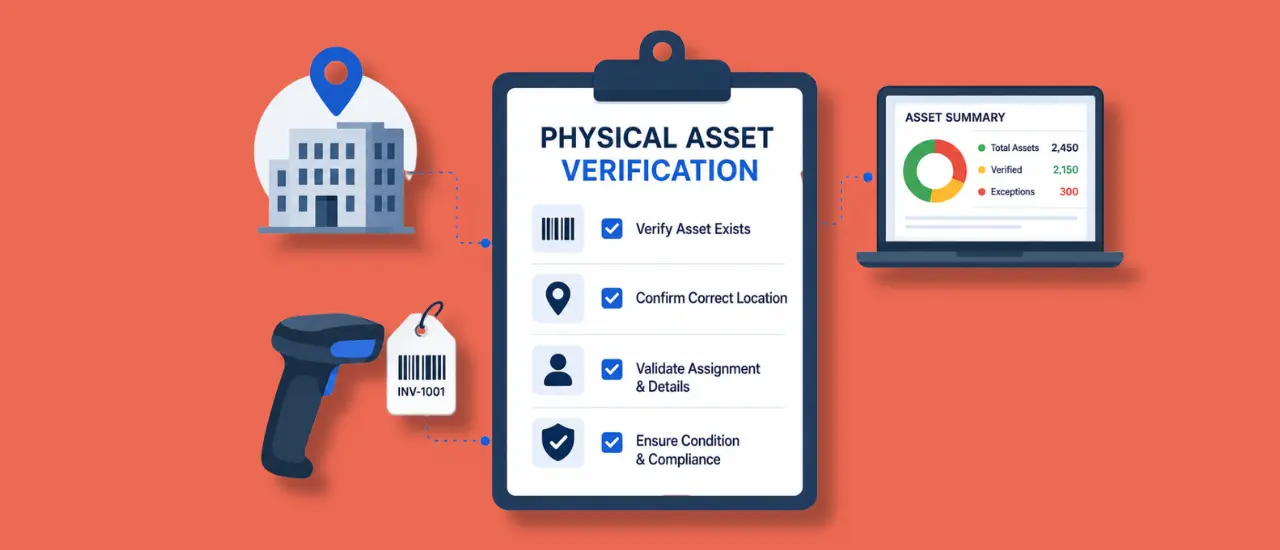
Step 3: Conduct Physical Asset Verification
The next step involves physically verifying assets.
Finance teams often work with operations, administration, or facility management teams to confirm:
- Asset existence
- Asset location
- Asset condition
- Asset ownership
This step helps identify missing assets, duplicate records, and assets that are no longer operational.
Step 4: Compare Physical Assets With Financial Records
Once physical verification is complete, compare findings against accounting records.
Look for discrepancies such as:
- Assets present but not recorded
- Assets recorded but missing
- Incorrect asset values
- Wrong asset locations
- Duplicate asset entries
Document all discrepancies for investigation.
Step 5: Investigate Variances
Not every discrepancy indicates a problem.
Some differences may result from:
- Recent purchases awaiting entry
- Pending disposals
- Department transfers
- Data entry mistakes
Investigate each variance carefully before making adjustments.
Step 6: Update Asset Records
After identifying the root cause of discrepancies, update records accordingly.
This may involve:
- Adding missing assets
- Removing disposed assets
- Correcting asset locations
- Updating depreciation schedules
- Adjusting financial records
The objective is to create alignment between physical assets and accounting records.
Step 7: Generate Reconciliation Reports
Prepare a reconciliation report summarizing:
- Assets verified
- Discrepancies identified
- Corrective actions taken
- Financial adjustments made
- Outstanding issues
These reports provide valuable documentation for auditors and management teams.

Challenges Finance Teams Face During Reconciliation
Although the process sounds straightforward, many organizations face practical challenges.
Large Asset Volumes
Organizations with thousands of assets often struggle to complete reconciliation efficiently.
Multiple Locations
Tracking assets across branches, warehouses, and project sites can complicate verification efforts.
Outdated Asset Registers
Many businesses continue to rely on spreadsheets that become inaccurate over time.
Lack of Real Time Visibility
Without a centralized asset management solution, teams may struggle to access accurate asset information.
Resource Constraints
Manual reconciliation can consume significant time and effort from finance and operational teams.
These challenges highlight the need for better asset management practices and technology driven solutions.
Best Practices for Effective Fixed Asset Reconciliation
Organizations that perform successful reconciliation exercises often follow a consistent set of best practices.
Maintain a Centralized Asset Database
A single source of truth reduces confusion and improves data accuracy.
Perform Regular Asset Verification
Annual reconciliation may not be enough for organizations with high asset movement.
Quarterly reviews can help maintain accuracy throughout the year.
Standardize Asset Tagging
Every asset should have a unique identifier that supports easy tracking and verification.
Document Asset Transfers
All asset movements should be recorded immediately to prevent location related discrepancies.
Automate Asset Tracking
Modern asset management software can automate updates, reduce manual work, and improve record accuracy.
How Technology Simplifies Fixed Asset Reconciliation
Traditional reconciliation methods often rely on spreadsheets and manual processes.
Today, organizations are increasingly adopting digital asset management solutions to streamline reconciliation activities.
Modern systems provide:
- Centralized asset records
- Barcode and QR code tracking
- Real time asset visibility
- Automated audit trails
- Faster physical verification
- Accurate reporting
These capabilities help finance teams spend less time searching for information and more time analyzing results.

The Business Impact of Accurate Reconciliation
When fixed asset reconciliation becomes a regular business practice, organizations experience several long term benefits.
These include:
- More accurate financial reporting
- Better audit outcomes
- Reduced asset losses
- Improved operational accountability
- Greater confidence in decision making
- Enhanced regulatory compliance
Perhaps most importantly, finance teams gain assurance that the information used to support strategic decisions is reliable and up to date.
Conclusion
Fixed asset reconciliation is an essential process for maintaining accurate financial records and ensuring accountability across the organization. By comparing physical assets with accounting records and resolving discrepancies promptly, finance teams can improve reporting accuracy, strengthen compliance, and reduce audit risks.
As businesses grow and asset portfolios become more complex, relying on spreadsheets and manual processes becomes increasingly difficult. Establishing a structured reconciliation process supported by modern asset management technology can help organizations maintain complete visibility into their assets while supporting stronger financial control.
Organizations that treat reconciliation as an ongoing discipline rather than a once a year exercise are better positioned to protect their investments, improve operational efficiency, and maintain confidence in their financial data.


.webp)





.png)

