
+1-855-823-2600 / +91-9798-500-500

Schedule A Call

sales@assetinfinity.com

Share your email and our team will guide you through a setup tailored to how your assets should be managed.
Takes 30 seconds. No sales pressure.









Track Budgets at project, department or category levelSimplify the whole Process of Budgeting -
Asset Infinity's Procurement Management includes a Budget for Procurement feature, enabling organizations to effectively plan and control finances in their procurement process. Set and manage budgets, monitor expenditure, and generate real-time reports for informed decision-making, cost savings, and a transparent workflow. Streamline your budget management with Asset Infinity's comprehensive procurement solution




Spend Visibility
Geta clear spend visibility for all projects, departments and category. Easy understanding of what is happening at different levels.

Improved Financial Planning
By tracking budgets at various levels, organizations can strategically allocate resources & ensure efficient financial planning.

Enhanced Cost Control
Tracking budgets allows better control over expenditures, preventing overspending and promoting cost savings.

Automated Notifications
Receive automated notifications and reminders about upcoming reservations. Our asset booking system keeps users informed about their bookings, ensuring that assets are used as planned and returned on time.
See how businesses use intelligent asset management and asset automation to improve asset visibility, automate tracking, and simplify asset lifecycle management across multiple locations.

Integrating budgets into requests, purchase orders, or CWIP simplifies the procurement process. Budget information is automatically considered while creating these documents, ensuring that spending aligns with the available budget. This streamlines the workflow, eliminates manual budget checks, and minimizes the risk of budgetary discrepancies.
Real-time reporting based on budget tracking provides valuable insights into financial performance. Organizations can generate comprehensive reports that highlight budget utilization, expenditure patterns, and variances. These insights enable proactive decision-making, allowing organizations to adapt budgets, reallocate resources and maintain transparency throughout the procurement process.
.webp)
Asset Infinity’s asset verification system is designed to streamline your verification process, making it user-friendly and seamlessly integrating with existing workflows.

Improve efficiency and oversight by centrally managing all asset requests. This centralization helps in maintaining control and ensuring that all requests are handled promptly.

Maintain control over the distribution of assets by accepting or rejecting requests in accordance with organizational guidelines and available resources.

By comprehending the demand for various assets, you may more efficiently manage your inventory. The asset request feature provides insights into which assets are in demand, helping you plan better.

Misuse and illegal access to assets can be greatly decreased by having a controlled request and approval process. The asset request system ensures that only authorized personnel can request and use assets.
Manage asset tracking, inventory, physical verification, and preventive maintenance from one mobile platform designed to keep your teams productive and your asset data accessible wherever work happens.

Compare physical assets with recorded information to build confidence in an asset register. Help teams work with details that reflect assets they have reviewed.

Scan asset tags to access a corresponding record more efficiently. Reduce manual searches so teams can focus on checking assets and capturing accurate findings.

Use mobile tools during each verification instead of printed paper lists. Reduce repeated transcription and keep checked information connected to asset records.

Identify assets that cannot be found during field checks. Help teams investigate whether items have moved, records need correction, or further action is needed.

Bring verification findings from different locations into one shared platform. Help teams review asset information without combining their lists from each site.

Confirm which assets are present before purchasing replacements. Help teams review available resources and make purchasing decisions with more reliable records.

Follow configured verification procedures across teams. Help employees check the same core details and maintain a shared approach to keeping asset data current.

Review asset condition during on-site verification. Help teams identify information that can support maintenance task follow-ups and asset replacement planning.

Bring mismatched details into focus so teams can investigate efficiently. Help reviewers separate items needing correction from records confirmed during checks.

Give field and office teams access to current asset information. Help employees coordinate verification activity with fewer separate messages and data requests.

Organize findings into reports that support useful follow-ups. Help groups review checked assets, examine differences, and prepare information for internal use.

Keep asset information aligned with verified findings. Help teams plan maintenance, replacement, and resource allocation using a better view of physical assets.
By leveraging Asset Infinity’s asset verification software, organizations can achieve significant improvements in asset performance and reliability. Accurate and reliable asset data enable informed decision-making, enhancing operational efficiency and financial management
.webp)

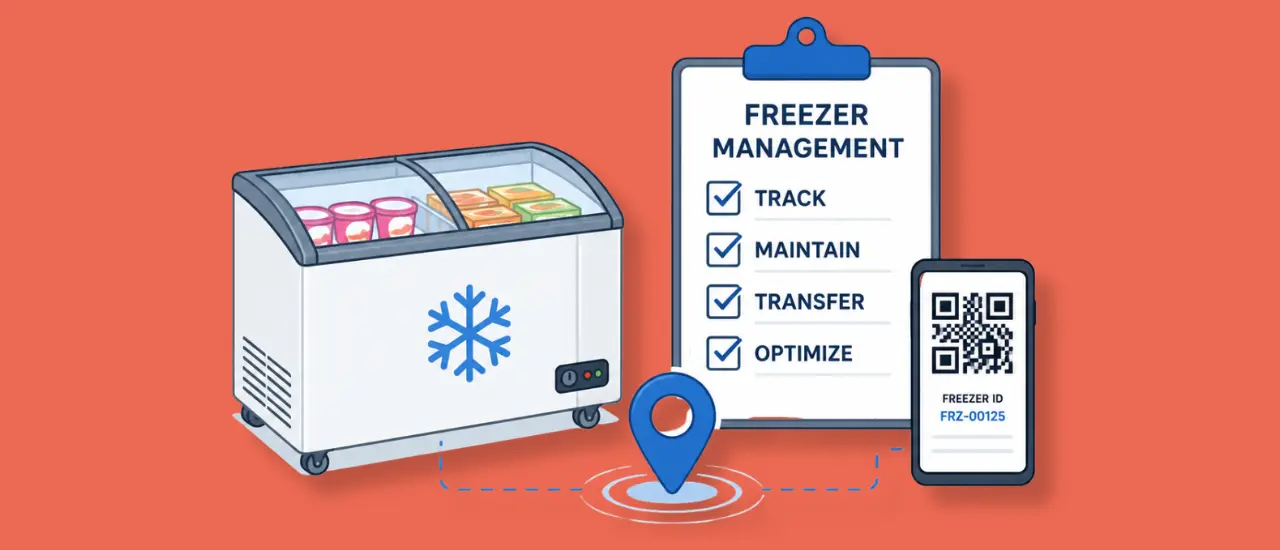
Learn how freezer management software helps food and FMCG companies track field equipment, manage maintenance, improve visibility, and reduce asset losses.
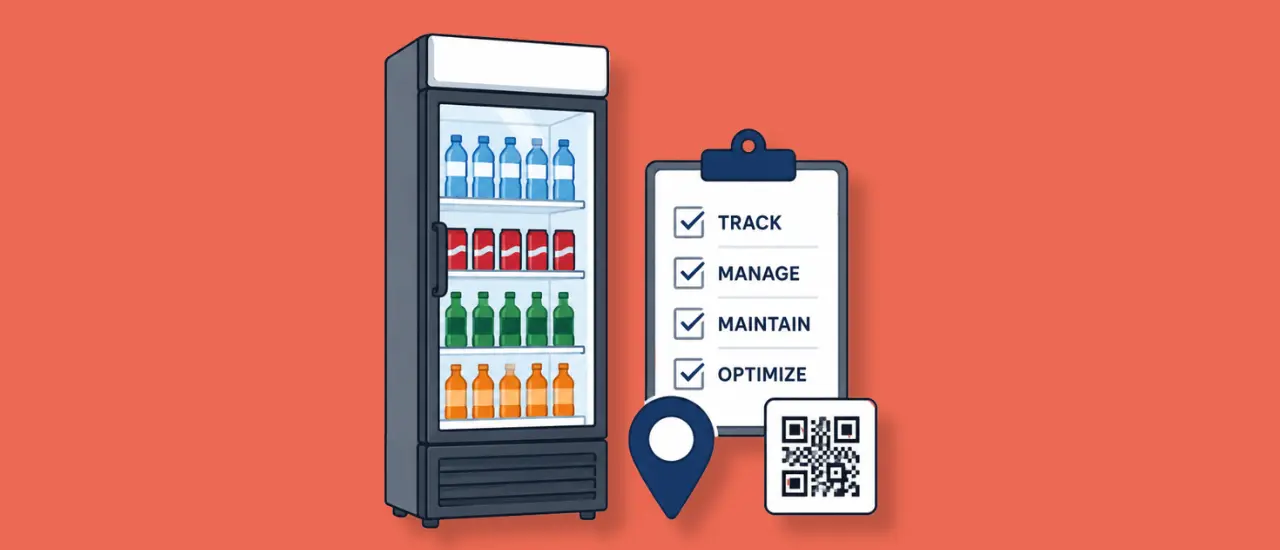
Learn how cooler management software helps beverage companies track field assets, manage maintenance, improve visibility, and optimize cooler utilization.
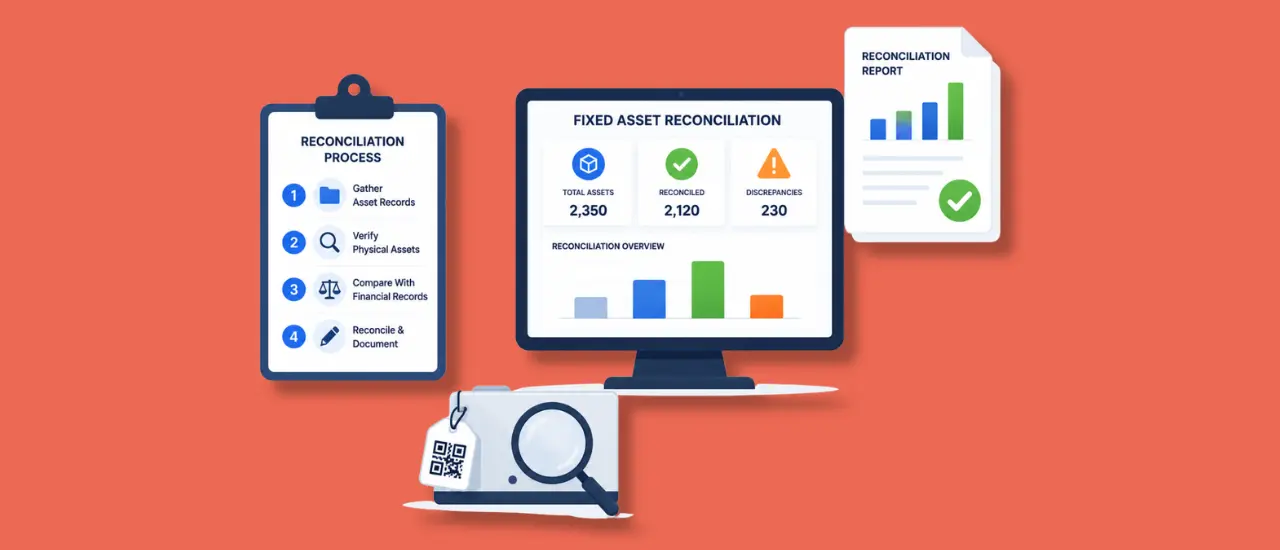
Fixed asset reconciliation helps organizations align physical assets with financial records, ensuring accurate reporting and stronger compliance. This guide explains the reconciliation process, common causes of discrepancies, best practices, and how finance teams can improve asset visibility, reduce audit risks, and maintain reliable fixed asset records across the organization.

For the asset management module, we allow unlimited users with no restrictions, and billing is done based on asset numbers. However, for other modules such as maintenance & purchase, we bill on the basis of number of users.
Yes, you can calculate depreciation & there are two methods we deploy-Straight line & WDV method. You can choose any method according to your needs.
Delivery notes come in handy when we are transferring an asset or assigning it to the employee then we can make PDF and send it over mail or print out it and & take his/her acceptance & similarly when we take back an asset from an employee, we can generate receipt.
Yes, this feature is available. With Asset Infinity you can customize it as well. Asset Delivery notes can pick existing asset information from the system automatically and if you want to add any other information that can be also done.

There are options for linking assets so yes parent-child assets can be created and defined easily.
Simplify the whole Process of Budgeting -
Asset Infinity's Procurement Management includes a Budget for Procurement feature, enabling organizations to effectively plan and control finances in their procurement process. Set and manage budgets, monitor expenditure, and generate real-time reports for informed decision-making, cost savings, and a transparent workflow. Streamline your budget management with Asset Infinity's comprehensive procurement solution

Geta clear spend visibility for all projects, departments and category. Easy understanding of what is happening at different levels

By tracking budgets at various levels, organizations can strategically allocate resources & ensure efficient financial planning

Tracking budgets allows better control over expenditures, preventing overspending and promoting cost savings
Integrating budgets into requests, purchase orders, or CWIP simplifies the procurement process. Budget information is automatically considered while creating these documents, ensuring that spending aligns with the available budget. This streamlines the workflow, eliminates manual budget checks, and minimizes the risk of budgetary discrepancies


Real-time reporting based on budget tracking provides valuable insights into financial performance. Organizations can generate comprehensive reports that highlight budget utilization, expenditure patterns, and variances. These insights enable proactive decision-making, allowing organizations to adapt budgets, reallocate resources and maintain transparency throughout the procurement process


Compare physical assets with recorded information to build confidence in an asset register. Help teams work with details that reflect assets they have reviewed.
Scan asset tags to access a corresponding record more efficiently. Reduce manual searches so teams can focus on checking assets and capturing accurate findings.
Use mobile tools during each verification instead of printed paper lists. Reduce repeated transcription and keep checked information connected to asset records.
Identify assets that cannot be found during field checks. Help teams investigate whether items have moved, records need correction, or further action is needed.
Bring verification findings from different locations into one shared platform. Help teams review asset information without combining their lists from each site.
Confirm which assets are present before purchasing replacements. Help teams review available resources and make purchasing decisions with more reliable records.
Follow configured verification procedures across teams. Help employees check the same core details and maintain a shared approach to keeping asset data current.
Review asset condition during on-site verification. Help teams identify information that can support maintenance task follow-ups and asset replacement planning.
Bring mismatched details into focus so teams can investigate efficiently. Help reviewers separate items needing correction from records confirmed during checks.
Give field and office teams access to current asset information. Help employees coordinate verification activity with fewer separate messages and data requests.
Organize findings into reports that support useful follow-ups. Help groups review checked assets, examine differences, and prepare information for internal use.
Keep asset information aligned with verified findings. Help teams plan maintenance, replacement, and resource allocation using a better view of physical assets.
Yes, it is possible to use SAP Code that is already created if the SAP codes are unique for individual assets. It would not be possible if you are using the same code for multiple assets. In case of same code for multiple assets, we need to split the assets and give them individual asset codes.
Asset Infinity gives you both options-change the asset code or keep it the same on location change. If the customer wants to change the number of asset while changing the location, the have a simple toggle button to do that. If they want to keep the number, then they do not have to do anything.
Our suggestion to the customer is to change their SAP code if they want, but to keep the asset code intact so that you have a complete asset history with you. This gives you the complete asset lifecycle in a single record.
Yes, there are APIs available to receive and return data from your ERP system into Asset Infinity. The system maps existing data and uploads it to the relevant fields in the system. The data from SAP or your ERP can also be extracted as an excel and feed into the Asset Infinity system.
Yes, it is possible to permanently delete an Asset and we give that access to the admin. But we always suggest discarding the asset and to not delete it completely. You can specify the reason and discard it, like this it will stay in the system, and you can access it whenever you want to.
The major information that we mention on the Bar Codes and QR Codes is the Asset Code. On scanning the tag you can see all the information pertaining to that asset code. Same goes for RFID and NFC.
No. You can also manually enter an asset code or the system generates it for you when you upload data. Asset codes can be changed at the time of asset creation or data upload.
Yes, if the customer scans through Asset Infinity’s app, then they will get complete details of their asset. But if the customer scans the code through any other scanner or through any other app then you will only receive the asset code/number of the asset and nothing else.
This is due to security & privacy reasons. If any unauthorized person scans the asset code, they should not be able to see your asset details. Hence the information is restricted to authorized personnel with Asset Infinity account access.
No, you don’t need to install the QR code and Barcode again. If they are already present, we'll map the same tags to our system. But if there is any additional information in the tags vs what’s uploaded to asset infinity, then we would not be able to read the information.
If asset code is stored, then we can use it and if it has some other information that it will be not scanned, and new tags will be stickered.
No, the latitude longitude information is not recorded automatically. We need to update it after a change in location.
Yes, we have a provision in Category Master through which you can categorize and enter any detail about the asset that you want. It would be reflected in the system. For example, the customer has a laptop, they defined that the life of asset is 5 years, and the percentage of depreciation is 20%. Now if any laptop is purchase then the system will automatically used for all the other assets too.
Yes, we have a provision in Category Master through which you can categorize and enter any detail about the asset that you want. It would be reflected in the system.
No two asset can have same code/number and two Sales Number cannot be the same.
Yes, we can customize the Bar Code and QR Codes by adding asset name, number, location, logo of company, etc on it.
Yes, it is possible to get colour logo.
It varies case to case, as different customers have different requirements. We usually use polyester stickers if the surface is hard or if we need the sticker to be weatherproof then we recommend metal stickers. Normally we recommend 60 x 25 sticker size, but it is not mandatory. You can choose any size of sticker according to your requirements.
Yes, it is possible. You can search for the asset number in the system and then get all the information of the asset and then you can print a new sticker for the asset.
The life of stickers that we generally use has a life of 4-5 years. We recommend a transparent protective layer on this sticker which enhances this life span of this sticker. The sticker would not be damaged because of water/dust/cleaning of asset.
No there are roles and permissions through which we manage and ensure the users see information only relevant to them. For example, an IT user can see only IT assets-related information & finance department user can see all assets. Invoice details and depreciation information cannot be accessed by a normal user. Therefore, according to roles, fields are visible. In this application, there is proper management of roles & permission.
For the asset management module, we allow unlimited users with no restrictions, and billing is done based on asset numbers. However, for other modules such as maintenance & purchase, we bill on the basis of number of users.
Yes, you can calculate depreciation & there are two methods we deploy-Straight line & WDV method. You can choose any method according to your needs.
Delivery notes come in handy when we are transferring an asset or assigning it to the employee then we can make PDF and send it over mail or print out it and & take his/her acceptance & similarly when we take back an asset from an employee, we can generate receipt
Yes, this feature is available. With Asset Infinity you can customize it as well. Asset Delivery notes can pick existing asset information from the system automatically and if you want to add any other information that can be also done.
There are options for linking assets so yes parent-child assets can be created and defined easily.
Yes, this feature is available. For example, a laptop may need different fields & a piece of furniture may need completely different fields.
There is a proper workflow engine in this application so yes you can define the workflow and approval processes for asset transfer or asset discard.
Yes, when an asset is added, the workflow will be initiated, and all the information can be added such as AMC details, Model No, purchase details, etc. Any information which is not available in ERP you can add that too in this application as a custom filed as well.
There are two methods for that. First is Bulk Import (must have data in excel format) & the second option is integration with your existing ERP, for which we have APIs.
Yes, you can customize it according to your needs & our support team can also assist you in uploading data.
From SMEs to global enterprises, Asset Infinity enables asset management for finance managers to be efficient, accurate, and forward-looking. By embedding asset tracking for CFOs into daily processes, organizations enhance transparency and reduce risks.
.webp)
.webp)
.webp)
.webp)






.png)

