
.webp)
.webp)
.webp)
.webp)



.webp)

.webp)
Introduction: The New Intelligence Layer in Asset Tracking
The year 2026 is set to redefine how organizations approach asset tracking, shifting from basic location monitoring to a predictive, automated, AI-driven ecosystem. Over the past decade, industries have moved from barcode scanning to RFID and IoT-enabled visibility. But now, with global supply chains under pressure, compliance becoming stricter, and operational efficiency turning into a survival metric, the future of asset management depends on new advancements in automation, intelligence, and real-time reporting.
Unlike traditional systems that relied on human input and periodic audits, intelligent asset tracking solutions of 2026 will deliver autonomous updates, analyze usage patterns, predict failures, and help leaders make informed decisions supported by automated asset management reports. As the future of asset management, America continues to accelerate, organizations worldwide will follow suit—aligning themselves with predictive, connected, and self-auditing asset ecosystems.
2023 vs. 2026: The Transformation of Asset Tracking
A major shift is underway. Below is a clear comparison highlighting how far technology has progressed in just a few years.
As industries mature, leaders must adapt to new asset management trends that emphasize automation, accuracy, uptime, and lifecycle intelligence.
Asset Tracking Evolution — 2020 → 2023 → 2026
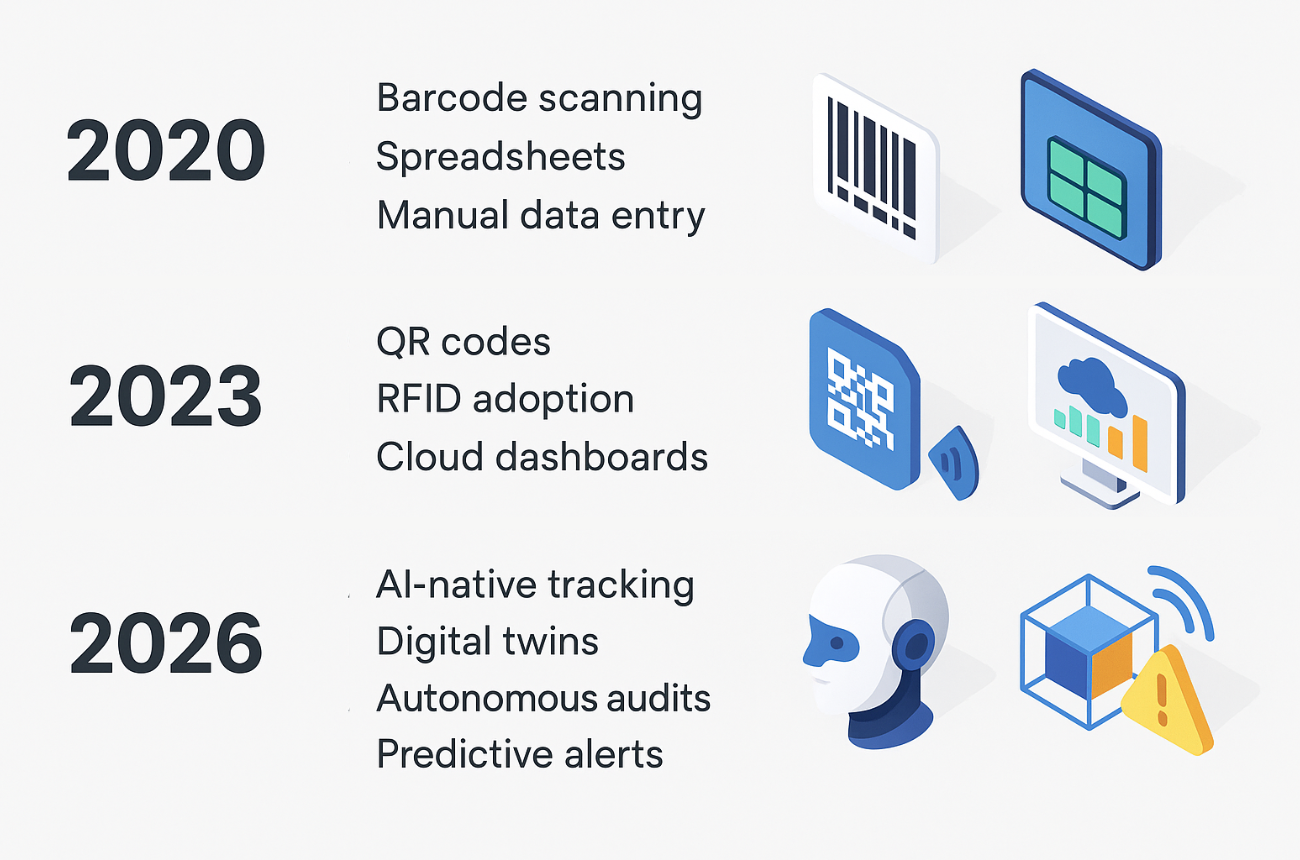
2020: Barcode scanning, spreadsheets, manual data entry
2023: QR codes, RFID adoption, cloud dashboards
2026: AI-native tracking, digital twins, autonomous audits, predictive alerts
This evolution reflects the deep shift in the future of asset management, where systems evolve from static record keepers into dynamic, intelligent ecosystems.
How Asset Tracking Will Transform in 2026
1. AI Takes Over Manual Tracking Tasks
Artificial intelligence will eliminate repetitive updates, reduce human error, and automate lifecycle entries. AI models will learn from historical data, enabling predictable, proactive decisions—one of the strongest emerging asset management trends shaping 2026.
2. IoT Delivers 360° Visibility Across Locations
IoT sensors add contextual intelligence, continuously streaming asset health, movement, utilization, and environment conditions. This forms the backbone of intelligent asset tracking solutions, enabling organizations to operate at full visibility.
3. RFID Evolves Into Predictive Lifecycle Signals
RFID tags will no longer function as passive identifiers. With new power-efficient chips, they will actively monitor usage cycles, helping organizations analyze patterns and generate cleaner, more accurate asset management reports.
4. Predictive Alerts Reduce Losses & Downtime
The shift from reactive logging to proactive detection marks a new chapter in the future of asset management North America. Predictive alerts notify teams before losses, theft, misuse, or equipment failure occur.
5. Digital Twins Become Central to Lifecycle Control
High-value assets—like heavy machinery, medical equipment, and manufacturing components—will have synchronized digital twins. These replicas show real-time health, utilization, and risk insights, pushing asset tracking far beyond simple location monitoring.

Why 2026 Intelligent Tracking Will Redefine the Future of Asset Management
1. Data-Driven Insights Replace Manual Decision-Making
With continuous data streams, organizations will rely less on assumptions and more on data-backed insights. These insights strengthen annual asset management reports, making them more accurate than ever.
2. Accuracy Improves Across the Asset Lifecycle
Predictive intelligence improves visibility, verifies utilization, and eliminates discrepancies that were once common in traditional systems.
3. Compliance Strengthens Through Automated Logging
Regulatory-heavy industries—pharma, aviation, manufacturing—will depend on intelligent asset tracking solutions to maintain audit trails, calibration logs, and service histories.
4. Alignment With Global Asset Management Trends
AI adoption, IoT expansion, cloud-first operations, and sustainability are now dominant asset management trends influencing the 2026 roadmap worldwide.
5. Loss Prevention Becomes Automated
Autonomous systems detect unusual movement, tampering, or unauthorized usage—critical for industries with high-value equipment or sensitive assets.
The Technology Stack Behind 2026 Asset Tracking
1. AI for Autonomous Recognition & Pattern Detection
AI models detect anomalies like overuse, underuse, tampering, blocking, or location inconsistencies—enhancing the predictive layer of asset tracking.
2. IoT Sensors for Scalability & Real-Time Insights
IoT devices communicate continuously, allowing systems to build deeper predictive models and supporting the broader future of asset management worldwide.
3. Next-Generation RFID With Predictive Capabilities
RFID becomes more intelligent, offering deeper insight into lifecycle behaviors. These enhancements support automated asset management reports and real-time event logging.
4. Cloud Architecture for Unified Global Visibility
Businesses operating across multiple locations need synchronized dashboards. Cloud platforms provide scalability aligned with growing asset tracking solutions.
5. Blockchain for Immutable Compliance
Since audit trails cannot be altered, blockchain-based logs improve accountability and reduce regulatory risks—one of the most important asset management trends emerging in 2026.
Asset Tracking Trends to Watch in 2026
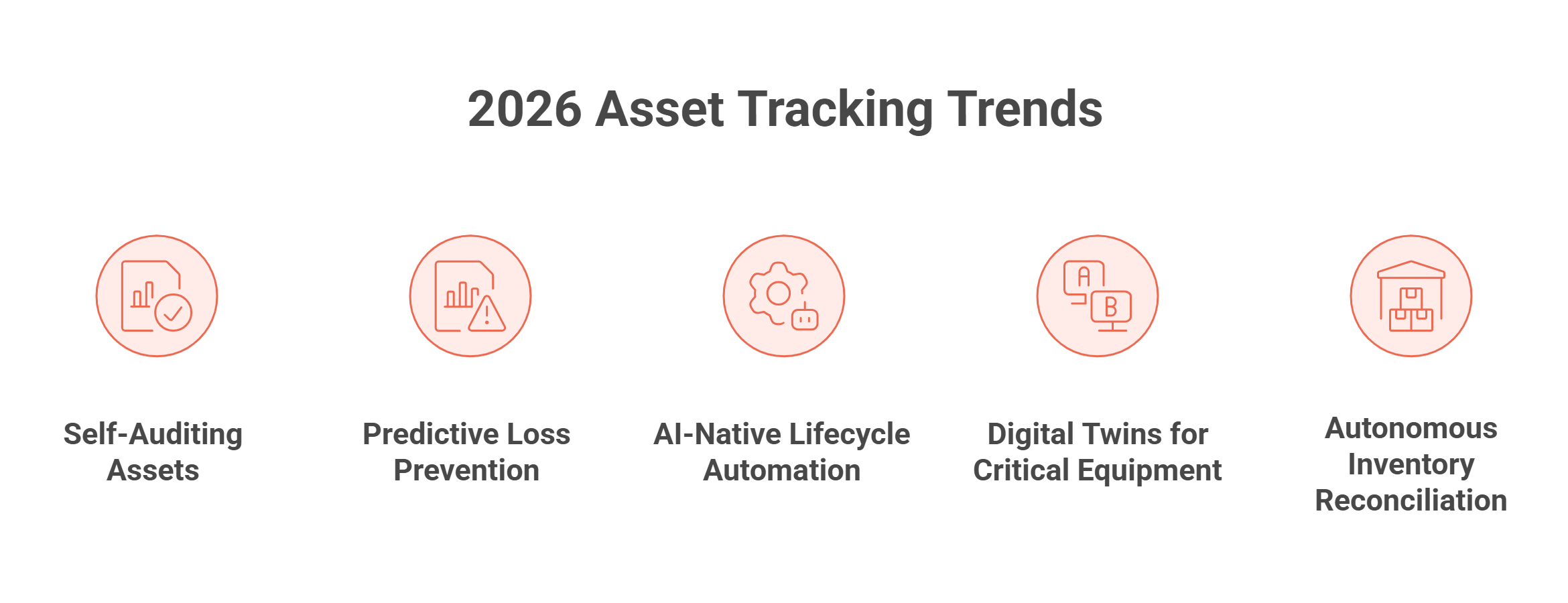
- Self-Auditing Assets: Assets update records, logs, and lifecycle histories without human involvement.
- Predictive Loss Prevention: AI analyzes behavior anomalies to forecast loss or theft before it happens.
- AI-Native Lifecycle Automation: Maintenance, warranty reminders, and replacements become autonomous.
- Digital Twins for Critical Equipment: Real-time virtual asset models reduce downtime and operational costs.
- Autonomous Inventory Reconciliation: Warehouses and factories leverage drones and smart sensors to eliminate manual counts.
Traditional Asset Tracking vs 2026 AI Asset Tracking
Here’s a clear breakdown that shows how asset tracking methods have evolved over time.
The shift is unmistakable, AI tracking isn’t just an upgrade; it reshapes how organizations manage assets altogether.
Industry Use Cases for Intelligent Asset Tracking in 2026
The shift toward intelligent asset tracking impacts every industry, but its value varies based on operational complexity, compliance expectations, and asset intensity. As organizations adjust to new global asset management trends, 2026 introduces smarter, more automated workflows that deliver accuracy, visibility, and long-term savings.
1. Healthcare: Higher Safety, Faster Response
Hospitals depend on thousands of mobile assets—from infusion pumps to surgical kits—and misplacements can affect patient safety. Intelligent asset tracking solutions automate sterilization logs, service alerts, and utilization reporting. Predictive intelligence helps verify calibration cycles, supporting regulatory demands for accurate asset management reports in healthcare facilities.
2. Manufacturing: Reducing Downtime with Predictive Insights
Factories rely on equipment uptime to maintain production schedules. IoT and RFID-enhanced asset tracking can monitor vibrations, temperature changes, energy consumption, and runtime patterns. Predictive analytics detects anomalies early, improving the future of asset management North America, where manufacturers already lead in AI adoption.
3. Logistics & Warehousing: Real-Time Fleet and Inventory Control
For logistics networks, delays and misplaced inventory directly impact revenue. Intelligent tracking tools optimize routes, monitor asset conditions during transit, and automate reconciliation. These advancements align with dominant asset management trends, including continuous visibility and automation-first warehouse strategies.
4. Construction: Preventing Equipment Loss Across Sites
Construction firms often manage equipment across multiple remote locations. Intelligent asset tracking solutions prevent theft, ensure accountability, and highlight underutilized equipment. Real-time notifications and geofencing improve fuel consumption, cost forecasting, and internal asset management reports.
5. IT & Data Centers: Protecting High-Value Technology Assets
Data centers must track servers, networking devices, cables, and critical components with absolute precision. Intelligent asset tracking mitigates configuration errors, detects unauthorized access, and maintains compliance logs automatically. This supports the long-term future of asset management, especially in security-sensitive sectors.
Mini Checklists for Fast 2026 Asset Tracking Adoption
To help organizations transition smoothly, here are practical checklists based on upcoming asset management trends for 2026.
Preparing Your Organization for Intelligent Tracking
- Identify assets requiring IoT, GPS, or RFID tagging
- Review gaps in current asset tracking workflows
- Integrate cloud platforms for real-time visibility
- Standardize naming, tagging, and documentation
- Train teams to transition away from manual reporting
Compliance & Reporting Automation in 2026
- Configure automated calibration logs
- Enable digital service history and audit trails
- Activate compliance alerts and lifecycle reminders
- Centralize automated asset management reports
- Align with regional regulations, including the future of asset management North America
Enhancing Predictive Maintenance
- Connect sensors to critical machinery
- Track condition-based indicators (heat, vibration, voltage)
- Enable predictive fault detection
- Integrate maintenance workflows with ERP systems
- Verify service logs for completeness and compliance
These checklists prepare organizations for the intelligent, autonomous future of asset tracking.
How Asset Infinity Enables Intelligent Asset Tracking
As asset tracking continues evolving, organizations require platforms capable of supporting AI, IoT, predictive analytics, and cross-location visibility. Asset Infinity provides this foundation through a modern, scalable, automation-ready interface.
1. Real-Time Visibility Across All Locations
Asset Infinity consolidates data from RFID, IoT sensors, GPS devices, and QR codes to deliver a unified dashboard. With real-time updates and automated alerts, organizations stay ahead of emerging asset management trends and maintain optimized workflows.
2. Predictive Maintenance and Automated Scheduling
The platform identifies asset behavior patterns and schedules maintenance proactively. This predictive intelligence reduces downtime and supports data-rich asset management reports across departments.
3. Compliance Automation and Monitoring
Asset Infinity keeps compliance records updated automatically—calibration logs, warranty details, certifications, and service history—all synced with intelligent asset tracking solutions, improving audit readiness.
4. IoT, RFID & GPS Ecosystem Integration
With compatibility across sensor ecosystems, Asset Infinity enables seamless device-level communication. These integrations support modern workflows aligned with the future of asset management vision for 2026.
5. Insightful Analytics and Lifecycle Reporting
The platform generates actionable insights, cost summaries, and performance metrics through automated reporting. This modernizes decision-making and supports global standards, including those highlighted in the future of asset management North America.

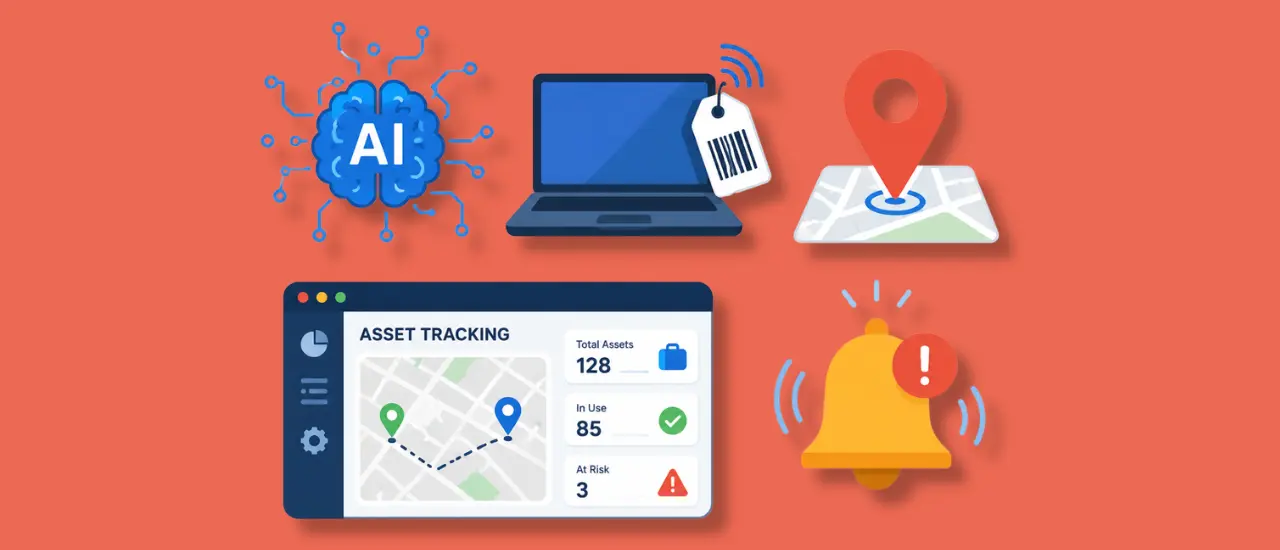
2026 Tech Stack Visual for Intelligent Asset Tracking
A complete 2026 tech stack includes:
- AI/ML-based pattern recognition
- IoT sensors for condition monitoring
- RFID + UHF hybrid tagging
- GPS & BLE tracking for mobility
- Blockchain-secure audit logs
- Cloud dashboards with predictive analytics
- Digital twin simulation engines
This ecosystem ensures future-proofed asset tracking strategies.
Conclusion: 2026 Marks the Beginning of Autonomous, Intelligent Asset Tracking
As AI, IoT, RFID, and predictive analytics converge, asset tracking in 2026 becomes more than a digital tool—it becomes an intelligent operational partner. The shift towards real-time decision-making, autonomous audits, and predictive failure detection represents a major breakthrough in the future of asset management. With industries increasingly dependent on accurate, automated data streams, organizations must adopt advanced asset tracking solutions to stay competitive.
From digital twins to predictive alerts, from blockchain-secured logs to AI-native reporting, the next phase of innovation will reshape how companies operate at every level. As asset management trends continue to evolve, enterprises that invest early in intelligent tracking systems—supported by robust platforms like Asset Infinity—will unlock unparalleled operational efficiency, compliance strength, and financial performance.
2026 is not just an upgrade.
It is the turning point where intelligent asset ecosystems redefine how businesses track, manage, and optimize their most valuable resources. \
FAQs — Future of Asset Management & 2026 Tracking
What technologies define the future of asset management?
AI, IoT, RFID, digital twins, and automation form the foundation. These technologies maximize visibility and reduce risks, aligning with core asset management trends.
How will asset tracking evolve in 2026?
Asset tracking will become predictive, automated, self-reconciling, and compliance-ready. Intelligent asset tracking solutions will remove nearly all manual work.
Why are asset management reports more accurate in 2026?
Reports are automated, data-driven, and supported by real-time logs created through IoT, AI, and blockchain-secured records.
How is the future of asset management North America different?
North America is leading global adoption of predictive analytics, autonomous inventory systems, and AI-native asset platforms, setting standards for other regions.
Which industries benefit most from intelligent tracking?
Manufacturing, healthcare, logistics, IT, energy, and construction see the highest ROI due to high asset volume and compliance requirements.










.png)

