
.webp)
.webp)
.webp)
.webp)



.webp)

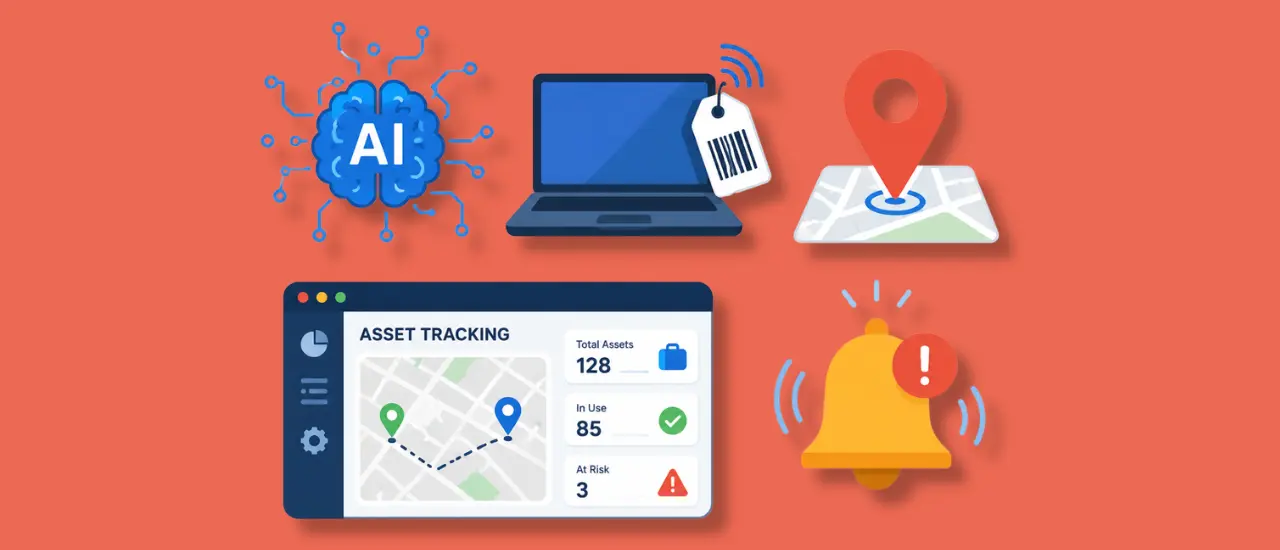
Have you ever spent hours trying to locate a company laptop, a critical piece of equipment, or a tool that was supposed to be available but somehow disappeared?
For many businesses, this isn't a rare occurrence. Assets are constantly moving between departments, job sites, warehouses, and employees. Without proper visibility, things get misplaced, forgotten, or even stolen. The result is more than just replacement costs, it can lead to project delays, productivity losses, compliance issues, and frustrated teams.
As organizations grow, managing assets through spreadsheets, manual records, or occasional audits becomes increasingly difficult. This is where asset tracking AI is making a significant difference.
By combining artificial intelligence with real-time tracking technologies, businesses can monitor assets more accurately, identify potential risks early, and make smarter decisions throughout the asset lifecycle. Instead of reacting to asset loss after it happens, companies can prevent it before it impacts operations.
What Is Asset Tracking AI?
Asset tracking AI refers to the use of artificial intelligence within asset management systems to monitor, analyze, and optimize the movement, usage, and performance of physical assets.
Unlike traditional tracking methods that simply record asset information, AI-powered systems continuously analyze data from multiple sources, including:
- RFID tags
- GPS trackers
- IoT sensors
- Barcode scanners
- Mobile applications
- Asset management software
The AI engine processes this information in real time, helping businesses understand where assets are, how they are being used, and whether there are any unusual patterns that require attention.
This level of intelligence makes AI asset tracking far more effective than conventional asset management approaches.
Why Asset Loss Is a Bigger Problem Than Most Businesses Realize
Asset loss doesn't always happen because something is stolen.
In many cases, assets simply become difficult to locate due to poor tracking processes, inaccurate records, or lack of accountability. A misplaced tool, unreturned laptop, or undocumented equipment transfer can create significant operational challenges.
Common causes of asset loss include:
- Manual data entry errors
- Poor inventory visibility
- Unauthorized asset movement
- Lack of real-time tracking
- Inadequate audit processes
- Inefficient maintenance management
Over time, these issues add up, increasing operational costs and reducing overall efficiency.
Businesses that implement asset tracking AI gain greater visibility into their assets and significantly reduce the likelihood of these problems occurring.
How Asset Tracking AI Reduces Asset Loss
Real-Time Visibility Across All Assets
One of the biggest advantages of asset tracking AI is real-time asset visibility.
Instead of relying on periodic updates, businesses can see the exact location and status of assets whenever needed. Whether equipment is stored in a warehouse, assigned to an employee, or being used at a remote site, the system provides instant access to current information.
Real-time visibility helps organizations:
- Locate assets quickly
- Reduce search time
- Improve resource allocation
- Prevent assets from being misplaced
When employees know exactly where assets are located, productivity improves and asset loss decreases.
Intelligent Detection of Unusual Activity
Traditional tracking systems tell you where an asset is. AI goes a step further by identifying behaviors that may indicate a problem.
Modern AI asset tracking solutions can automatically detect:
- Assets leaving approved locations
- Unexpected movement patterns
- Unauthorized usage
- Missing check-ins
- Irregular asset transfers
When unusual activity is detected, the system sends alerts immediately, allowing businesses to investigate and take action before a loss occurs.
Predicting Risks Before Assets Go Missing
One of the most valuable capabilities of asset tracking AI is predictive analytics.
Artificial intelligence analyzes historical data to identify trends and risk factors that humans might overlook.
For example, AI can identify:
- Locations where assets frequently go missing
- Equipment that is regularly misplaced
- Departments with recurring tracking issues
- High-risk assets requiring additional monitoring
By identifying risks early, businesses can strengthen controls and reduce future asset losses.
Improving Accountability Through AI Asset Tracking
A lack of accountability is often a major contributor to asset loss.
When multiple employees use the same equipment without proper tracking, it becomes difficult to determine responsibility when assets go missing.
AI-powered asset management software creates a complete history for every asset, including:
- User assignments
- Location changes
- Asset transfers
- Maintenance activities
- Usage records
This digital audit trail increases accountability and encourages better asset management practices across the organization.
Automated Audits Eliminate Tracking Gaps
Manual audits are time-consuming, costly, and often inaccurate.
Businesses that rely solely on physical audits may not discover missing assets until months after they disappear.
With asset tracking AI, audits become faster and more accurate.
The system automatically compares actual asset data against recorded information and identifies discrepancies instantly.
Benefits of automated auditing include:
- Reduced administrative workload
- Improved inventory accuracy
- Faster compliance reporting
- Early detection of missing assets
As a result, businesses can maintain accurate asset records without dedicating excessive resources to manual verification.
Smarter Maintenance Management Prevents Asset Loss
Many organizations lose track of assets during maintenance or repair processes.
Equipment is sent for servicing, moved between facilities, or assigned to third-party vendors without proper documentation.
AI-powered systems solve this challenge by tracking assets throughout their maintenance lifecycle.
Using AI for asset management, businesses can:
- Schedule preventive maintenance
- Monitor asset condition
- Record service history
- Track maintenance locations
- Receive automated maintenance alerts
This ensures assets remain visible and accounted for at every stage of their lifecycle.
Geofencing Enhances Asset Security
Geofencing is another powerful feature commonly found in AI asset tracking platforms.
Geofencing allows organizations to create virtual boundaries around locations such as:
- Construction sites
- Warehouses
- Manufacturing facilities
- Distribution centers
If an asset leaves a designated area without authorization, the system immediately triggers an alert.
This capability helps businesses:
- Prevent theft
- Monitor asset movement
- Improve site security
- Accelerate asset recovery
For organizations managing high-value equipment, geofencing provides an additional layer of protection against asset loss.
Reducing Theft with Asset Tracking AI
Asset theft remains a serious concern across industries.
Whether it's construction equipment, IT hardware, vehicles, or specialized tools, stolen assets can create significant financial losses.
Asset tracking AI helps reduce theft through continuous monitoring and intelligent analysis.
Key anti-theft capabilities include:
- Real-time location tracking
- Automated security alerts
- Unauthorized movement detection
- Asset usage monitoring
- Historical movement records
These features enable businesses to identify suspicious activity quickly and respond before losses escalate.
Better Asset Utilization Through AI Insights
Many businesses purchase new assets simply because they cannot locate existing ones.
Poor visibility often leads organizations to believe assets are unavailable when they are actually underutilized.
With AI-powered asset management software, businesses gain valuable insights into:
- Asset utilization rates
- Idle equipment
- Usage trends
- Asset demand patterns
This information helps organizations maximize the value of existing assets before investing in additional resources.
Industries Benefiting from AI Asset Tracking
The benefits of asset tracking AI extend across multiple industries.
Healthcare
- Medical equipment tracking
- Compliance management
- Equipment availability monitoring
Manufacturing
- Machinery tracking
- Tool management
- Production asset monitoring
Construction
- Equipment location tracking
- Theft prevention
- Site asset management
Logistics and Transportation
- Fleet visibility
- Cargo tracking
- Route optimization
IT and Corporate Enterprises
- Laptop and device tracking
- Hardware lifecycle management
- Employee asset allocation
Regardless of industry, organizations that depend on valuable physical assets can benefit from AI-driven tracking and monitoring.
Choosing the Right Asset Tracking AI Solution
When evaluating an asset tracking AI platform, businesses should look for features that support both operational efficiency and asset security.
Key capabilities include:
- Real-time asset tracking
- AI-powered analytics
- Predictive maintenance
- RFID and IoT integration
- Mobile accessibility
- Automated alerts
- Geofencing functionality
- Comprehensive reporting
- Scalable deployment options
Selecting the right solution can help businesses improve visibility, reduce losses, and achieve a stronger return on investment.
The Future of Asset Tracking AI
As artificial intelligence continues to evolve, asset management systems will become even more intelligent and proactive.
Future innovations are expected to include:
- Autonomous asset monitoring
- Advanced predictive risk analysis
- AI-powered digital twins
- Computer vision-based asset recognition
- Automated workflow optimization
These advancements will enable businesses to manage assets with greater accuracy, efficiency, and confidence than ever before.
Final Thoughts
Asset loss is more than an operational inconvenience it directly impacts productivity, profitability, and business performance.
Organizations that continue to rely on manual tracking methods often struggle with limited visibility, delayed audits, and preventable losses. In contrast, businesses adopting asset tracking AI gain real-time insights, stronger accountability, improved security, and predictive intelligence that helps prevent asset loss before it occurs.
As asset inventories become larger and more complex, AI asset tracking is no longer a competitive advantage it's becoming a business necessity. Companies that invest in intelligent asset management today will be better equipped to protect valuable resources, improve operational efficiency, and support long-term growth.



.webp)







.png)

