
.webp)
.webp)
.webp)
.webp)




.webp)
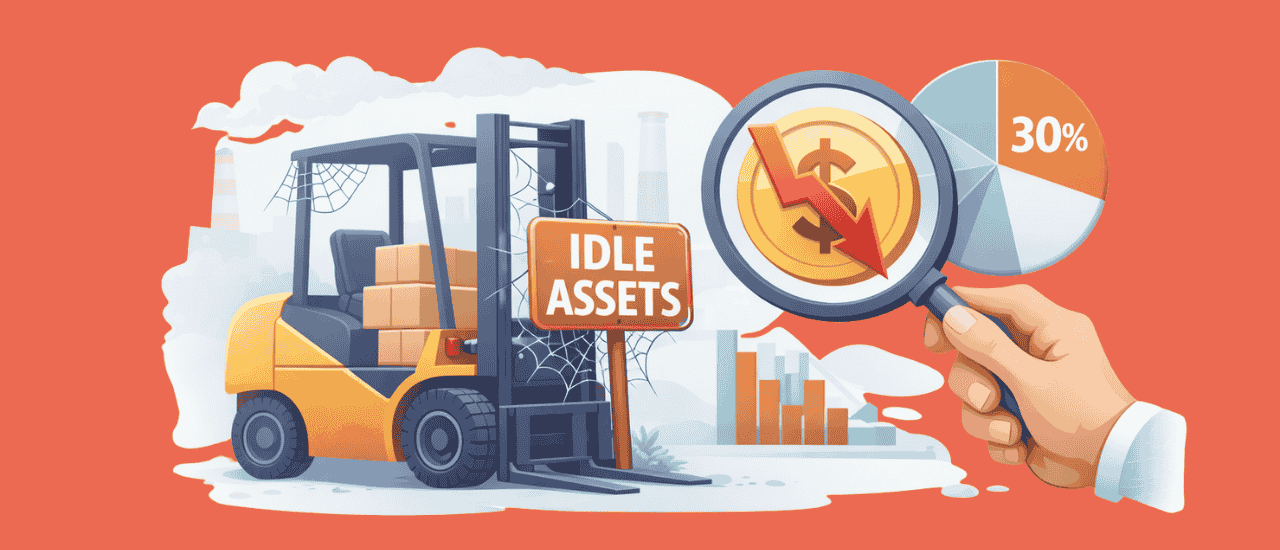
Most enterprises believe that once an asset is purchased and recorded, its value is automatically realized. In reality, the opposite is often true. Poor asset performance silently erodes budgets, reduces operational agility, and creates long term inefficiencies that remain hidden for years. Studies consistently show that nearly 30 percent of assets owned by large organizations remain unused or severely underutilized.
As enterprises scale, expand locations, and decentralize operations, assets slowly drift away from active workflows. Equipment is bought for future needs, tools are assigned without follow up, and visibility weakens across departments. These idle assets rarely trigger alarms because they still exist on paper. However, declining asset utilization and weakening asset efficiency eventually show up as rising costs, unnecessary purchases, and stalled productivity.
Understanding how this problem develops is essential before enterprises can solve it.
What Idle Assets Actually Represent Inside Large Enterprises
Idle assets are not accidental. They are a direct outcome of how enterprises grow and operate.
1. Assets that remain functional but disconnected from work
In many organizations, assets are fully operational but simply not tied to active tasks. Machines may be available but not scheduled, devices may exist but not assigned, and tools may sit unused because no one knows they are available. This creates a silent gap between ownership and asset utilization.
2. Assets purchased as buffers for uncertainty
Enterprises often buy additional resources to prepare for growth, seasonal demand, or risk mitigation. When those scenarios change, the assets remain unused. Over time, these idle assets accumulate without anyone questioning their relevance or impact on asset performance.
3. Assets trapped within departmental silos
When departments manage assets independently, sharing becomes difficult. One team may struggle with shortages while another holds surplus resources. This imbalance reduces asset efficiency across the organization and encourages duplicate purchases.
4. Assets that lose relevance due to operational change
As workflows evolve, some resources no longer fit current processes. Without tracking performance trends, enterprises fail to identify when an asset has stopped adding value, leading to gradual performance decline.
5. Assets hidden by manual tracking limitations
Spreadsheets and disconnected records lack the ability to reflect real usage. As a result, unused resources remain invisible, masking the true state of asset performance.
Why Asset Performance Drops as Enterprises Scale Operations
Growth adds complexity faster than most organizations can adapt their asset practices.
1. Loss of centralized visibility across locations
As locations increase, asset data becomes fragmented. Leadership no longer has a single view of where resources are, how they are used, or whether they are needed. This lack of visibility directly weakens asset performance and decision making.
2. Independent purchasing decisions across teams
Departments often procure assets to solve immediate problems without checking availability elsewhere. This behavior inflates inventory, lowers asset utilization, and increases long term operational costs.
3. Inconsistent asset tracking standards
Different locations follow different tracking processes. Some update records diligently, others do not. This inconsistency undermines reporting accuracy and makes asset efficiency difficult to measure reliably.
4. Delayed updates that distort performance insights
When asset updates rely on manual input, delays are inevitable. These delays prevent enterprises from detecting underused resources early, allowing inefficiencies to persist.
5. Weak accountability for asset outcomes
Without clear ownership, assets receive less attention. Maintenance is delayed, usage is inconsistent, and performance slowly declines without intervention.
The Financial Impact of Idle Assets on Enterprise Budgets

Unused assets are not neutral. They actively weaken financial performance.
1. Capital locked without generating returns
Every unused resource ties up capital that could be invested elsewhere. Poor asset performance restricts flexibility and limits growth initiatives across the enterprise.
2. Ongoing costs associated with ownership
Even when not in use, assets incur storage, insurance, depreciation, and maintenance costs. As idle assets increase, these expenses accumulate quietly and reduce profitability.
3. Increased spending due to lack of awareness
When existing resources cannot be located or verified, enterprises approve new purchases. This lowers asset utilization and inflates capital expenditure unnecessarily.
4. Budget planning based on incomplete data
Without accurate usage insights, financial forecasts rely on assumptions. This leads to inefficient allocation and weaker asset efficiency outcomes.
5. Reduced return on enterprise investments
As more assets fail to contribute value, overall return declines, affecting long term financial health.

Operational Blind Spots That Keep Assets Idle
Operational blind spots prevent enterprises from addressing inefficiencies early.
1. Asset movement without reliable traceability
Assets often move between sites, projects, or teams without proper documentation. This breaks visibility and weakens asset utilization control.
2. Poor alignment between procurement and operations
Procurement teams may not have access to real usage data. As a result, purchases are made without understanding existing availability.
3. Limited insight into actual usage behavior
Tracking ownership alone does not reveal how often assets are used. Without usage data, asset efficiency cannot be improved systematically.
4. Reactive management instead of proactive planning
Without continuous insight, enterprises respond to problems after value is lost rather than preventing inefficiencies.
5. Fragmented data across enterprise assets
When information is scattered, leaders cannot form a clear picture of how enterprise assets contribute to performance.
Why Periodic Audits Fail to Solve the Idle Asset Problem
Audits are helpful but insufficient on their own.
- Audits provide only temporary visibility: They capture asset status at a single point in time but miss ongoing changes in asset performance.
- High effort with limited long term impact: Manual audits require significant effort but rarely lead to sustained improvement in asset utilization.
- Delayed action on identified issues: By the time audit findings are reviewed, assets may already be idle elsewhere.
- Focus on counts rather than contribution: Audits confirm existence but not effectiveness, leaving asset efficiency gaps unresolved.
- Lack of integration with daily decision making: Audit results are often isolated from operational workflows, limiting their impact.
Hidden Cost of Idle Assets in Enterprises
Setting the Foundation for Asset Optimization
Solving the idle asset problem requires a shift from ownership focused thinking to performance driven management. Enterprises that prioritize asset optimization focus on how resources are used, not just where they are recorded. By understanding true asset performance, improving asset utilization, and strengthening asset efficiency, organizations can prevent waste before it becomes systemic.
How Enterprises Can Recover Value from Idle Assets
Once enterprises accept that unused resources are widespread, the next challenge is recovery. The good news is that reclaiming value does not always require new investment.
1. Identifying idle assets through usage driven analysis
The most effective way to recover value is to analyze how assets are actually used. Usage driven analysis highlights gaps between ownership and activity. When enterprises compare assigned assets against real usage patterns, idle assets become visible and actionable.
2. Creating visibility across all enterprise assets
Centralized visibility allows leaders to see assets across departments and locations. When enterprise assets are visible in one system, organizations can identify overlaps, shortages, and underused resources that were previously hidden.
3. Reallocating assets to areas of active demand
Recovered value often comes from reassigning assets rather than replacing them. Moving resources from low usage areas to high demand teams improves asset utilization and strengthens asset performance without additional spending.
4. Retiring assets that no longer support operations
Some assets no longer align with business needs. Holding on to them increases costs without delivering value. Strategic retirement improves asset efficiency and reduces unnecessary overhead.
5. Preventing recurrence of idle asset accumulation
Recovery efforts must be paired with governance. Enterprises that fail to address root causes will see idle assets return. Continuous monitoring ensures long term improvement.
Practical Strategies to Improve Asset Utilization at Scale
Sustainable improvement requires structured and repeatable strategies.
1. Establishing clear asset ownership models
Every asset should have a defined owner responsible for its usage and condition. Ownership increases accountability and improves asset utilization across teams and locations.
2. Standardizing asset request and return processes
Clear processes reduce misuse and ensure assets are returned when no longer needed. Standardization helps enterprises maintain consistent asset efficiency across operations.
3. Aligning procurement decisions with performance data
When purchasing decisions are informed by asset performance metrics, enterprises avoid unnecessary acquisitions and improve capital efficiency.
4. Encouraging cross location asset sharing
Shared access models reduce duplication and increase utilization. Enterprises that promote sharing unlock value from existing resources.
5. Monitoring utilization trends continuously
Continuous monitoring allows organizations to detect early signs of underuse and intervene before assets become idle.
Asset Optimization as a Long Term Enterprise Discipline
Asset optimization is not a project. It is an ongoing capability that matures over time.
- Shifting focus from quantity to contribution: Enterprises must move away from counting assets and toward measuring contribution. This mindset shift improves asset performance across the lifecycle.
- Using performance insights to guide strategy: Reliable data allows leaders to align asset investments with business priorities. This ensures asset efficiency supports strategic goals.
- Eliminating redundancy across enterprise assets: Redundant resources often exist due to poor coordination. Optimization efforts help identify and eliminate these inefficiencies across enterprise assets.
- Supporting lifecycle based planning: Assets deliver maximum value when managed throughout their lifecycle. Planning ensures resources are used effectively from acquisition to retirement.
- Embedding optimization into daily operations: When optimization becomes part of daily decision making, asset utilization improves naturally and consistently.
Technology Enablement and Its Role in Asset Performance
Technology provides the foundation for sustainable asset control.
- Real time visibility into asset usage: Accurate and timely data allows enterprises to understand actual usage rather than assumptions. This improves asset performance decision making.
- Automation that reduces human dependency: Automation minimizes errors and delays. This consistency strengthens asset utilization and improves asset efficiency across large organizations.
- Analytics that uncover hidden inefficiencies: Advanced analytics reveal usage patterns that manual methods miss. These insights support proactive optimization efforts.
- Scalable systems that grow with the enterprise: As organizations expand, scalable platforms ensure asset efficiency does not decline with complexity.
- Reliable data for enterprise assets: Technology ensures that decisions affecting enterprise assets are based on facts, not fragmented records.
Preparing Enterprises for Sustainable Asset Performance
Long term success requires discipline and commitment.
- Building a culture of accountability: When teams understand their responsibility for asset usage, performance outcomes improve naturally.
- Integrating asset data into strategic planning: Asset performance data should inform budgeting, expansion, and investment decisions.
- Continuously refining utilization processes: Processes must evolve as business needs change to maintain strong asset utilization.
- Measuring progress through efficiency metrics: Clear metrics help enterprises track improvements and reinforce accountability.
- Strengthening resilience through optimized assets: Enterprises with optimized assets are better prepared to adapt to change and growth.
Enterprise Asset Optimization Outcomes
Conclusion
The hidden cost of unused resources continues to drain enterprise value year after year. Poor asset performance leads to wasted capital, operational inefficiencies, and missed opportunities for growth. As organizations scale, the risk of idle assets increases unless visibility and accountability are built into daily operations.
Enterprises that focus on improving asset utilization, strengthening asset efficiency, and committing to continuous asset optimization can reclaim significant value from existing resources. Addressing this challenge is not only about cost control. It is about building a resilient organization where enterprise assets actively support performance, productivity, and long term success.
Frequently Asked Questions on Idle Assets and Asset Performance
This section addresses common enterprise concerns.
Why do so many enterprise assets remain unused
Enterprise assets often become idle due to weak visibility, decentralized ownership, and lack of performance monitoring.
How does poor asset performance affect business growth
Poor asset performance ties up capital, increases costs, and limits the organization’s ability to scale efficiently.
What is the most effective way to improve asset utilization
Improving asset utilization requires continuous monitoring, clear ownership, and data driven decision making.
Can asset optimization reduce future spending
Yes. Asset optimization enables enterprises to reuse existing resources effectively, reducing unnecessary purchases.
How often should asset efficiency be reviewed
Asset efficiency should be reviewed continuously rather than relying on periodic audits alone.










.png)

