






The client
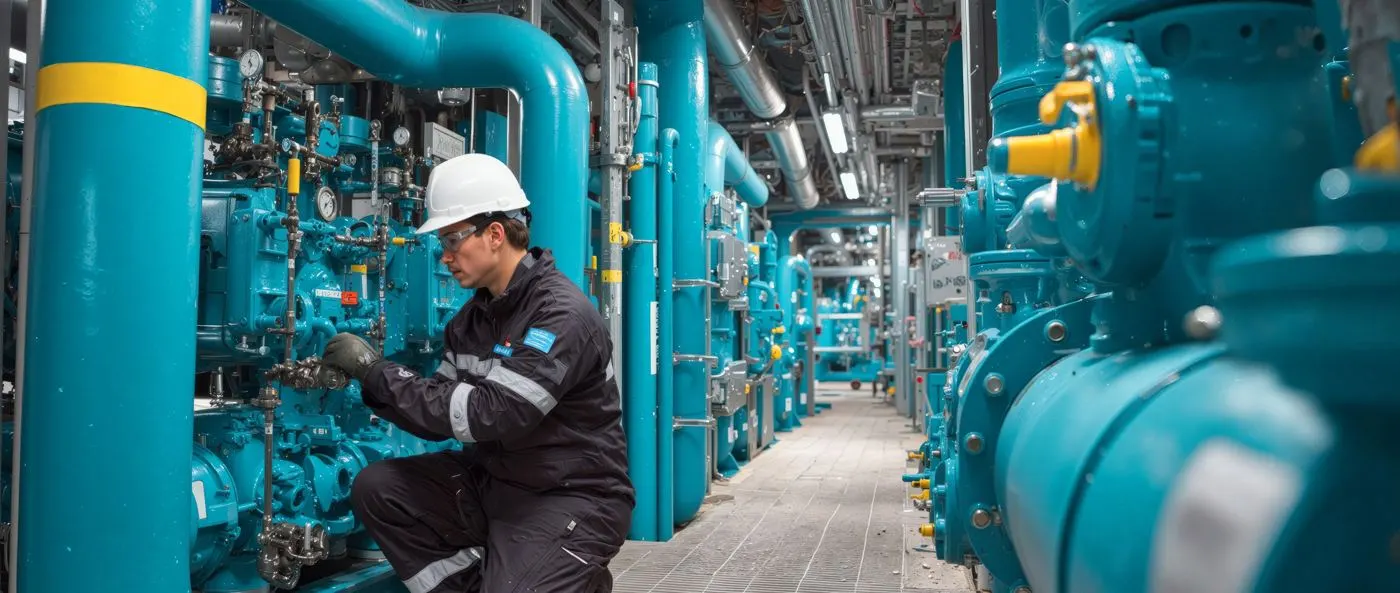
The client is a large industrial zero liquid discharge (ZLD) facility supporting a major manufacturing plant. It runs evaporators, RO units, ATFDs, clarifiers, dosing systems, blowers, pumps, flow meters and online analyzers.
Each must meet strict environmental standards, and with regulators increasing scrutiny, the plant needed documentation that would stand up to any audit.
The challenge
Ahead of a major environmental and discharge audit, the facility found high-risk gaps. Missing records could mean penalties, notices or even a temporary shutdown order.
- PM logs for evaporators, RO skids and pumps scattered across registers and diaries.
- Chemical dosing recorded inconsistently, so usage was hard to verify.
- Calibration lapses on pH meters, TDS analyzers, flow meters and online instruments.
- Effluent discharge logs missing timestamps or complete readings.
- No single view of PM, dosing, effluent quality or calibration status.
What they set up in Asset Infinity
The facility ran maintenance, dosing, calibration and effluent records in Asset Infinity, so every operational record was time-stamped and ready for an auditor.
Standard PM for all equipment
Preventive plans cover RO feed pumps, ATFD motors, blowers, dosing pumps and evaporators. Technicians record readings and photos, and overdue work is escalated. (Maintenance)
Dosing and effluent checklists
Operators log chemical type, quantity, batch number and time, with before and after readings. Effluent checks record pH, conductivity, TDS, flow, temperature and sample photos. (Maintenance)
Calibration on schedule
Calibration for pH, TDS, conductivity, turbidity and flow instruments runs on scheduled plans, with certificates stored on each instrument and overdue calibration flagged. (Maintenance)
One compliance dashboard
PM compliance, calibration status, dosing patterns, effluent quality trends and repeated anomalies are shown together, so teams fix issues before an audit. (Insight)
How it works day to day
Here is how a day of records builds up at the ZLD plant now.
- Operator: logs each chemical dose. The dosing checklist asks for chemical type, quantity, batch number and time, with before and after process readings. Required fields cannot be skipped.
- Operator: records effluent quality. pH, conductivity, TDS, flow rate and temperature are entered with a sample photo, time-stamped as they are recorded.
- System: raises PM on time. Preventive plans create work orders for pumps, blowers, ATFD motors and evaporators when they are due.
- Technician: completes maintenance with evidence. Readings and photos go on the equipment’s record before the job can close.
- Instrumentation team: keeps instruments calibrated. Calibration work orders arrive on schedule. Certificates are attached to each instrument, and an overdue calibration is flagged.
- System: escalates anything overdue. PM and calibration that pass their due date are escalated to supervisors, so nothing stays unresolved.
- Plant manager: reviews compliance. The dashboard shows PM compliance, calibration status, dosing patterns and effluent trends, so anomalies are corrected early.
Before and after
| Before | With Asset Infinity | |
|---|---|---|
| PM logs | Registers, spreadsheets and diaries | Recorded against each asset with evidence |
| Chemical dosing | Recorded inconsistently | Type, quantity, batch and time for every dose |
| Calibration | Lapses on key instruments | Scheduled, with certificates on each instrument |
| Effluent logs | Missing timestamps and readings | Time-stamped with complete readings |
| Overall view | None | One compliance dashboard |
| Audit outcome | Risk of penalty or shutdown | Penalty avoided, zero missing calibration records |
How it rolled out
- Three teams included. Rolled out across operations, maintenance and laboratory and instrumentation teams with no disruption to the plant.
- Operators on mobile. Operators were trained to record dosing and effluent logs on mobile devices.
- History migrated. Historical calibration and effluent records were brought in for continuity.
The results
- 0 missing calibration records at the audit
- Near 100% PM compliance across ZLD equipment
- A regulatory audit penalty avoided through complete traceability
- Accurate dosing logs improved treatment consistency and cut chemical wastage
- Effluent quality stabilized through closer monitoring and corrections
- A clean audit outcome, with praise for documentation quality
- A repeatable audit-readiness routine for future inspections
Why it worked
Records made as work happens
Doses, readings and calibrations are logged at the time, so their authenticity is easy to show an auditor.
Every instrument has a history
Calibration certificates and due dates sit on each instrument’s record, which closed the gaps auditors look for.
Issues found before the audit
The dashboard shows overdue work and anomalies early, leaving time to correct them.
Looking ahead
By digitizing preventive maintenance, dosing, calibration and effluent logs, the ZLD facility avoided a significant audit penalty and showed auditors a complete, time-stamped trail.
Audit readiness is now part of daily work. Every dose, reading and calibration goes in as it happens, so the next inspection starts from records that are already complete.