






Retail facilities management software that keeps every store open and trading
Our retail facilities management software puts every store, distribution center and dark store in one register, with requests, planned maintenance and contractor visits on each. A broken door or a warm case reaches the right person with its clock running.
- OSHA 29 CFR 1910 (walking-working surfaces and exit routes)
- NFPA 101 (Life Safety Code, means of egress)
- ASME A17.1 (elevators and escalators)
- EPA Section 608 (refrigerant management)
What our retail facilities management software does for your stores
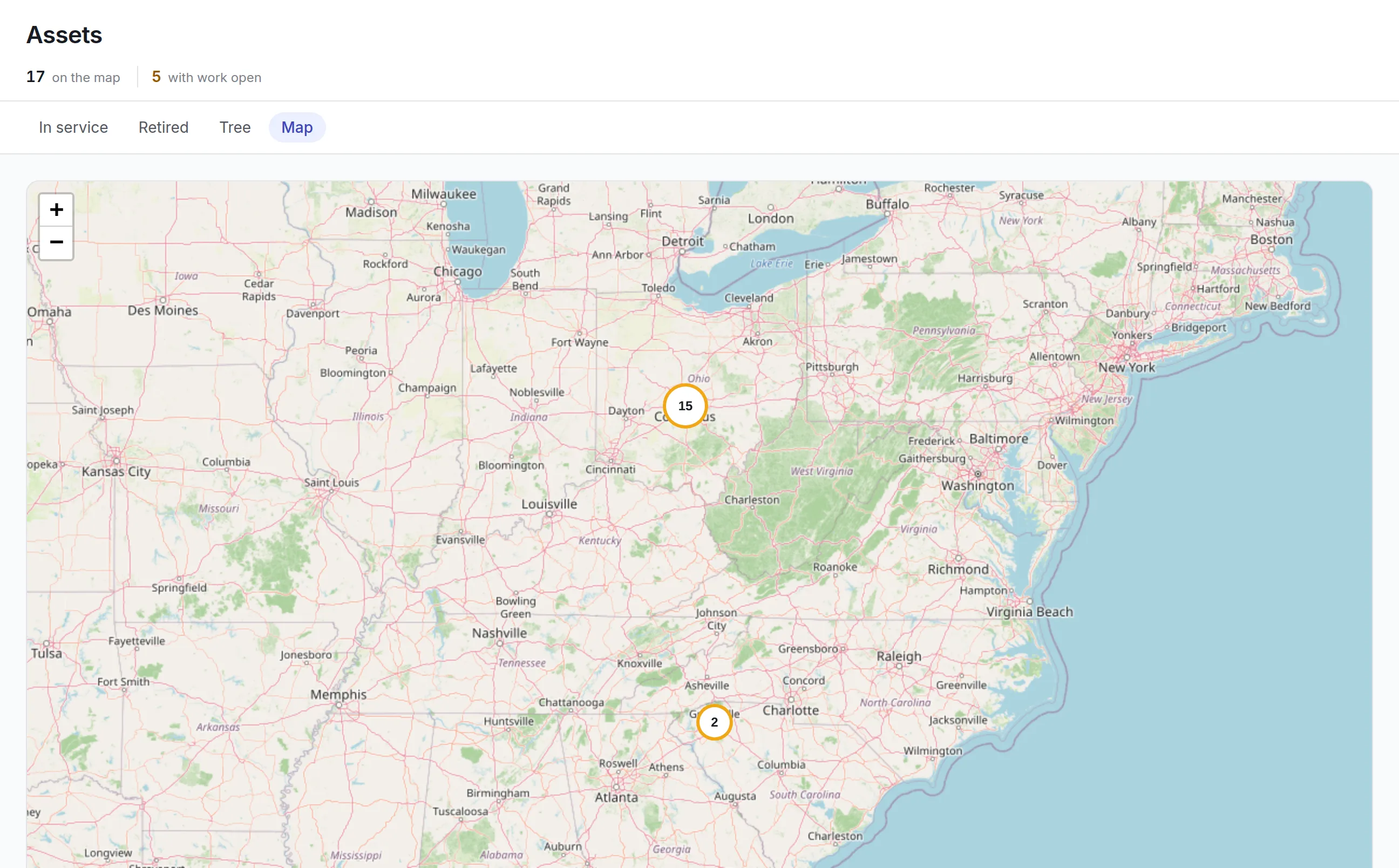
Every store in one register
Each store, distribution center or dark store is a site with its own floors and areas, from the sales floor to the stockroom and roof.
Store requests with a clock
Store managers report a fault from the web or by email. Response and resolution targets start at once, and escalations tell the people you choose when a job runs late.
HVAC and refrigeration on schedule
Rooftop units, air curtains and refrigerated cases fall due by date or run hours, with the checklist and readings each visit records.
Doors, shutters and gates
Roller shutters, automatic doors and EAS gates get their own plans and weekly tests, so a fault that leaves a store open to loss is found early.
Contractors held to terms
HVAC, escalator and security agreements show the assets they cover, the response times signed up to and when they renew.
Counts at every refit
Verification rounds count fixtures and equipment store by store, and show what was not found and what turned up unexpected.
What is retail facilities management software?
Retail facilities management software is a system a store facilities team uses to record every store and the equipment in it, take fault reports from store managers, schedule preventive maintenance for HVAC, refrigeration, doors and lighting, and hold contractors to the terms they signed. It shows open and overdue work across the whole estate in one place.
Retailers buy it when the estate outgrows a shared inbox and a spreadsheet. A chain of forty stores has forty sets of rooftop units, shutters, signs and registers, most of them serviced by contractors, and the head of facilities needs to know which store is waiting on whom, and why the same air curtain keeps failing.
How retail facilities management software works in Asset Infinity
Each store is a site with floors and areas: the sales floor, fitting rooms, cash desk, stockroom, loading bay, back office and roof. A distribution center, fulfillment center or dark store is a site too, with its dock doors, racking and charging areas. Every asset has one record that holds its jobs, parts, meters, contracts and cost.
From a store’s complaint to a closed job, the work runs like this:
The store reports it
The manager reports that the entrance air curtain is blowing cold, from the web or by email, under a category such as too hot or too cold, lights or window display, fixture or mannequin damaged, or registers and card terminals.
The clock starts
The request becomes a work order with a priority, and the priority sets the response and resolution times. A security equipment fault can be answered faster than a routine repair, and with escalations on, a late job tells the people you choose.
The right person takes it
The job goes to an in-house technician in the mobile app, which works in a stockroom with no signal and syncs later, or to the contractor named on the asset’s service agreement.
The fix is recorded
Parts used, time, cost and the cause go on the job, so the asset’s history shows the same fault if it comes back.
Waiting is a state of its own
A job waiting for a part shows that it is on hold and why, so a stopped escalator does not look like a forgotten one.
The store’s checks catch the next one
The store-opening check and weekly gate tests run as rounds on a phone. A failed critical item raises a corrective job on that asset.
Maintenance request software covers request intake, categories and response targets in detail.
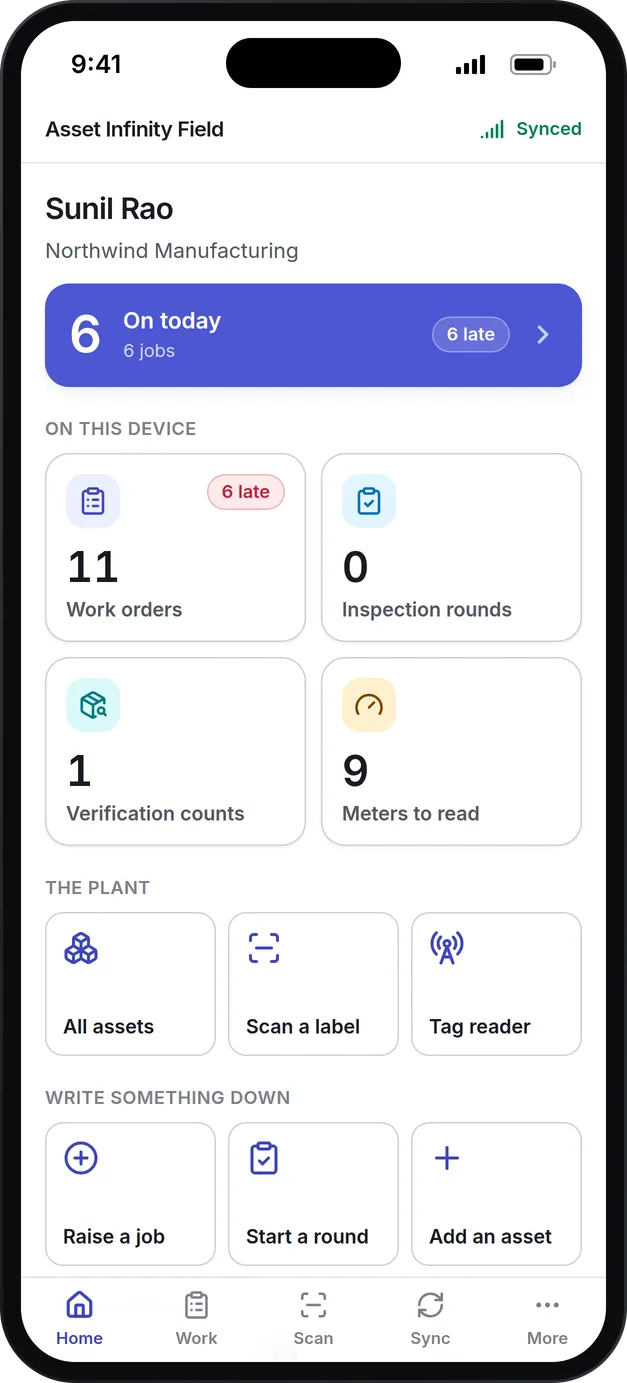
Store-opening checks and weekly tests on a phone
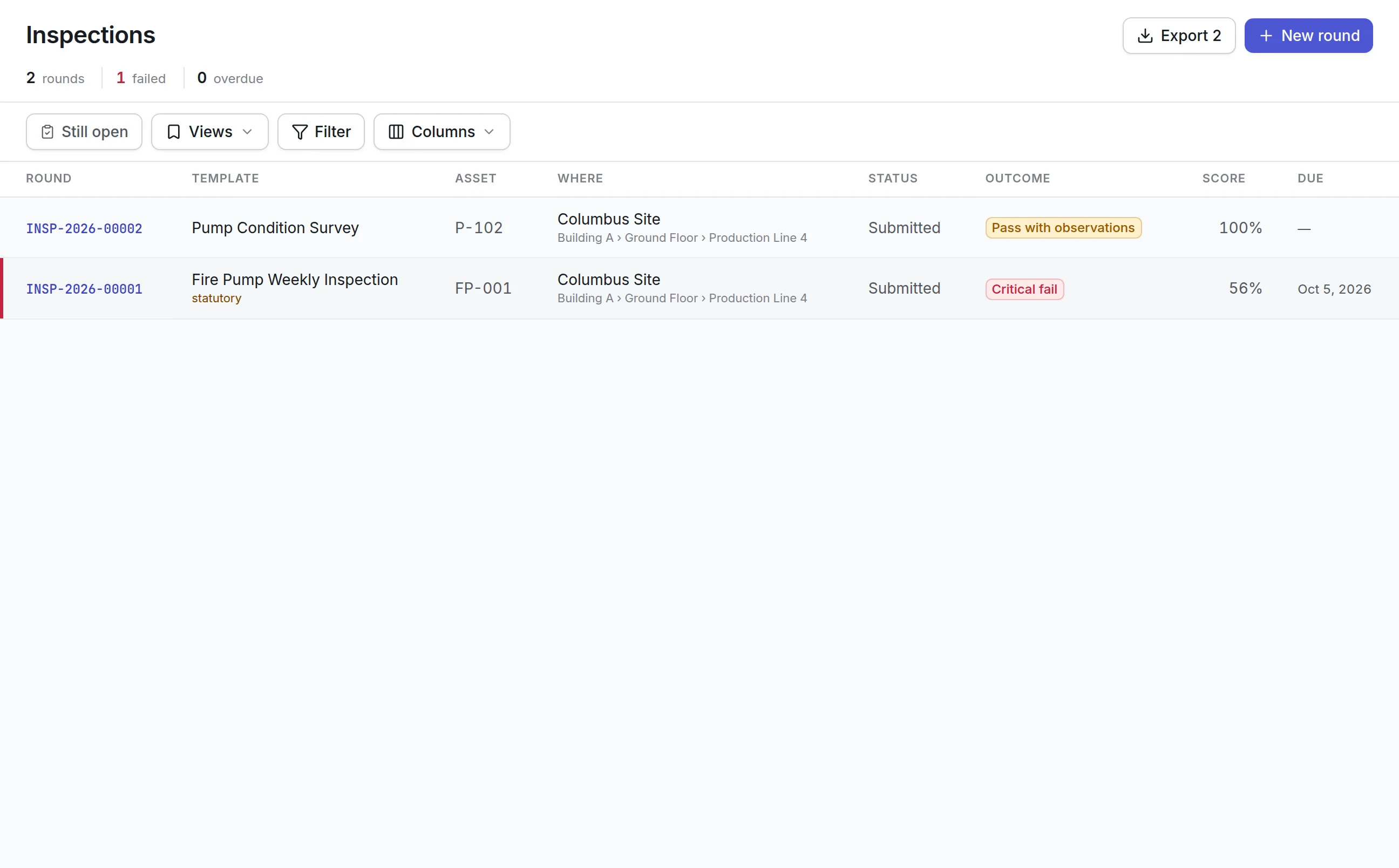
Most store faults are found by the people who open the doors. Asset Infinity turns those checks into graded inspection rounds, so the answer, the person who gave it and the time are recorded together, and a failure becomes a job instead of a note.
More detail
The retail trial opens with three of these checklists:
Critical items such as blocked fire exits or loose wall bays fail the round on their own. Asset Infinity keeps these records; it does not certify that a store complies with any code.
Planned maintenance for HVAC, refrigeration, doors and signs
Rooftop units run every trading hour, signs and window lighting sell before the door does, and a shutter that sticks half open is a store that cannot close. Each of these gets a plan that falls due by calendar or by meter reading, with preventive maintenance software raising the work orders and attaching the checklist. The retail trial includes these plans:
More detail
Rooftop units and the escalator carry run-hour meters, and a shopfront shutter counts its open and close cycles, so a plan can follow how hard a store actually works its equipment.
Refrigeration temperatures your team does not have to read
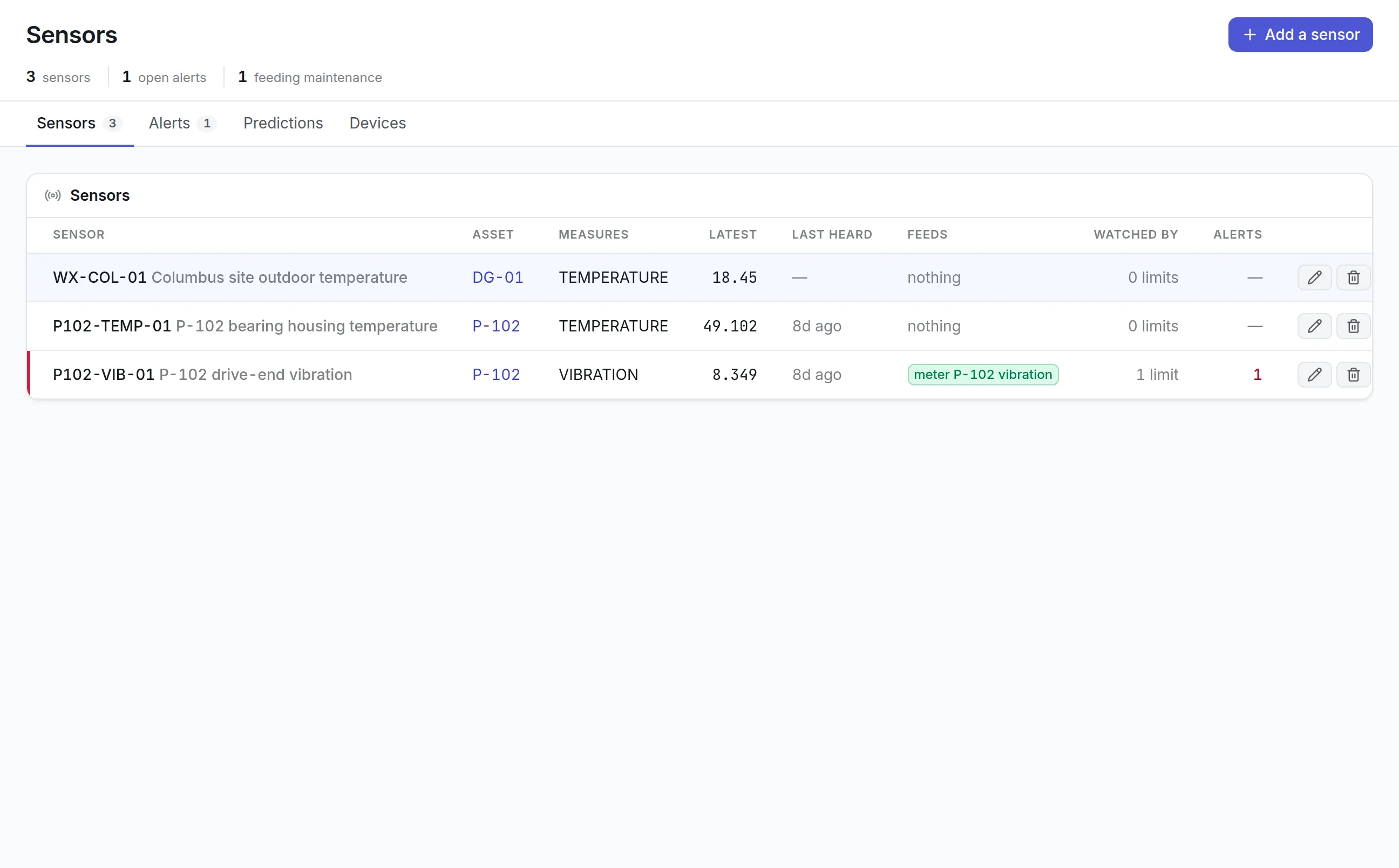
For a convenience store, grocery chain or dark store, refrigerated cases and walk-in coolers are the equipment that costs the most when it fails overnight. Readings can come from a round, or from a sensor bound to the asset.
- Reports readings on its own, with the latest value and when it was last heard from
- Watches each reading against limits you set, and opens an alert when one is crossed
- Keeps the alert open until the reading recovers, so acknowledging it does not hide it
- Writes through to the asset’s meter when it feeds maintenance, so plans on that meter come due
More detail
What a sensor does once it is connected:
Predictive maintenance software explains sensors, limits and alerts in more detail, and what a store needs to connect them.
Store-level asset tracking and counts at every refit
A retailer reconciles its fixtures and equipment whenever a store is refitted, closed or opened. The register holds every rooftop unit, sign, mannequin set, wall bay, CCTV recorder and till with its store, area, install date and cost, and labels make each one quick to find with a phone.
More detail
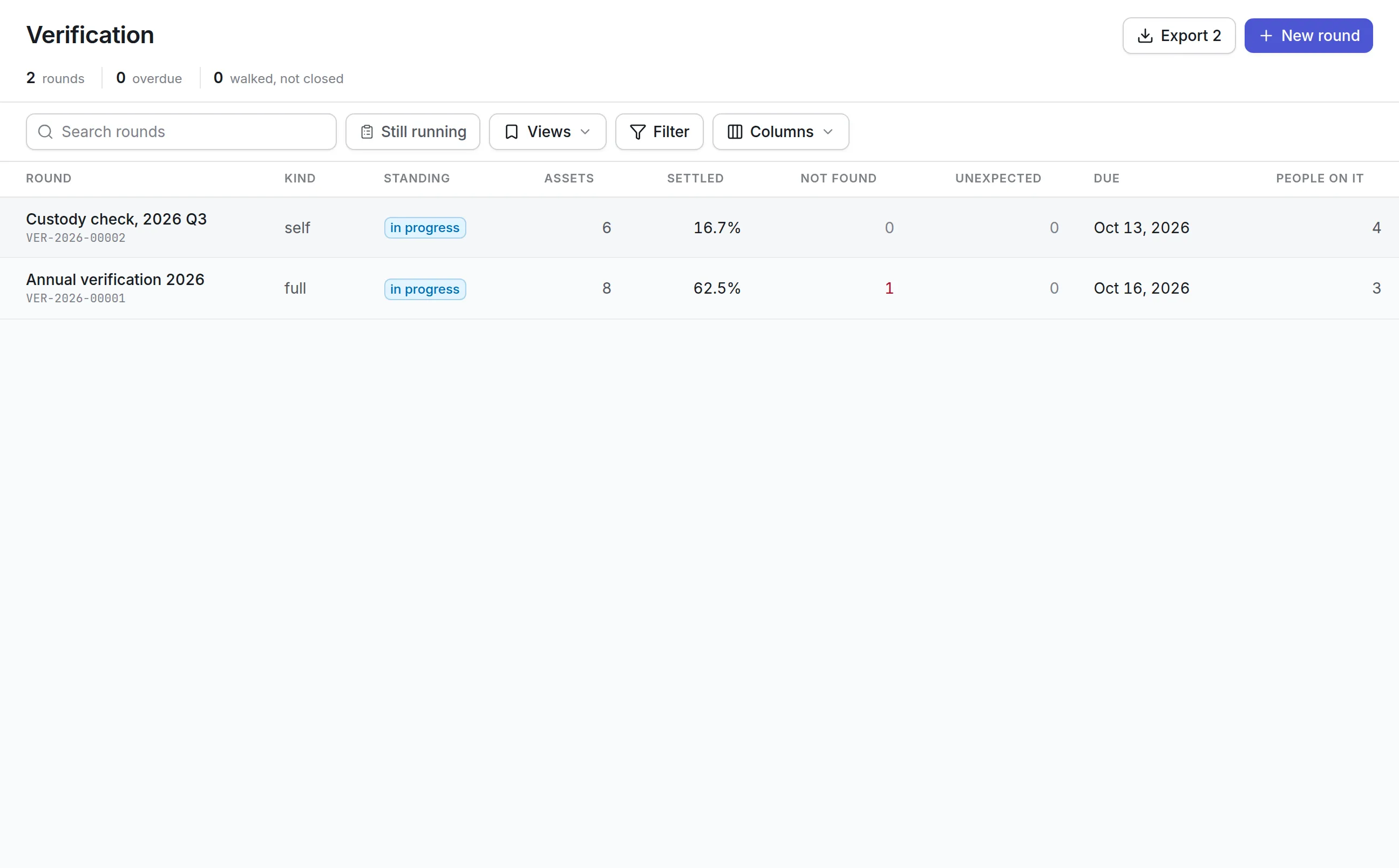
A verification round lists what each store should hold. The person walking it scans labels, and the round shows what is settled, what was not found and what turned up that the register did not expect. The asset inventory software page covers counts and labels in detail, and capital planning software covers the refit budget that follows.
Contractors, energy and the refit budget
Much of a store’s maintenance is done by contractors, so the agreements matter as much as the jobs. Each contract on the register names its vendor, the assets it covers, what it includes (labor, travel, parts), its value and the response and resolution times for each priority. The trial includes an escalator and freight elevator agreement, a rooftop HVAC agreement and EAS system support across every store. A lapsing agreement or a missed visit shows up before it costs you; see maintenance contract management.
Lighting and HVAC are a store’s largest utility load. Energy management records supply points, meters and tariffs, and the retail trial carries a lighting sub-meter so the first energy question has an answer. Energy management software covers findings and reduction targets.
What should you look for when choosing retail facilities management software?
- Stores as sitesFacilities teams think in stores, not buildingsIn Asset InfinityEach store, distribution center or dark store a site, renamed “store” if you like
- Requests from store teamsStore staff are not maintenance usersIn Asset InfinityWeb and email requests with retail categories
- Response clocks and escalationA broken shutter or gate leaves stock at riskIn Asset InfinityTargets per priority and category, with an escalation ladder
- PM by date and run hoursRooftop units and escalators wear by hoursIn Asset InfinityCalendar and meter triggers with checklists and readings
- Store checks on a phoneFaults are found at opening timeIn Asset InfinityGraded rounds that raise a job on a failed critical item
- Refrigeration monitoringA warm case overnight means lost stockIn Asset InfinitySensors with limits and alerts, or readings on a round
- Contractor agreementsMost store work is contracted outIn Asset InfinityCoverage, included costs, response times and renewal per contract
- Asset countsRefits and closures need a reconciled listIn Asset InfinityVerification rounds with not found and unexpected assets
- Estate-wide viewOne team looks after every storeIn Asset InfinityOpen and overdue work for one store or all of them
- Offline mobile appStockrooms and roofs have poor signalIn Asset InfinityiOS and Android app that syncs when back in range
See it on your own assets, or price it in two minutes.
Retail facilities management software by store type
Apparel and department stores
A clothing or department store runs requests for temperature, lighting and fixtures, a quarterly HVAC plan, monthly sign checks and weekly EAS gate tests. Escalators and freight elevators sit on a contractor’s agreement with their own response times. A two-floor flagship and a single-floor mall store use the same plans, with each store’s assets in its own place.
Grocery and convenience chains
Refrigerated cases, walk-in coolers and ice machines carry their own plans, and sensors watch temperatures between visits. Automatic doors, air curtains and rooftop units follow the same schedule as the cooling. The store manager raises a request when a case runs warm, and the refrigeration contractor’s agreement sets how fast someone comes.
Distribution and fulfillment centers
A distribution center is a site with dock doors, levelers, racking, conveyors and battery charging. Dock doors run on cycle counts, racking gets a regular inspection round, and forklifts can carry their own run-hour meters and plans. The same team sees the stores it supplies on the same screen.
Dark stores and micro-fulfillment sites
A dark store has no shoppers but the same refrigeration, shelving and doors as a shop, and often no facilities staff on site. Requests come from the shift lead by email, sensors watch the coolers, and contractors are dispatched against their agreements, so the site keeps picking orders.
What retail facilities management software costs with Asset Infinity
The asset register starts at $130 a month for up to 500 assets, with unlimited users, so every store manager can report a fault. Maintenance is $25 per user per month for the people who do the work. Add-ons a retailer typically adds are flat per organization:
- Maintenance requests, $75 a month
- Escalations, $75 a month
- Contracts, $100 a month
- Energy and utilities, $150 a month
- Capital planning, $200 a month
Build a quote for your estate. The retail trial opens with a two-floor flagship store and two smaller stores already loaded: rooftop units, an air curtain, signs, window lighting, wall bays, mannequins, EAS gates, CCTV, roller shutters, registers, an escalator and a freight elevator, with the plans and checklists above, three contractor agreements and eight weeks of sample history.
Getting started
- Import your stores and their assets, one region first, and print labels for the equipment each store holds.
- Set request categories and response times so store managers know what to expect.
- Load the plans that protect trading first: rooftop units, refrigeration, shutters, doors and gates.
- Put the store-opening check on a phone in each store, and give technicians the mobile app.
To see it with your own estate, book a demo.
What teams in this industry use most
Common questions
What is retail facilities management software?
Retail facilities management software records every store and the equipment in it, takes fault reports from store teams, schedules preventive maintenance and tracks the contractors who do much of the work. It gives a facilities team one view of open and overdue work across the whole estate.
Can store managers report problems without training?
Yes. A store manager reports a fault from the web or by email and chooses a category such as too hot or too cold, lights or window display, or registers and card terminals. Technicians can also scan a label on the asset in the mobile app to raise a job on the spot.
Does it work for distribution centers and dark stores as well as shops?
Yes. Each building is a site with its own locations, assets and plans, so a fulfillment center's dock doors and racking sit in the same register as a store's rooftop units.
Can it monitor refrigeration temperatures?
Yes. Temperatures can be recorded as readings on an inspection round, or a sensor bound to the asset reports them on its own and raises an alert when a reading crosses its limit.
Can we call our sites stores?
Yes. The retail trial already renames sites to stores, and any organization can change what things are called on the Localization screen.
How much does retail facilities management software cost?
Asset Infinity's asset register starts at $130 a month for up to 500 assets with unlimited users, and maintenance is $25 per user per month. Add-ons such as maintenance requests and escalations are flat monthly prices.
See it with your own assets
A demo run on an example from your industry. Or start the trial and look around on your own.