






Automotive manufacturing maintenance software that keeps the line moving
Our automotive manufacturing maintenance software services presses and welding robots on the hours and strokes they run. A stopped station is answered against its own clock, and shutdown work is checked against the window before the line goes down.
- IATF 16949 (automotive quality management, including total productive maintenance)
- OSHA 29 CFR 1910.147 (lockout/tagout)
- OSHA 29 CFR 1910.217 (mechanical power presses)
- ANSI/RIA R15.06 (industrial robot safety)
- NFPA 33 (spray application using flammable materials)
- OSHA 29 CFR 1910.178 (powered industrial trucks)
What our automotive manufacturing maintenance software does in press, body, paint and assembly
A stopped line comes first
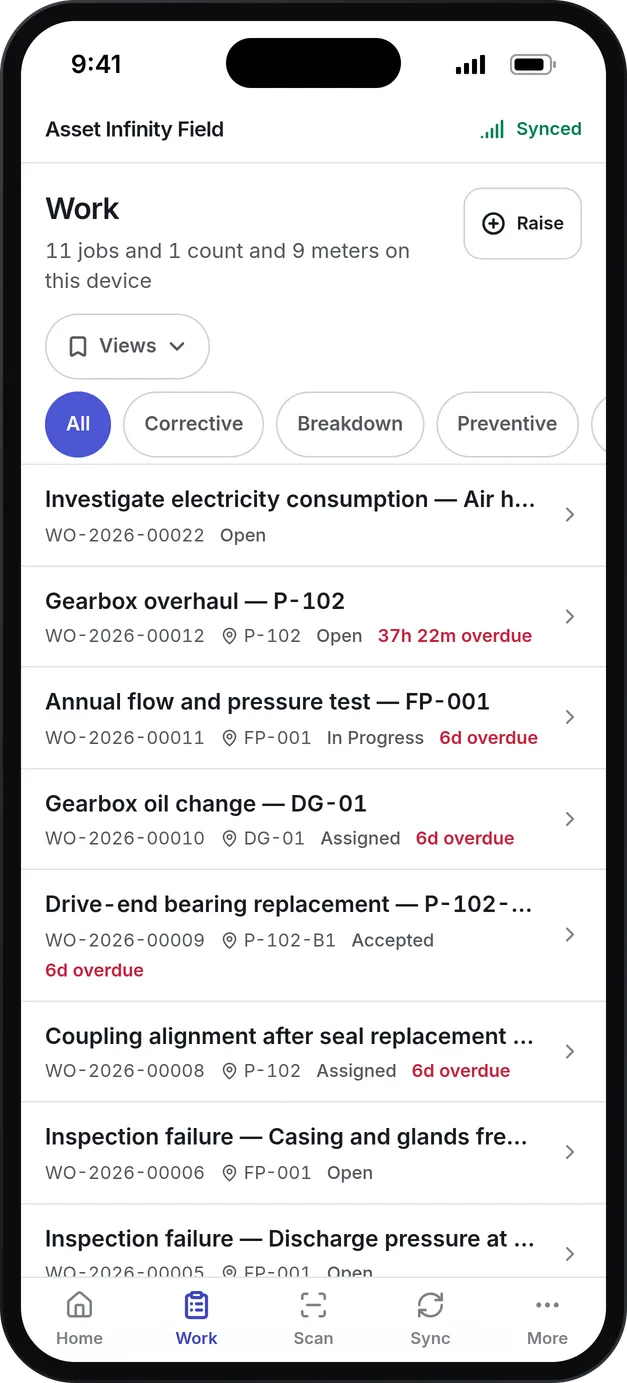
Operators raise a request as "Line or station stopped", and a line-stopping breakdown carries its own response and resolution targets. Escalations tell the people you choose when a job runs late.
Robots and presses on their hours
Plans fall due on run hours or stroke counts read from each machine's meters, so a welding robot's 5,000-hour service comes up when the robot has worked 5,000 hours.
Torque tools in calibration
Nutrunners and click wrenches carry a calibration due date and status. The calibration job records as-found and as-left torque and keeps the certificate.
Lockout on presses and booths
Permits to work record each isolation before work on a press or inside a paint booth, and a lockout audit checks the procedure at the machine.
Shutdowns that fit the window
Summer and holiday shutdown work is packaged with its readiness and critical path, so a package that will not fit the window shows up weeks before it starts.
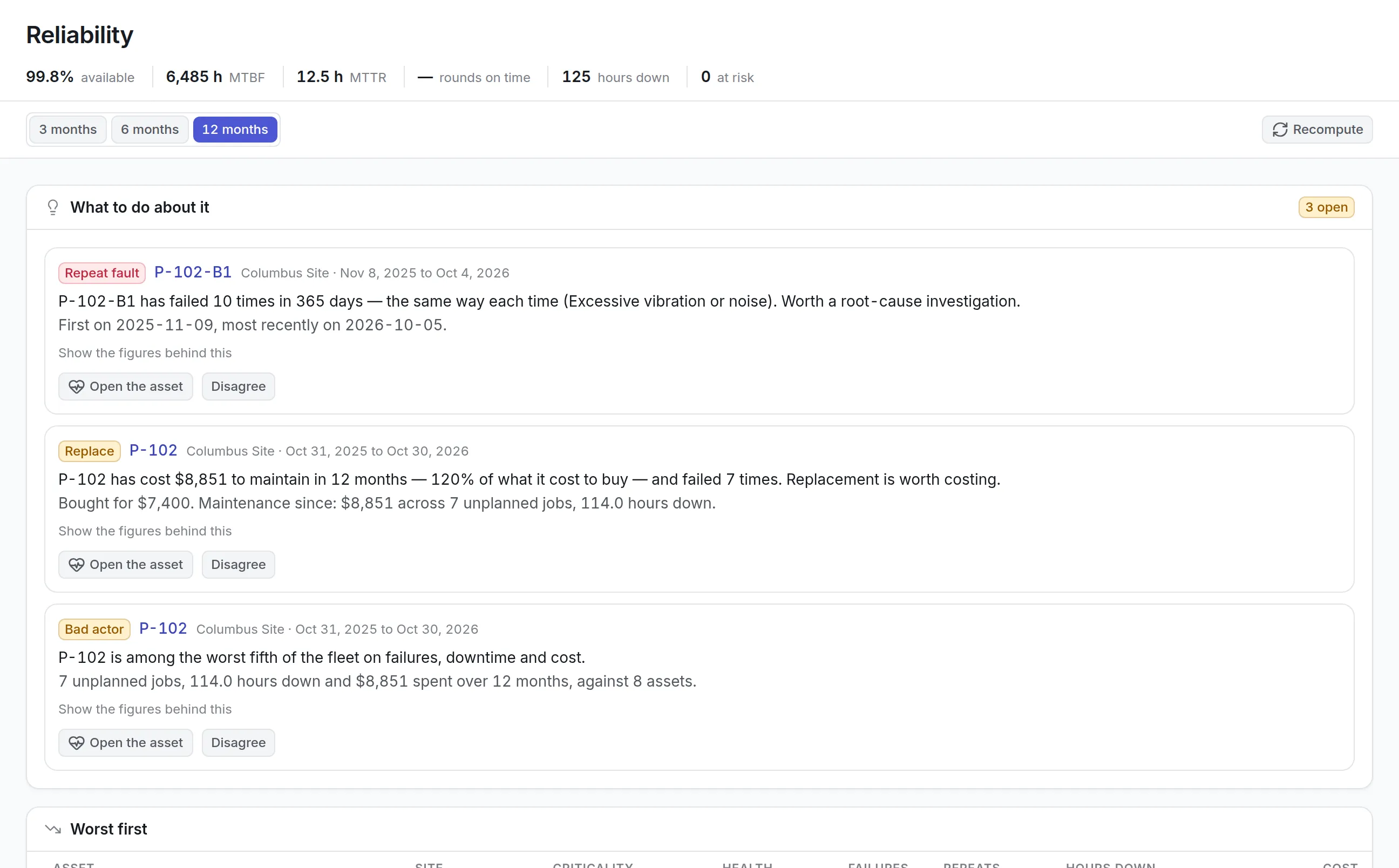
Why the robot stopped
Breakdowns close with what failed and how it was fixed. Root cause analysis tracks the corrective action until it is shown to have worked.
What is automotive manufacturing maintenance software?
Automotive manufacturing maintenance software is a system that plans, records and measures the maintenance of the equipment in a vehicle or parts plant: stamping presses, spot-welding robots, paint booths and ovens, assembly conveyors, compressors and the torque tools on the line. It services machines on the hours and strokes they run, answers line stoppages first and keeps the calibration and lockout records auditors ask for.
Car plants and their suppliers buy it because a line runs to a takt time. When one robot in the body shop stops, every station behind it waits, and the question at the end of the shift is always the same: how long were we down, why, and will it happen again. Spreadsheets and paper cards answer the first part. They rarely answer the other two.
An automotive plant also maintains things a general plant does not: transfer presses counted in millions of strokes, robot dress packs that wear against their own retainers, paint booths whose filters and airflow decide finish quality, and DC nutrunners whose torque is a quality record in itself. If your plant runs mainly CNC machines, molding and utilities, our page on manufacturing maintenance software is the better fit.
How automotive manufacturing maintenance software works in Asset Infinity
The automotive trial calls a site a plant and an asset equipment, because that is what plant engineers say, and sets the plant out the way it runs: shops for press, body, paint, assembly and utilities, then lines, then stations. A breakdown at station 10 on the underbody line is recorded against that station’s robot, not against “Building A”.
From a stopped station to a fix that holds, the work runs like this:
The line reports it
A team leader raises a request under “Line or station stopped”, “Equipment causing a quality defect” or “Air, oil or coolant leak”. Requests can come from the web or by email, and a technician can scan the machine’s label in the mobile app.
The clock starts
A critical line-stopping breakdown is answered in 15 minutes and resolved in 4 hours on the trial’s targets; a high-priority robot fault in 30 minutes and 8 hours. With escalations on, a late job tells the people you choose.
The right people go
The job reaches a maintenance technician or electrician on the phone, offline if the body shop has dead spots. If the robot is under an OEM support agreement, the contract and its own response times sit on the equipment record.
The fix is recorded
Parts, labor, the vendor’s time and the cause are written on the job. A chafed encoder cable at axis 4 is recorded as that, with the time the line was down.
The cause is chased
A repeat failure opens a root cause investigation, and its actions are verified and later reviewed to see whether they worked.
The prevention is scheduled
The robot’s next service falls due on its run hours, and the start-of-shift line check picks up the next worn tip cap before it becomes a stop.
Planned maintenance on hours, strokes and shifts
Automotive equipment wears by use, so most of its plans run on meters. Each press, robot and compressor can carry run-hour and cycle meters, read on the phone or fed by a sensor, and preventive maintenance software raises the job when a meter reaches its interval. The automotive trial opens with these plans and their checklists:
More detail
A step with a unit asks for a reading and the range it should fall in, so a clutch air pressure of 5.2 bar is recorded as out of range rather than ticked as done. Compressors also carry energy and free air delivered meters, which is how an energy engineer spots a leak growing in the compressed air system. Predictive maintenance software covers sensors, limits and condition triggers.
Torque tools and calibration records
On an assembly line, a nutrunner on wheel nuts or seat bolts is a quality control. If its torque drifts, every car it touched since the last good calibration is in question, so the calibration record matters as much as the tool.
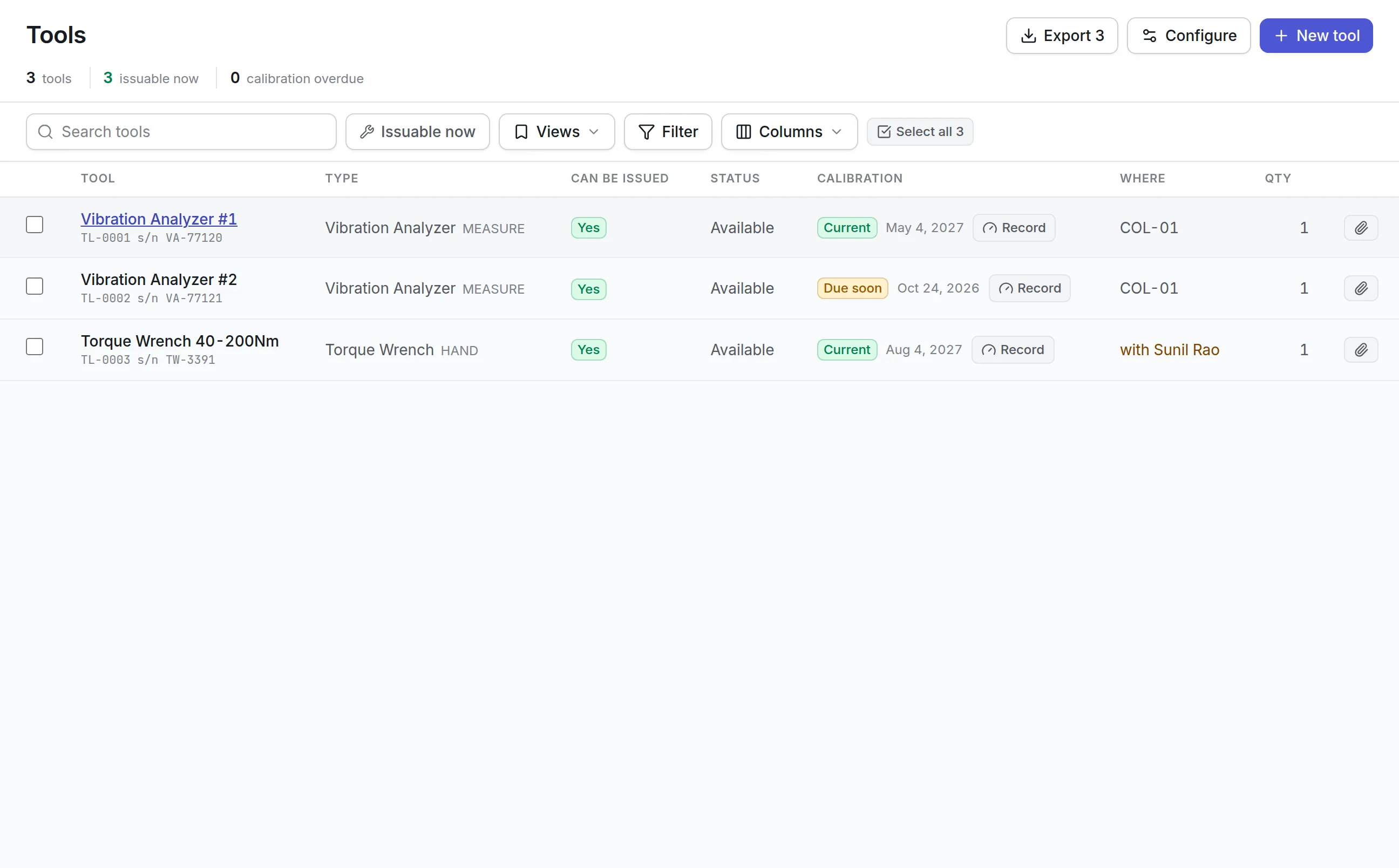
- Keep each torque tool’s type, serial number, location and calibration due date
- See at the top of the list how many tools are issuable and how many are overdue for calibration
- Record a calibration from the list, and know who holds a hand tool on loan
- Raise the semiannual calibration job from a plan with its own steps: as-found torque at 20, 60 and 100 percent of range, adjustment if any point is outside plus or minus 3 percent, as-left torque, label and certificate
More detail
With tool tracking software a plant can:
Start-of-shift checks and lockout audits
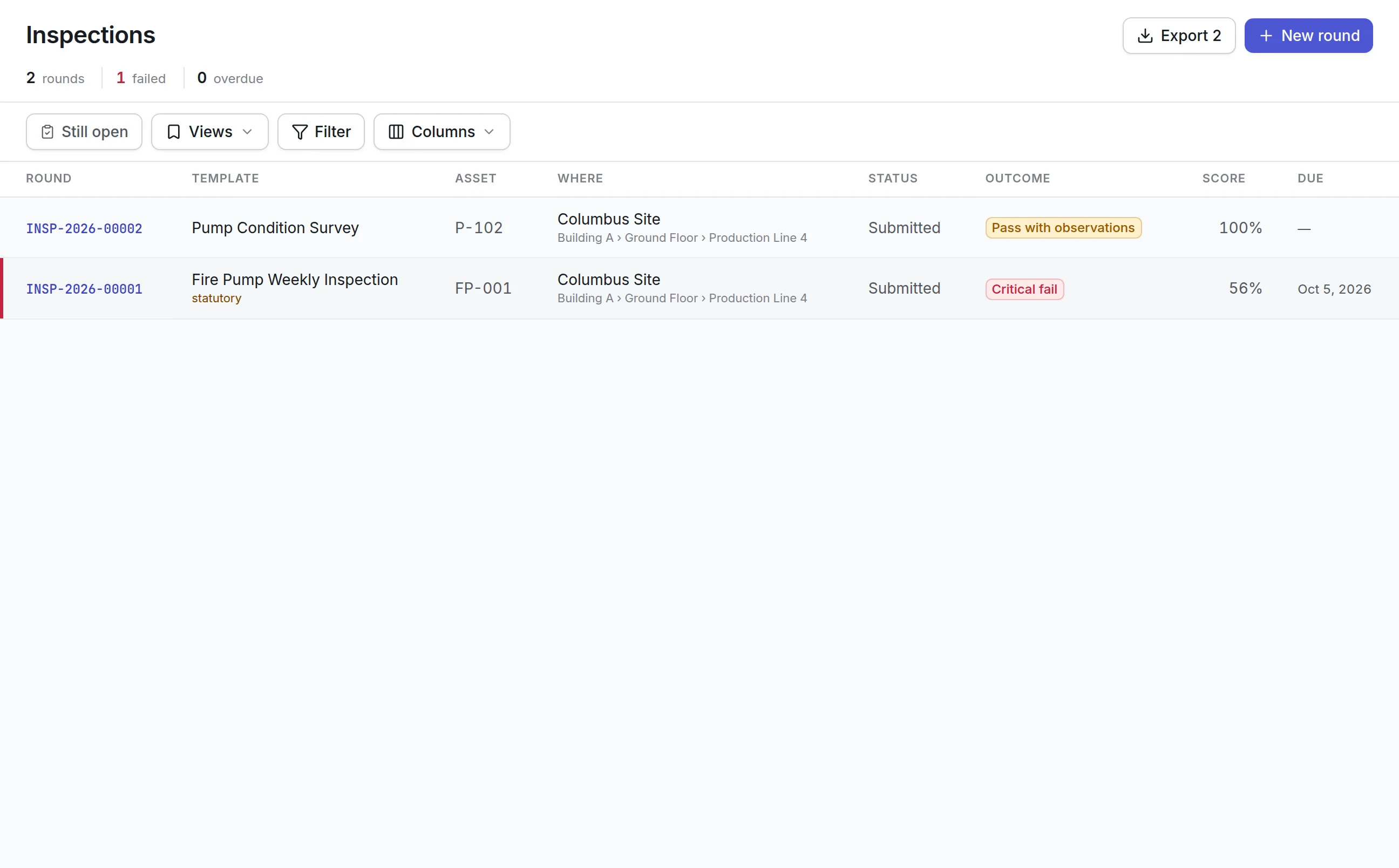
TPM depends on small checks done every shift by the people closest to the line. In Asset Infinity those checks are inspection rounds on the phone, graded as they are filled in, with critical items that fail the round on their own.
More detail
The automotive trial includes three inspection templates:
A failed critical check raises a corrective job, so a forklift with a dead reverse alarm is on a technician’s list before the next shift takes it. Permits to work record each isolation and both signatures, and a job that needs a permit cannot start until one is in force. See lockout tagout software. Asset Infinity keeps these records; it does not certify compliance with OSHA or any other standard.
Robot and compressor contracts with their own response times
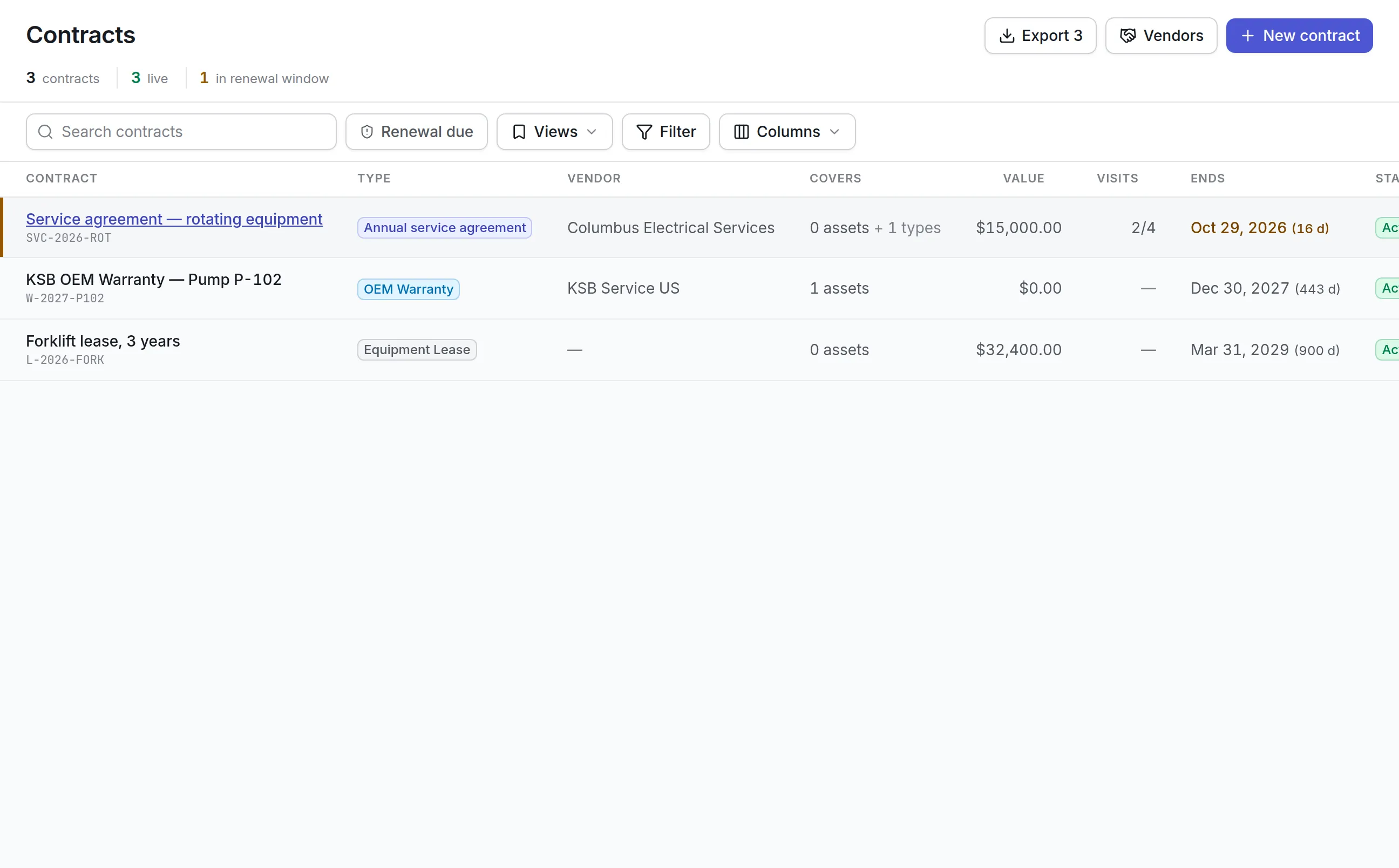
Most car plants keep robot makers, press specialists and compressor firms on contract. The contract register holds what each agreement covers, its value, its visits and when it ends, and flags the ones in their renewal window.
More detail
In the automotive trial, the robot support agreement covers the four body shop robots with a 1-hour response and 8-hour resolution for critical faults, the compressed air contract covers every hour-based service on both compressors, and the forklifts are rented with servicing included. A breakdown on a covered robot can then be held to the response time the contract promised. Maintenance contract management covers coverage, visits and renewals in detail.
What should you look for when choosing automotive manufacturing maintenance software?
A car plant needs more than a work order list. These are the capabilities that decide uptime and audit readiness on a line that runs to takt.
- Plant, shop, line and stationA stop is reported at a station, not a buildingIn Asset InfinityShop, line and station locations, set out that way in the automotive trial
- Meter-based PMPresses and robots wear by strokes and hoursIn Asset InfinityRun-hour and cycle meters, read on the phone or fed by sensors
- Line-stop response targetsA stopped line costs more per minute than anything elseIn Asset InfinityResponse and resolution targets by priority, type and category, with escalation
- Autonomous maintenance checklistsTPM puts daily checks on the lineIn Asset InfinityDaily task lists with readings against limits
- Torque tool calibrationTorque is a quality recordIn Asset InfinityCalibration status, due dates and certificates per tool
- Lockout and permitsPresses and booths store dangerous energyIn Asset InfinityPermits with isolations and signatures, plus lockout audits
- Shutdown planningBig press and paint work waits for a fixed windowIn Asset InfinityWork packages with readiness and critical path against the window
- Reliability and root causeA repeat robot fault costs more than one-off breakdownsIn Asset InfinityMTBF, MTTR, availability and investigations with verified actions
- Spare partsA missing weld cap stops a stationIn Asset InfinityStock by storeroom, reorder points and purchase requests
- Offline mobile appBody shops have dead spotsIn Asset InfinityiOS and Android app that syncs when back in range
See it on your own assets, or price it in two minutes.
Automotive manufacturing maintenance software by shop
Each shop starts from the same product and uses the parts its work needs.
Press shop
Transfer and blanking presses run on run-hour and stroke meters, with a daily autonomous checklist and a long service on the hour count. The big service is booked into a planned shutdown, where readiness shows which parts, permits and contractors are still missing. Coil and die handling forklifts carry their pre-use check, and every press job that needs isolation waits for a permit.
Body shop
Spot-welding robots get a 5,000-hour service and a start-of-shift check on tip caps and guards. A robot fault has its own response target, and the OEM support agreement sits on each robot. Weld tip caps, tip dresser cutters and dress-pack sets are stocked with reorder points through parts inventory management, because each one has stopped a station before.
Paint shop
The topcoat booth and curing oven run on calendar plans for ceiling filter changes and airflow checks, with the downdraft speed recorded on the job. Work inside a booth can require a permit. Booth filters are expensive and slow to arrive, so their stock levels matter as much as any robot spare.
Assembly and utilities
Trim line conveyors are lubricated weekly with chain slack recorded, and nutrunners at wheel and seat stations are calibrated every six months. Compressors run on 2,000-hour services under contract, and the cooling tower carries monthly water treatment checks. Operators raise line requests without seeing the whole work order list.
What automotive maintenance software costs with Asset Infinity
The asset register starts at $130 a month for up to 500 assets, with unlimited users. Maintenance is $25 per user per month and parts and stock is $20 per user per month. The add-ons an automotive plant usually takes are flat per organization:
- Reliability and root cause, $150 a month
- Permits to work, $100 a month
- Tools and calibration, $75 a month
- Reordering, $75 a month
- Contracts, $100 a month
- Escalations, $75 a month
Sensors come from the Asset Infinity store. Build a quote for your own plant.
Getting started with the automotive trial
The automotive trial opens with a main plant and a separate stamping plant, two presses, four welding robots, two conveyors, a paint booth and oven, two compressors, a cooling tower, four torque tools and three forklifts already loaded. It includes the plans and inspection templates above, a robot OEM support agreement, a compressed air service contract, a forklift rental and eight weeks of history, including a robot breakdown with its line downtime and a press service booked into next month’s shutdown. Reliability, root cause analysis, shutdowns, reordering, tools, permits, sensors and purchasing are switched on.
When you move to your own plant, most teams start with one shop:
- Import the equipment for that shop by line and station, and print labels.
- Add the meters on presses and robots and load the hour-based services.
- Set the line-stop targets and request categories for team leaders.
- Load the torque tools with their calibration dates.
Then add the next shop. To see it with your own lines and equipment first, book a demo.
What teams in this industry use most
Common questions
What is automotive manufacturing maintenance software?
Automotive manufacturing maintenance software plans and records the maintenance of the equipment in a car or parts plant, from presses and welding robots to paint booths, conveyors, compressors and torque tools. It schedules preventive work by hours, strokes or calendar, answers line stoppages against response targets and keeps calibration and lockout records.
Can preventive maintenance follow robot run hours and press strokes?
Yes. Each machine can carry run-hour and cycle meters, read on the phone or fed by a sensor, and a plan falls due when the meter reaches its interval, such as every 5,000 hours on a welding robot or 10,000 hours on a transfer press.
Does it support IATF 16949 and TPM?
Asset Infinity keeps the maintenance records an IATF 16949 audit asks about, including planned and predictive maintenance, daily autonomous maintenance checklists, downtime and spare parts. It does not certify that a plant complies with IATF 16949 or any other standard.
Can it track torque tool calibration?
Yes. Torque tools have a calibration due date and status, and a calibration plan raises a job every six months with steps for as-found and as-left torque. The certificate is attached to the record.
Can we call assets "equipment" and sites "plants"?
Yes. The automotive trial already does, and any organization can change what things are called on the Localization screen.
How much does automotive maintenance software cost?
The asset register starts at $130 a month for up to 500 assets with unlimited users, and maintenance is $25 per user per month. Plant add-ons such as reliability and root cause or permits to work are flat monthly prices.
See it with your own assets
A demo run on an example from your industry. Or start the trial and look around on your own.