

Warehouse maintenance software that keeps trucks moving and doors open
Our warehouse maintenance software services every forklift by its hour meter and puts a broken dock door on the board with its clock running. Racking walks, pre-use checks and sorter service are recorded where an auditor can find them.
- OSHA 29 CFR 1910.178 (powered industrial trucks)
- OSHA 29 CFR 1910.147 (lockout/tagout)
- ANSI MH16.1 (industrial steel storage racks)
- ANSI MH30.1 (dock leveling devices)
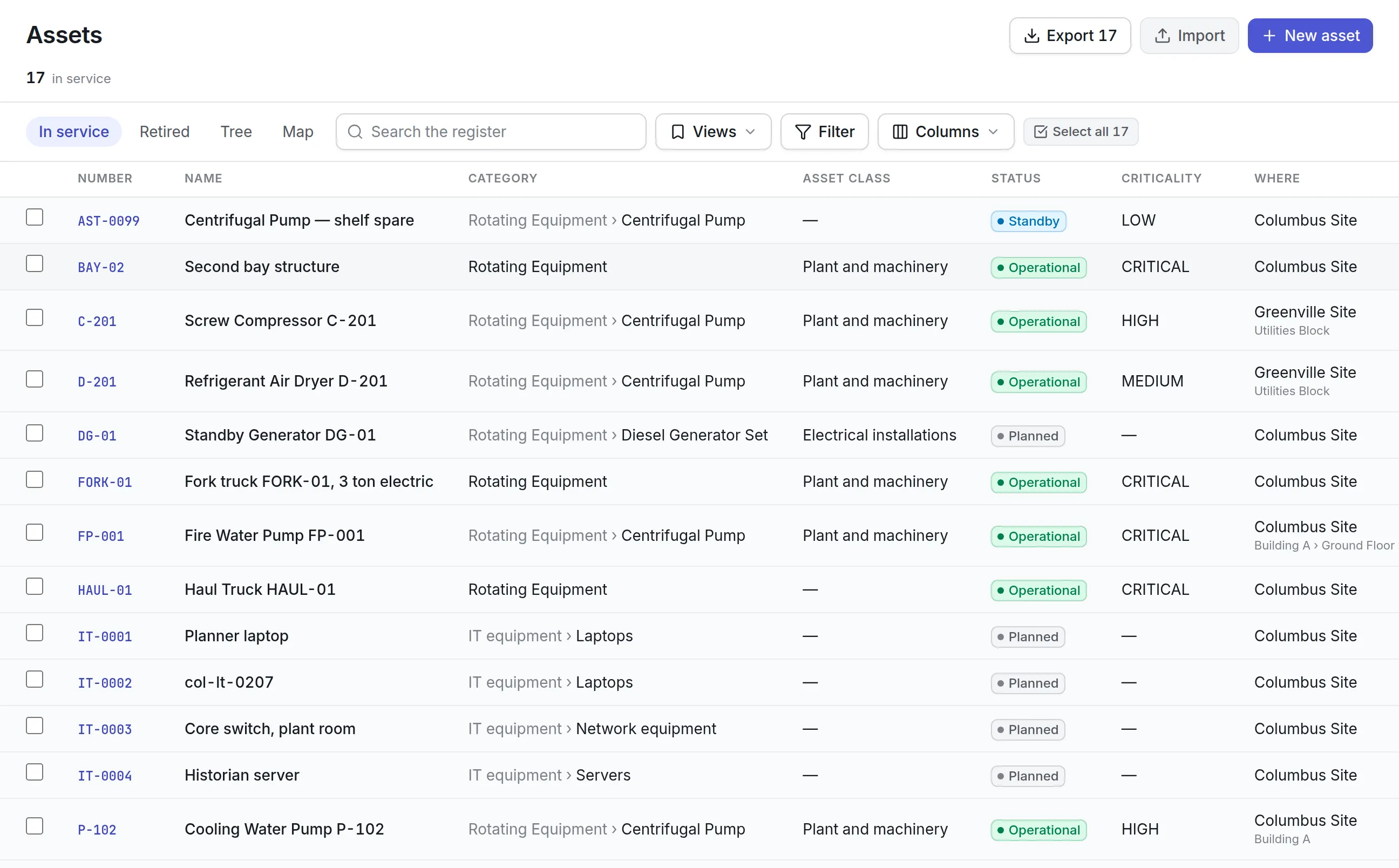
What our warehouse maintenance software does on the warehouse floor
Trucks serviced by hours
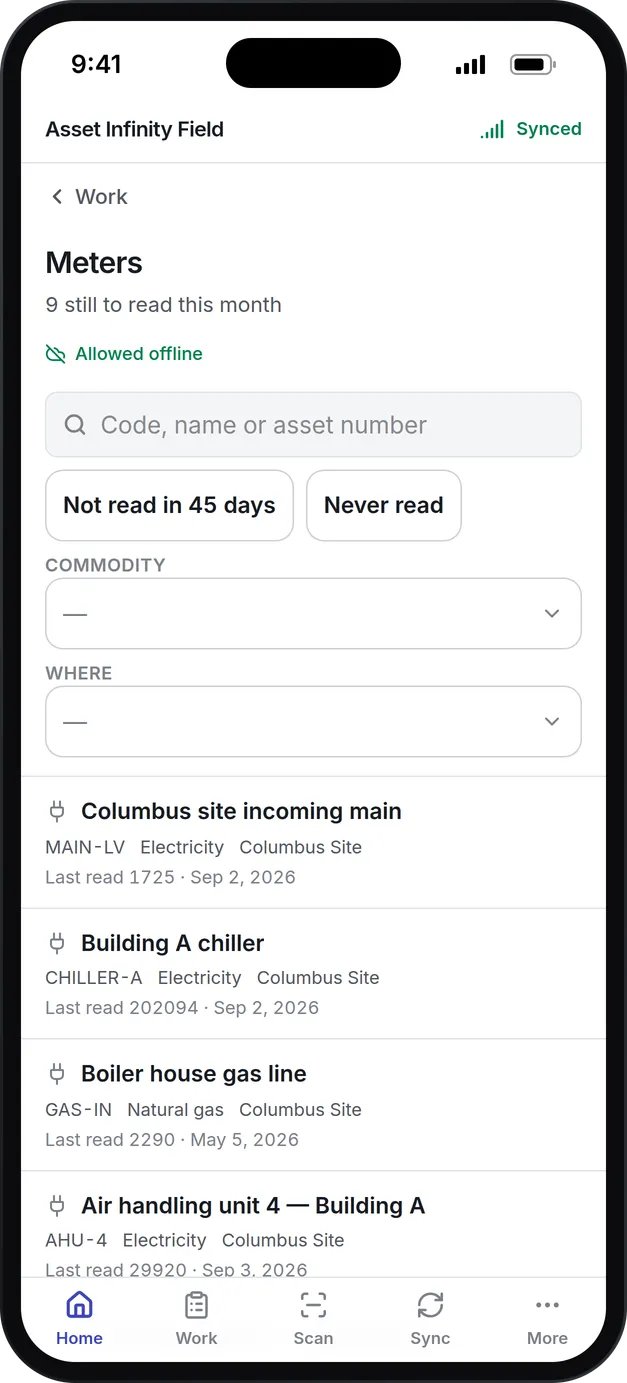
Forklifts, reach trucks and yard tractors fall due by their hour meters, read on the phone or fed by a tracker. Each service raises its own work order with its checklist.
Dock doors with a clock
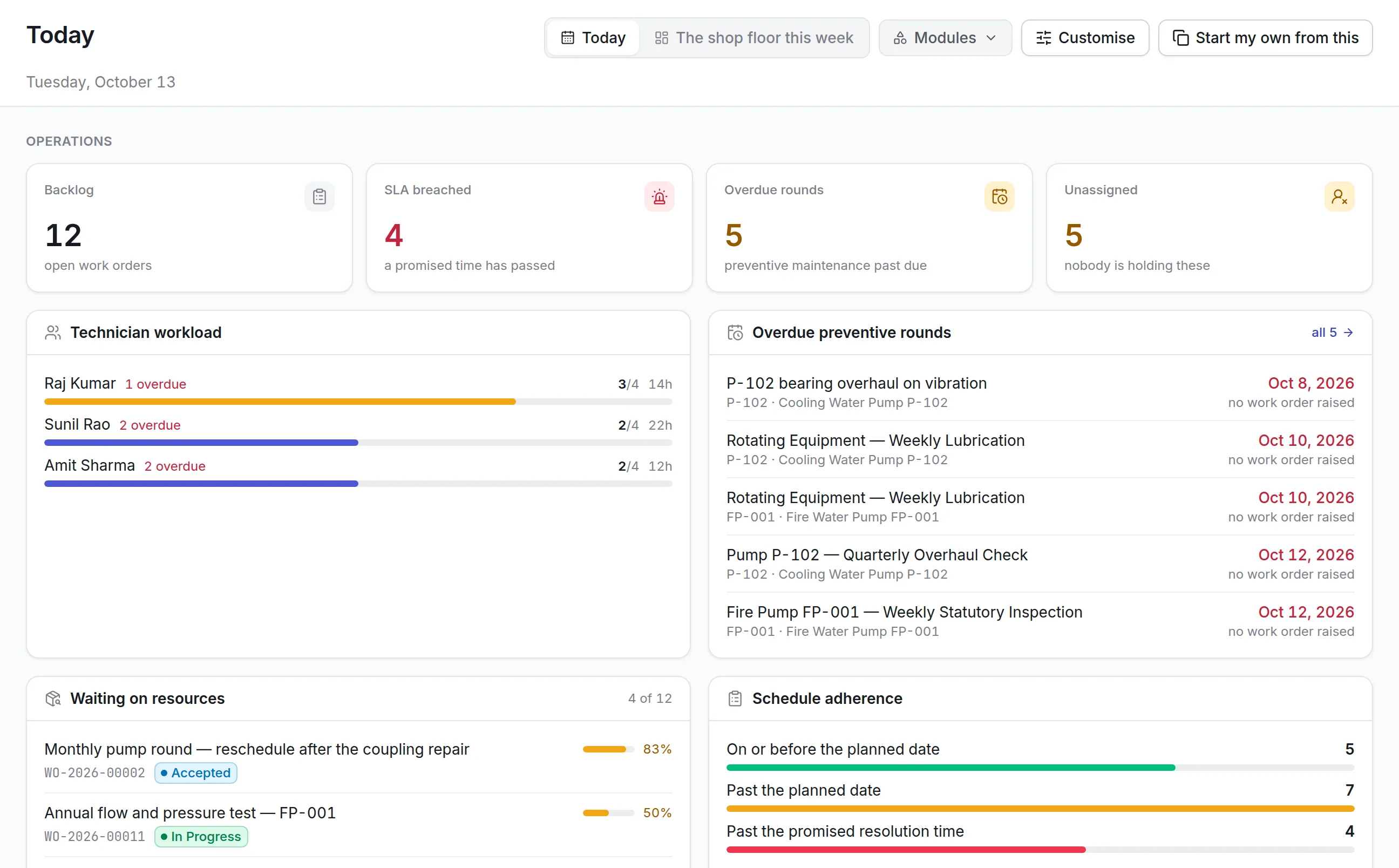
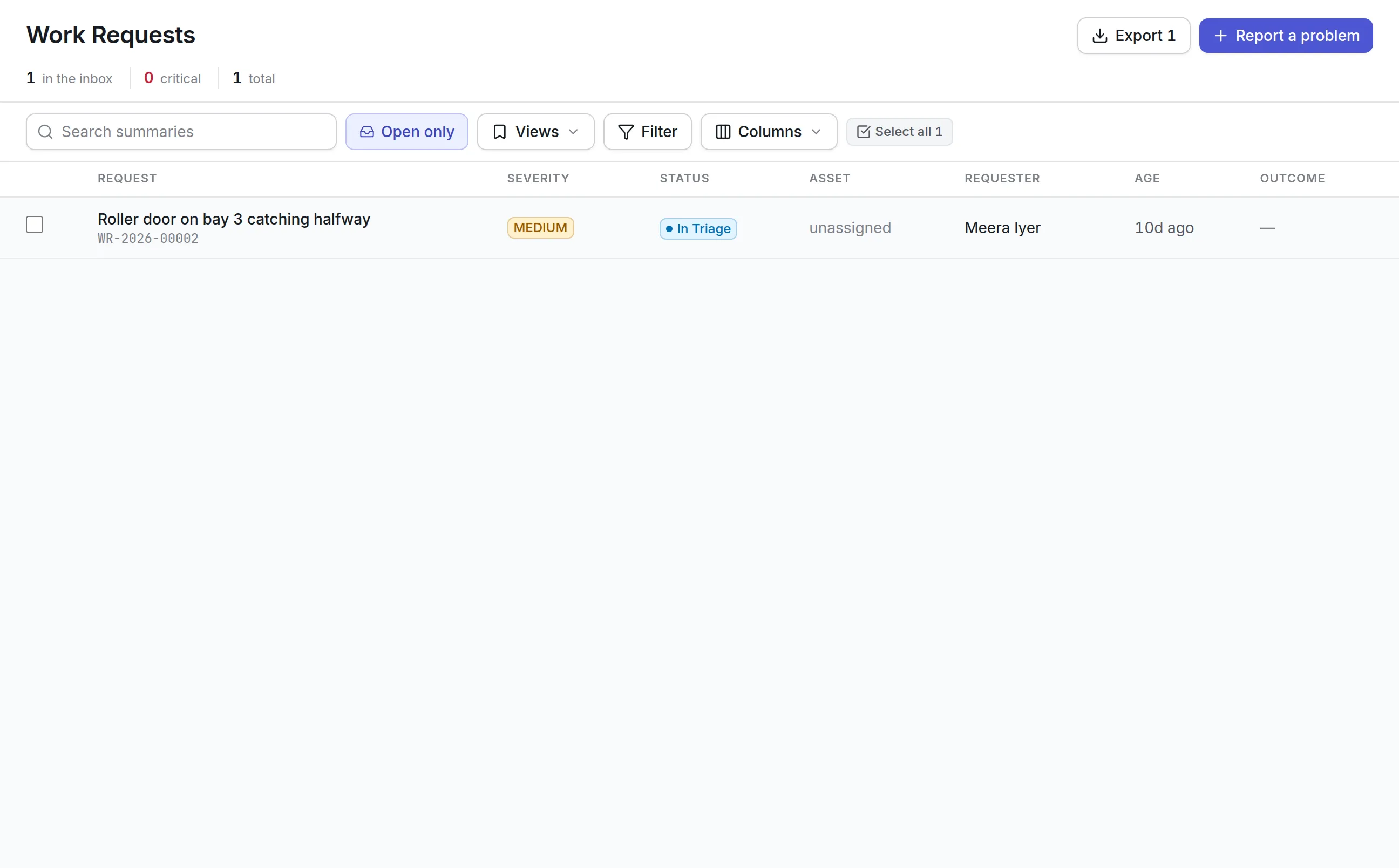
A door that will not close or a leveler lip that will not extend is reported against its dock. The priority sets the response and resolution times, and late jobs escalate.
Racking walks on record
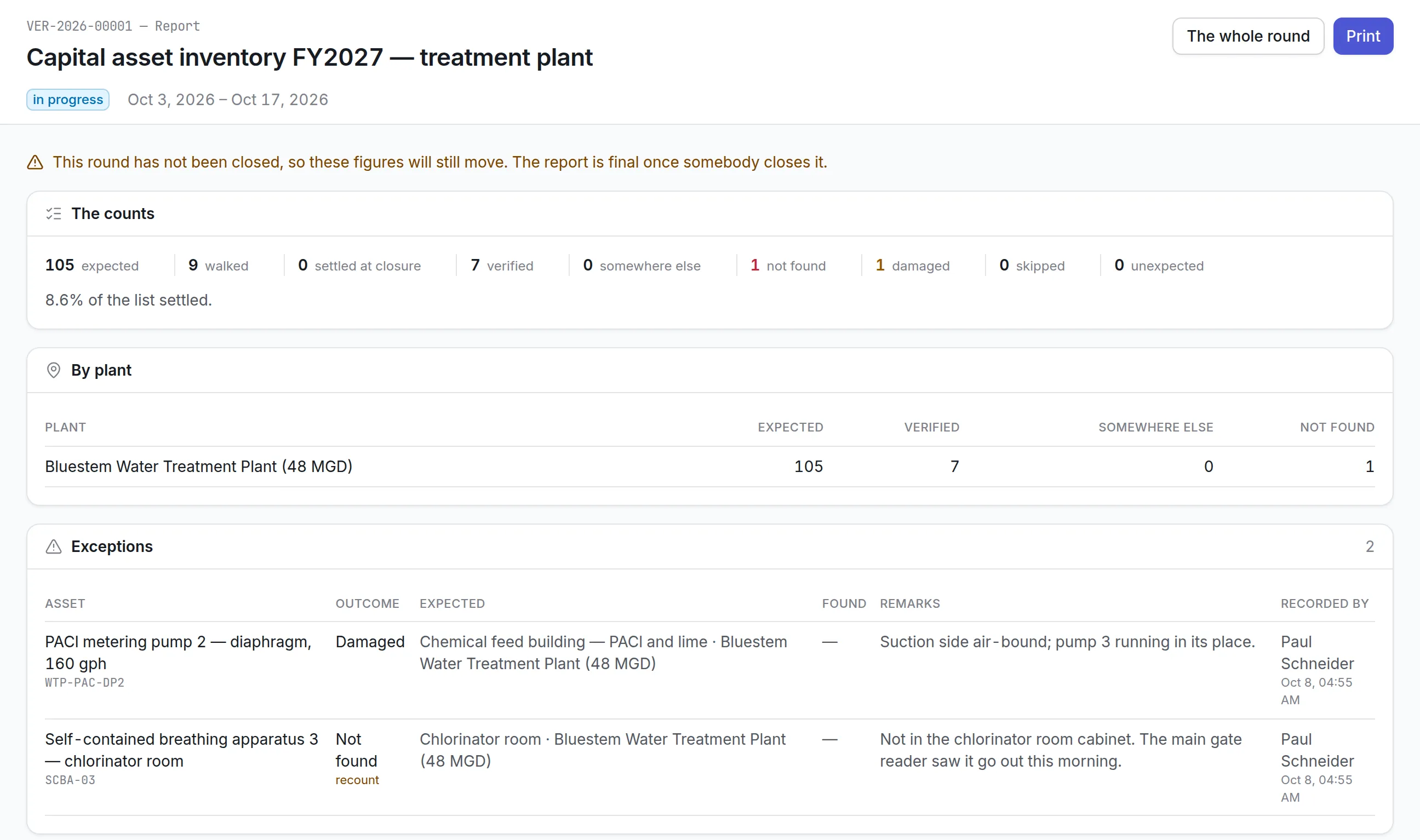
Monthly damage walks and the annual expert inspection run as graded checklists. A failed upright raises a job on that run, with photos.
Pre-use checks on the phone
Operators answer the daily truck check in the mobile app, even with no signal. A critical failure such as brakes that do not hold raises corrective work.
Spares before the shift stops
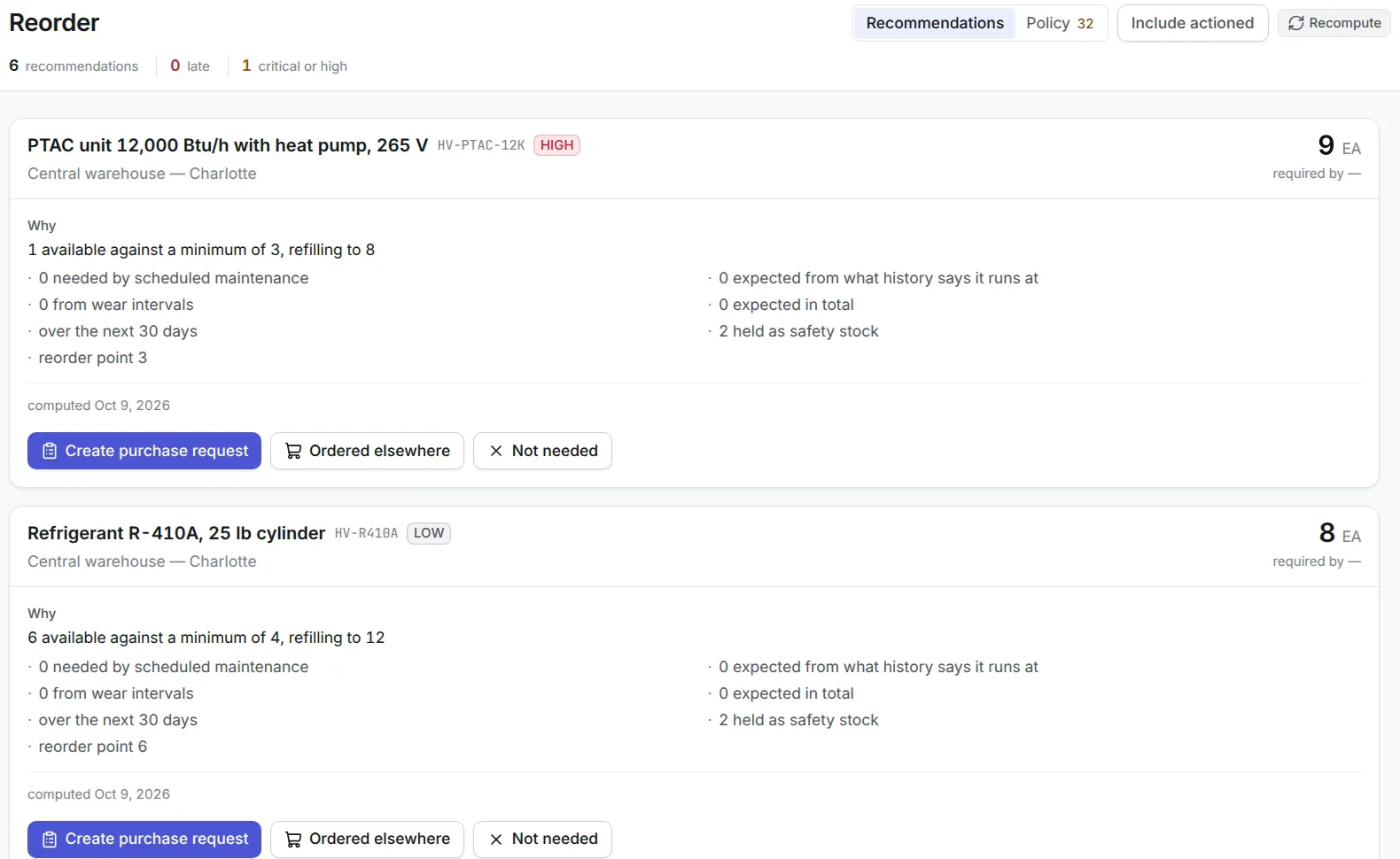
Load wheels, drive tires, seal kits and door springs carry reorder points, and recommendations turn into purchase requests in one click.
Readers on the gates
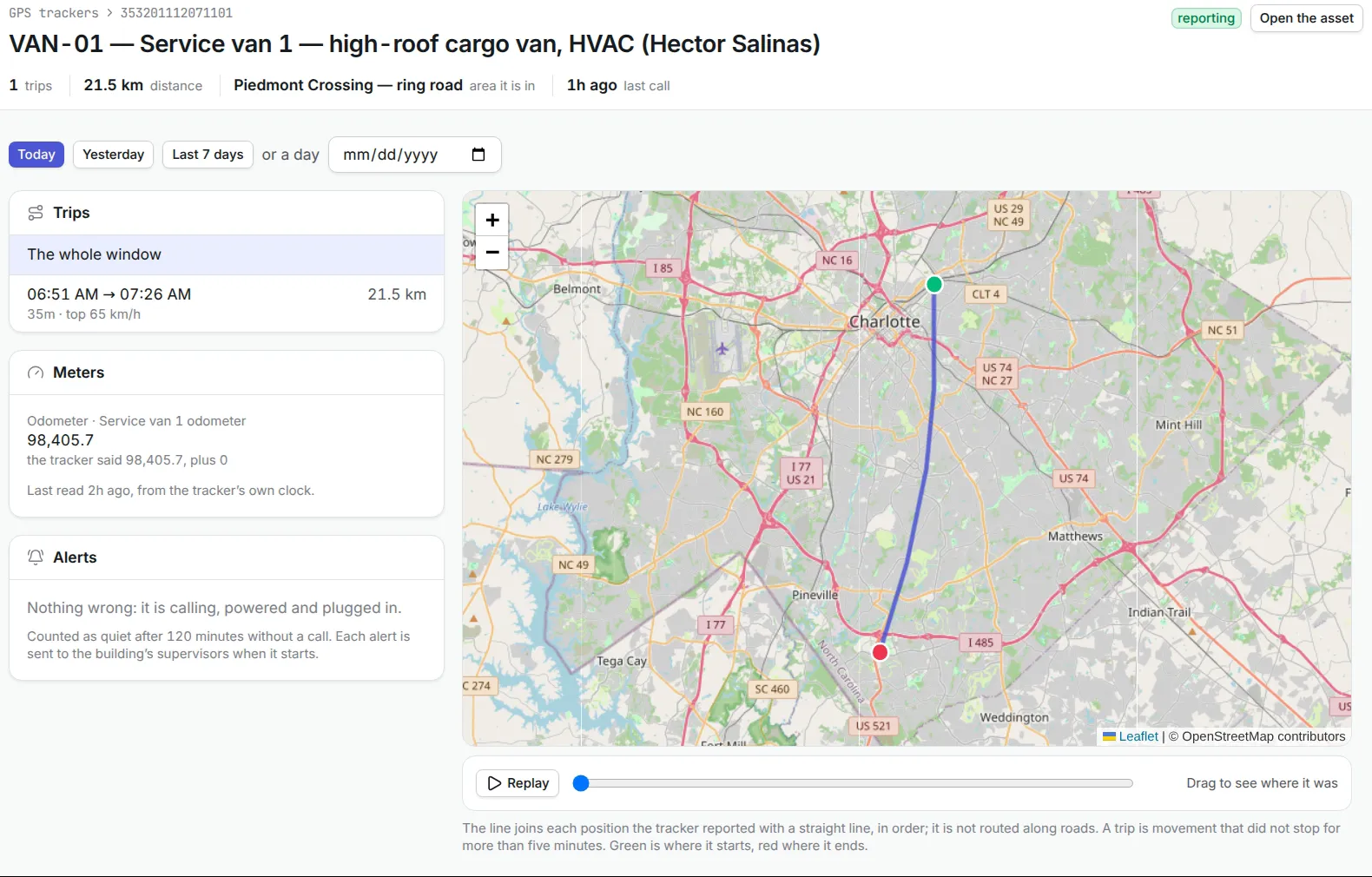
Fixed RFID readers at dock doors and yard gates record each tagged asset that passes, and GPS trackers place yard trucks and fleet vehicles.
What is warehouse maintenance software?
Warehouse maintenance software is a system a maintenance team uses to record the equipment in a warehouse or distribution center, such as forklifts, reach trucks, dock levelers, doors, conveyors, sorters, racking and battery chargers, and the work done on each. It schedules servicing by hour meter or calendar, takes fault reports from the floor, records inspections and keeps spare parts in stock.
Distribution centers and 3PLs buy it because a stopped truck or a jammed door costs a shift’s throughput, and a damaged upright nobody wrote down is a liability. When a customer or an insurer asks when a racking run was last inspected, the answer should be a record, not a memory.
How warehouse maintenance software works in Asset Infinity
Each warehouse is a site, divided into zones such as inbound, storage, picking and outbound, with docks and aisles inside them. Every truck, leveler, charger and racking run sits in the place it works, in the asset register. A fault on the floor reaches a fix like this:
Someone reports it
A shift lead raises a request from the web or by email, under a category such as truck fault, dock door or leveler, racking damage, or conveyor or sorter stopped. A technician can also scan the truck’s label in the mobile app and raise a job on the spot.
The clock starts
The request becomes a work order with a priority, and the priority sets its response and resolution targets. A critical breakdown can be held to a 30-minute response, while a dock door can be given two hours. With escalations on, a late job climbs a ladder and tells the people you choose.
The job is checked before anyone goes
Readiness shows whether the job’s parts, tools, skills and permit are in hand, so a technician is not sent to a door without the spring.
The work waits visibly when it must
A job waiting for a part is on hold with the reason shown, so the board says why Dock 3 is still out of service.
The fix is recorded
Parts, labor and the cause go on the asset’s record, so a pallet truck that keeps wearing its load wheels flat shows it in its history.
Prevention is scheduled
Plans fall due by hour meter, calendar or whichever comes first, and raise their own work orders ahead of time. See preventive maintenance software for triggers and lead times.
Maintenance request software covers request intake, triage and the requester’s view in detail.
Forklift and MHE maintenance by the hour meter
Trucks wear by the hours they run, not by the calendar. In Asset Infinity each forklift, reach truck and pallet truck carries an hour meter, and a plan such as a 250-hour service raises the job when the reading gets there. Readings come in three ways:
More detail
The service itself carries its checklist. A 250-hour task list can ask the technician to record the hour meter, check the forks for heel wear, check chain stretch, grease the mast, test the brakes and test the horn, lights and reversing alarm. A step can ask for a reading with limits, such as electrolyte temperature at the end of a charge during weekly battery watering.
Many warehouses keep their trucks on a dealer’s full-service contract. That contract sits on the contract register with the trucks it covers, its response times and what it excludes, so the team can see whether a repair is covered before raising a purchase order. See maintenance contract management.
Racking, dock and pre-use inspections an auditor can read
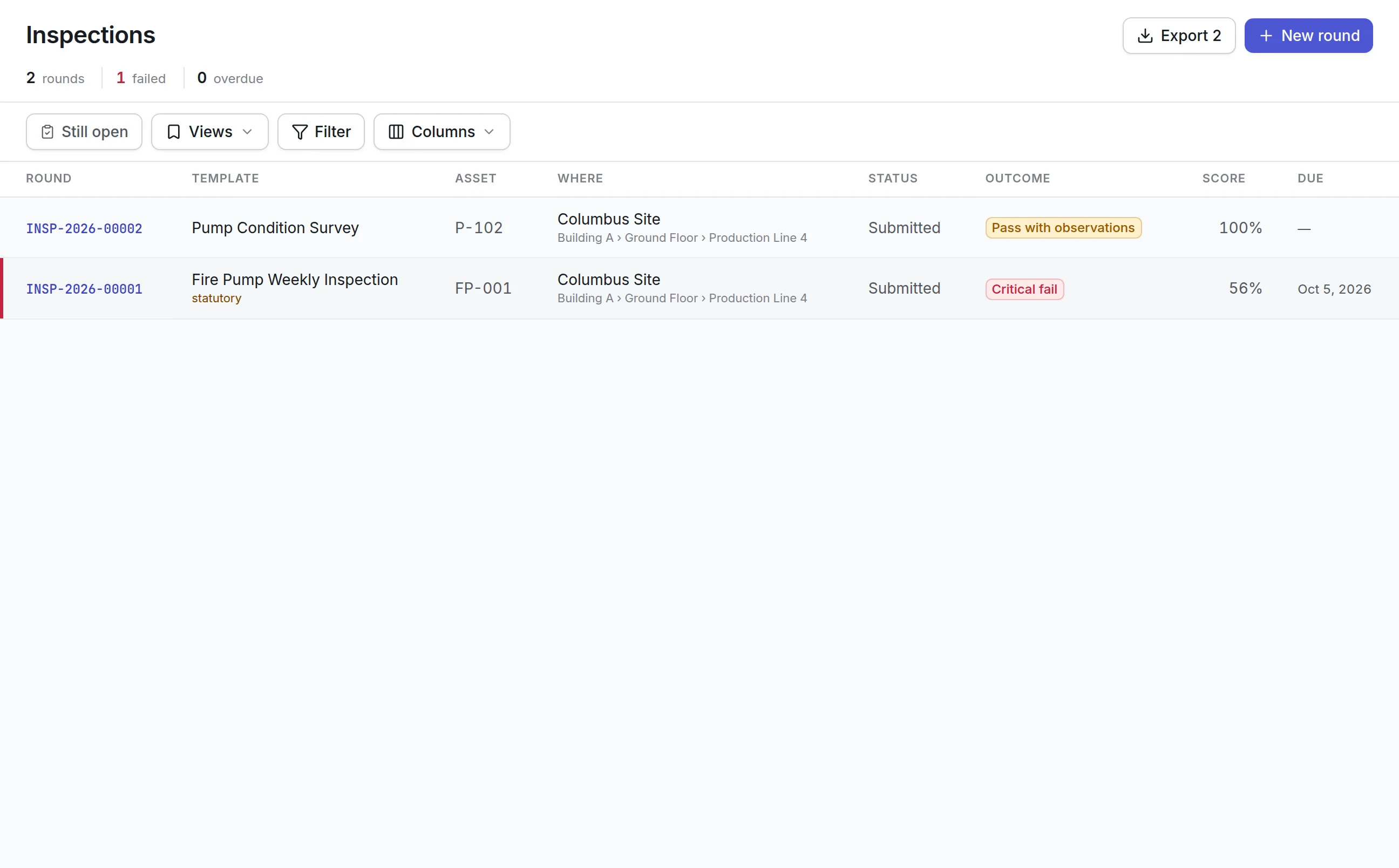
Three kinds of check carry most of a warehouse’s safety record. Each runs as a graded inspection round on the phone, so the answer, the photo and the person who gave it are kept together.
More detail
Items can be marked critical. A failed critical item fails the round, and a corrective work order can be raised by itself on that asset, so a damaged upright becomes a job on the racking run the same morning. Work at height on racking and hot work in the building can need a permit to work, and a job that needs a permit cannot start until one is in force. Lockout before a sorter is opened is recorded the same way, with each isolation and who signed it. See inspection management software for scoring and templates.
Asset Infinity keeps these records; it does not certify that a warehouse complies with OSHA or any other standard.
Yard trucks, fleet and RFID gate reads
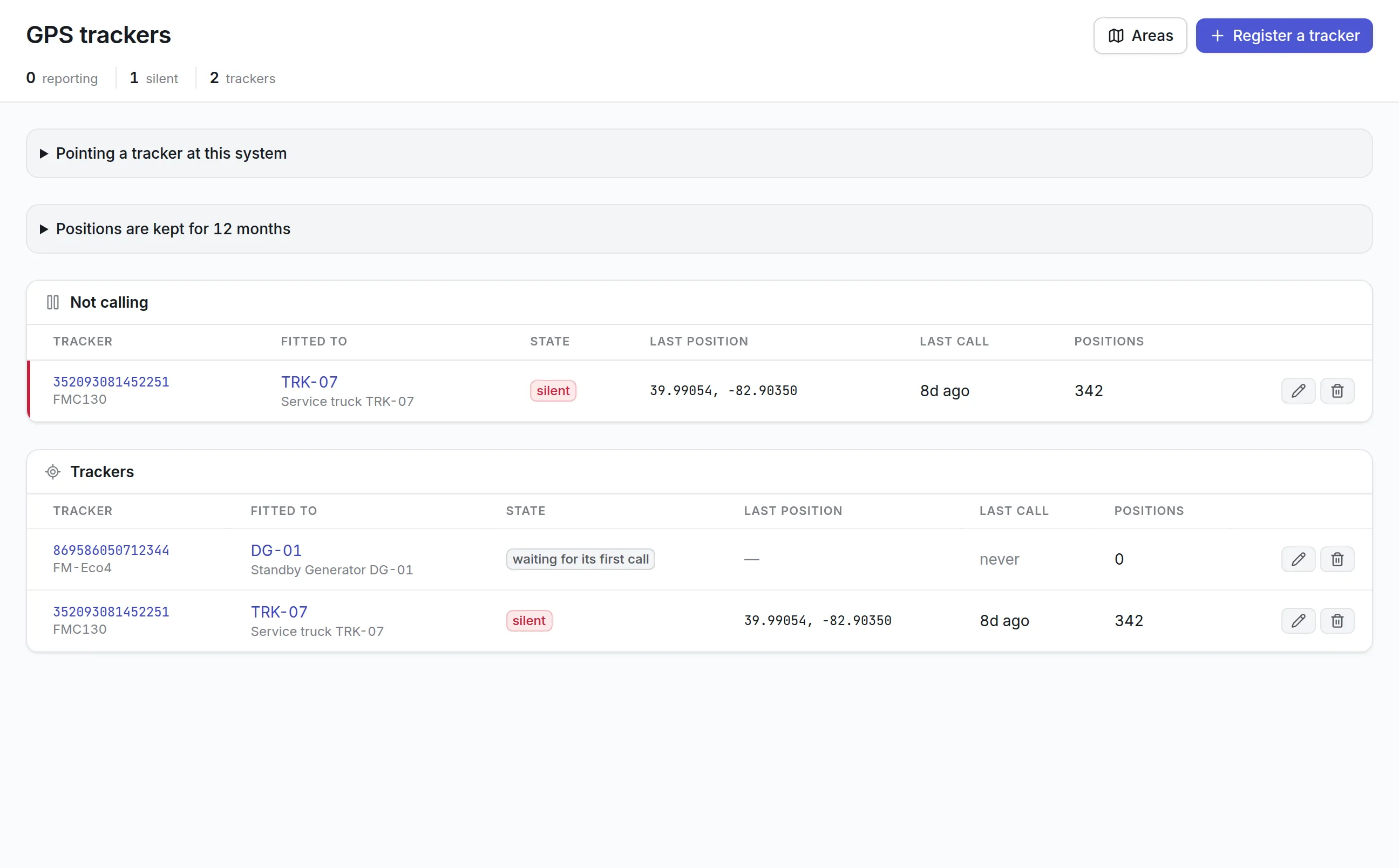
Equipment in a logistics operation does not stay put. Yard tractors shunt trailers, delivery vehicles leave the site, and pallet trucks drift between buildings. Asset Infinity tracks them on the same record that holds their maintenance.
More detail
Trackers that stop calling are listed first, so a unit that lost power is noticed before its service plan goes stale. Fleet maintenance software covers vehicle service plans, and RFID asset tracking covers readers, antennas and rules.
What should you look for when choosing warehouse maintenance software?
- Hour-meter PMTrucks wear by hours runIn Asset InfinityMeter, calendar and whichever-comes-first triggers
- Pre-use checks on a phoneOperators check trucks at the start of every shiftIn Asset InfinityGraded checklists in an offline iOS and Android app
- Racking inspectionsDamaged uprights are a collapse riskIn Asset InfinityMonthly walks and annual inspections with critical items
- Dock door response timesA dead door stops a trailerIn Asset InfinityPriorities with response and resolution targets and escalation
- Places by zone and dockFaults are reported where they happenIn Asset InfinityWarehouse, zone, dock and aisle locations
- Spare partsLoad wheels and springs run shortIn Asset InfinityReorder points and recommendations that become purchase requests
- ContractsTrucks and docks are often serviced by dealersIn Asset InfinityCoverage, response times and assets on each contract
- Permits and lockoutRacking repairs and sorter work need isolationIn Asset InfinityPermits to work with a hard stop on the job
- TrackingYard trucks and pallet trucks moveIn Asset InfinityGPS trackers, areas and fixed RFID readers
- Multi-site view3PLs run many buildingsIn Asset InfinityEach warehouse a site, with dashboards across all of them
See it on your own assets, or price it in two minutes.
Warehouse maintenance software by operation
Single distribution center
A two-shift DC starts with its trucks on 250-hour plans, weekly battery watering in the charging room, quarterly leveler service and the monthly racking walk. Shift leads raise faults under five or six request categories, and the maintenance supervisor reads one list of what is open and late.
Third-party logistics provider
A 3PL runs several warehouses for different clients. Each warehouse is a site with its own zones, stores and technicians, and access can be limited so a site team sees only its own work. Group maintenance sees open and overdue work for one building or all of them.
Parcel and cross-dock operation
A cross-dock lives on its sorter and its doors. The sorter’s monthly service checks belt tracking, divert shoes and photo-eyes, and a jam at induction is a critical breakdown with its own response time. Dock levelers and doors run under the dock contractor’s agreement, with call-outs recorded against it.
Cold storage and yard
Trucks working in a freezer and yard tractors outside run more hours a week, so their meter-based plans come round sooner. Yard tractors can carry GPS trackers that feed engine hours, and readers at the gate record which tagged trailers and trucks came in and out.
What warehouse maintenance software costs with Asset Infinity
The asset register starts at $130 a month for up to 500 assets, with unlimited users. Maintenance is $25 per user per month and parts and stock is $20 per user per month. Add-ons a warehouse typically adds are flat per organization:
- Maintenance requests, $75 a month
- Escalations, $75 a month
- Reordering, $75 a month
- Permits to work, $100 a month
- Contracts, $100 a month
RFID readers, GPS trackers and sensors come from the Asset Infinity store. Build a quote for your own buildings. The logistics and warehousing trial calls each site a warehouse and opens with four forklifts, two reach trucks, three electric pallet trucks, a parcel sorter, four dock levelers and doors, four battery chargers and two racking runs, plus a small cross-dock. It includes the plans above, three contracts and eight weeks of history that ends the morning a reach truck damages an upright and the bay is closed. The word “warehouse” can be changed back on the Localization screen.
Getting started in one building
- Import the trucks, docks and racking for one warehouse and print asset labels.
- Load the hour-meter plans and record each truck’s current reading.
- Turn on the pre-use and racking checks your team already does on paper.
- Set reorder points on the wheels, tires and springs that have stopped a shift before.
Then add the next building. To see it with your own equipment, book a demo.
What teams in this industry use most
Common questions
What is warehouse maintenance software?
Warehouse maintenance software records the equipment in a warehouse or distribution center and the work done on it. It schedules forklift and dock servicing, takes fault reports from the floor, records racking and pre-use inspections and keeps spare parts in stock.
Can forklifts be serviced by hour meter?
Yes. A maintenance plan can fall due every 250 hours, by calendar, or whichever comes first. Readings are entered on the phone or fed from a GPS tracker's engine hours.
Does it handle racking inspections?
Yes. A monthly racking damage walk and an annual expert inspection run as graded checklists. A failed critical item raises a corrective work order on that racking run.
Can operators do pre-use truck checks on a phone?
Yes. The daily pre-use check runs in the iOS and Android app, which works with no signal and syncs later. A failed critical item raises corrective work on the truck.
Does it work for a 3PL running several warehouses?
Yes. Each warehouse is a site with its own zones, docks, aisles, stores and technicians, and access can be limited so each site team sees its own work.
How much does warehouse maintenance software cost?
Asset Infinity's asset register starts at $130 a month for up to 500 assets with unlimited users, and maintenance is $25 per user per month. Add-ons such as reordering and permits to work are flat monthly prices.
See it with your own assets
A demo run on an example from your industry. Or start the trial and look around on your own.