






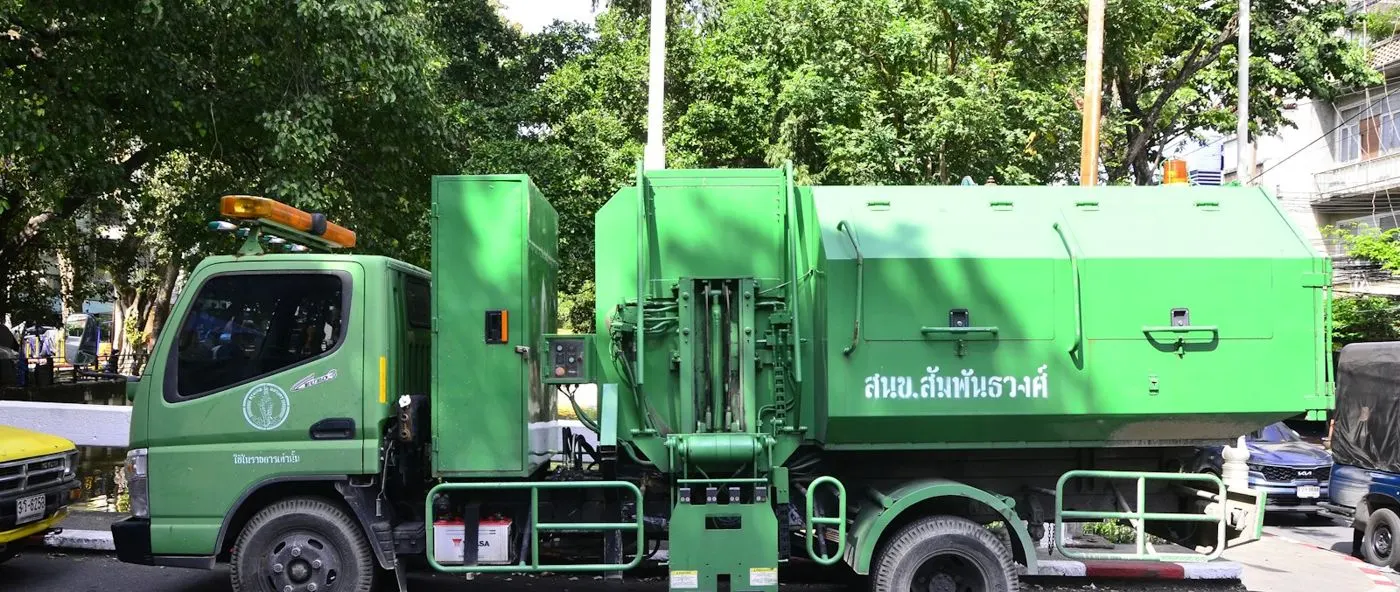
The client
The client is a large US waste management company that collects, disposes of and recycles chemical and medical waste.
Each waste stream has its own disposal and recycling rules, and healthcare customers trust the company to destroy sensitive medical records and waste securely. Regulations keep tightening, so every job has to be done and documented the right way.
The challenge
As environmental regulations became stricter, the company had to keep up with compliance while handling more kinds of waste. Its resources were not used efficiently, which raised costs and lowered recycling rates.
- Keeping up with changing environmental rules risked penalties and reputational damage.
- Each chemical and medical waste stream needed its own disposal and recycling method.
- Inefficient use of vehicles and people raised operating costs.
- Recycling rates were lower than they should have been.
- Healthcare customers needed proof that sensitive records and waste were securely destroyed.
What they set up in Asset Infinity
The company brought compliance documents, waste stream jobs, collection vehicles and reporting into Asset Infinity, so every job is categorized, tracked and recorded in one place.
Jobs categorized by waste stream
Each collection and disposal job is a work order tagged with its waste stream, with the checklist for that stream’s disposal or recycling method attached. (Work)
Compliance documents in one register
Permits, procedures and compliance documents are stored against the sites, vehicles and equipment they apply to, instead of in separate files. (Assets)
GPS on collection vehicles
GPS trackers show where each collection vehicle is, so routes and schedules can be followed and vehicles sent where they are needed. (Connected)
Compliance reports on schedule
Reports on jobs, waste streams and completed checks are built once and sent on a schedule, instead of compiled by hand. (Insight)
How it works day to day
Here is how a waste collection job runs from pickup to report.
- Dispatcher: creates the job. The collection is a work order tagged with its waste stream, so the right disposal checklist comes with it. It is assigned to a crew and vehicle.
- System: shows the vehicle on its way. The vehicle’s GPS tracker reports its location, so the dispatcher can follow the route and schedule.
- Driver: records the pickup. In the mobile app, the driver completes the checklist for the waste stream with photos and a signature. Required fields cannot be skipped.
- Facility technician: disposes or recycles by method. At the facility, the technician completes the disposal or recycling steps for that stream and records the outcome.
- Supervisor: signs off destruction jobs. For sensitive medical records and waste, the supervisor reviews the completed checklist and closes the work order, creating the record healthcare customers ask for.
- Compliance manager: receives the reports. Scheduled reports summarize jobs, waste streams and completed checks, ready for internal and regulatory review.
Before and after
| Before | With Asset Infinity | |
|---|---|---|
| Compliance work | Hard to keep up with changing rules | 30% less workload |
| Waste streams | Increasingly complex to manage | Each job tagged with its stream and method |
| Categorization and recycling | Lower recycling rates | 25% more accurate |
| Resources | Inefficient allocation, higher costs | 20% lower operational costs |
| Collection vehicles | Routes and schedules hard to follow | GPS location for every vehicle |
| Secure destruction | Proof needed for healthcare customers | Zero breaches or leakage incidents reported |
How it rolled out
- Compliance records centralized. Compliance documentation was brought into one place and linked to the sites, vehicles and equipment it covers.
- Waste streams configured. Each chemical and medical waste stream was set up with its own category and disposal checklist.
- Vehicles connected. Collection vehicles were fitted with GPS trackers to follow collection routes and schedules.
The results
- 30% less compliance management workload
- 25% better waste stream categorization and recycling accuracy
- 20% lower operational costs
- 0 data breaches or data leakage incidents reported
- Compliance with environmental regulations maintained
- Better use of vehicles and people across collections
- A documented record of each secure destruction job for healthcare customers
Why it worked
One record per job
Every collection and disposal is a work order with its stream and checklist, so compliance evidence builds as the work is done.
The right method every time
Tagging each job with its waste stream brings the correct checklist with it, which improved categorization and recycling accuracy.
Vehicles in view
GPS on collection vehicles shows where resources are, so they can be allocated better.
Looking ahead
By recording every collection, disposal and destruction job in one system, the company cut the work of staying compliant and kept each waste stream on its correct method.
The same records that answer a regulator also show where vehicles and people are used well, which is where the lower operating costs came from.