






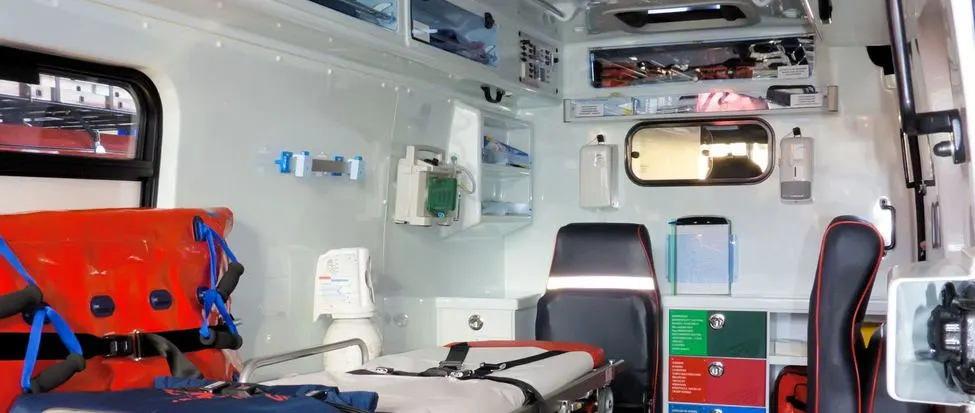
The client
The client is a chain of hospitals that runs a central ambulance fleet.
Each ambulance carries medical equipment and supplies that must be present and working on every call. Vehicles, equipment and stock were managed with manual checks and records, and vehicles were often maintained only after they broke down.
The challenge
Without real-time tracking or a maintenance plan, the chain dispatched ambulances slowly, repaired them after breakdowns and could not be sure each one was properly stocked.
- No real-time tracking, so dispatch was delayed and the fleet was used inefficiently.
- Vehicles were maintained after breaking down, raising downtime and costs.
- Manual stock checks left some ambulances short of supplies for emergencies.
- Some ambulances were overused while others stood idle.
- Manual records made health and safety compliance hard to prove.
What they set up in Asset Infinity
The chain brought its ambulances, on-board equipment and medical supplies into Asset Infinity, with GPS devices on every vehicle and RFID readers for equipment.
GPS on every ambulance
GPS trackers show each ambulance’s location on a dashboard and feed odometer and engine hours into the vehicle’s record. (Connected)
Plans by mileage and engine hours
Each ambulance has preventive plans driven by its mileage and engine hours, and on-board medical equipment has its own schedules, so service comes before a breakdown. (Maintenance)
Supplies under control
Medical supplies are tracked with barcodes and RFID tags, with reorder points for critical items and batch tracking for stock that expires. (Stores)
Equipment and compliance records
Each item of on-board equipment has its own record, with maintenance logs, health checks and calibration certificates stored centrally, ready for audits. (Assets)
How it works day to day
Here is how the fleet is run now, from dispatch to restocking.
- Fleet manager: sees every ambulance. The dashboard shows each ambulance’s GPS location and whether it is in operation, on standby or in maintenance, so an available vehicle is sent quickly.
- System: updates the meters. GPS trackers feed odometer and engine hours into each vehicle’s record, which drive its maintenance plan.
- System: raises service when due. When an ambulance reaches its mileage or engine-hour interval, a preventive work order is created and the maintenance team is notified.
- Technician: services and records. The technician completes the job in the mobile app, logging parts and notes, so the vehicle’s maintenance history stays complete.
- Logistics staff: restocks after a call. After each deployment, used supplies are issued from stock to the ambulance. Items below their reorder point appear in reorder advice.
- Logistics staff: checks on-board equipment. Barcode or RFID scans confirm each ambulance carries the equipment it should, and the equipment’s own service schedule is followed.
- Fleet manager: reviews utilization. Utilization reports show how much each ambulance is used, so overused and idle vehicles are spotted and the fleet is redeployed.
Before and after
| Before | With Asset Infinity | |
|---|---|---|
| Ambulance location | No real-time tracking | GPS location on a dashboard |
| Vehicle maintenance | After breakdowns | Plans by mileage and engine hours |
| Medical supplies | Manual checks, some ambulances understocked | Barcode and RFID tracking, 98% accuracy |
| Utilization | Some overused, others idle | Usage reports guide redeployment |
| Compliance | Hard to prove from manual records | Central documents and maintenance logs |
How it rolled out
- Assessment and goals. Fleet processes were reviewed for gaps, and goals were set for response times, maintenance costs, stock accuracy and compliance.
- Setup and hardware. Custom fields were added, GPS devices and RFID readers were installed, and vehicle, equipment and stock records were migrated.
- Pilot, then full fleet. Fleet managers, maintenance and logistics staff were trained, a pilot ran on part of the fleet, and use then expanded fleet-wide.
The results
- 15% average reduction in ambulance response times
- 20% lower maintenance costs
- 25% higher fleet utilization
- 98% accuracy in medical supply and equipment availability
- Digital record-keeping simplified compliance and improved audit readiness.
- Maintenance history for every vehicle helps diagnose recurring issues.
- Lifecycle records support decisions to repair, replace or retire equipment.
Why it worked
One system for vehicle and kit
Ambulances, their equipment and their supplies are tracked together, so readiness is visible in one place.
Service by use
Mileage and engine hours trigger maintenance, which keeps vehicles available instead of waiting for breakdowns.
Proof kept as work happens
Maintenance logs and certificates are recorded during the work, so audits need no extra preparation.
Looking ahead
By tracking its ambulances, their equipment and their supplies in one system, the hospital chain cut response times by an average of 15%, lowered maintenance costs by 20% and raised fleet utilization by 25%.
Ambulances now leave properly stocked far more reliably, and the records that prove compliance are kept as the work is done, ready for any audit.