

The client
The client is a large wind O&M service provider managing hundreds of turbines across multiple wind farms. The fleet mixes makes and capacities, with nacelle equipment, generators, yaw and pitch systems, gearboxes and hydraulic units.
Its contracts depend on turbine availability, so repeating alarms and reactive downtime cost it directly.
The challenge
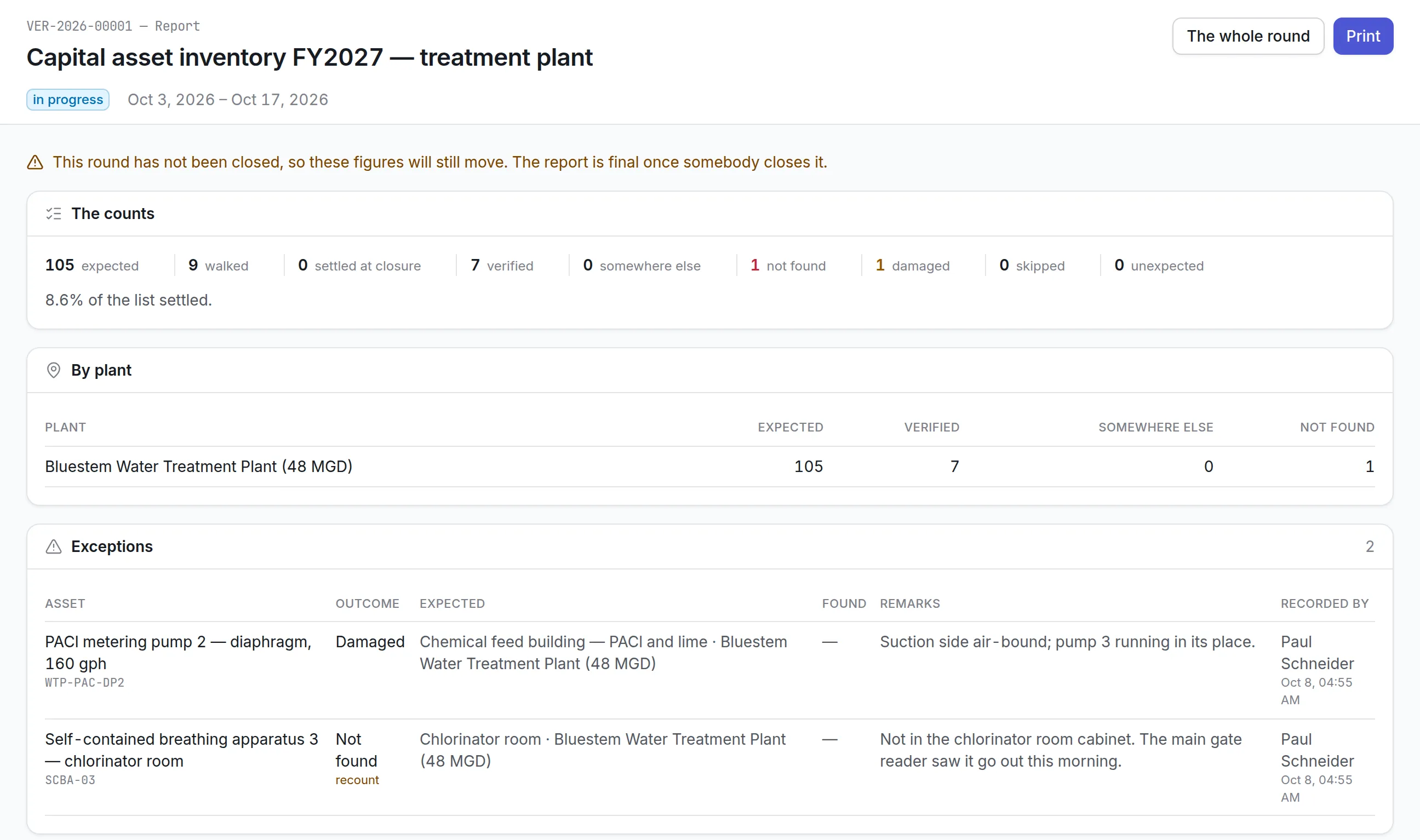
The same turbine alarms kept coming back. Without one log of alarms and maintenance, nobody could see which turbines failed repeatedly or link alarms to skipped PM.
- Repeated pitch, yaw, generator temperature, hydraulic and sensor alarms.
- Missed lubrication, skipped filter checks and inconsistent torque inspections.
- Technician entries missing root cause data or complete resolutions.
- Spare parts use not linked to alarm recurrence.
- Downtime hurting generation and SLA commitments.
What they set up in Asset Infinity
The provider moved turbine maintenance, alarm handling and root cause records for every wind farm into Asset Infinity.
PM aligned to OEM guidelines
Checklists for each turbine model cover nacelle lubrication, hydraulic checks, yaw and pitch inspection, cooling cleaning and anemometer and wind vane checks, with escalation when PM is overdue. (Maintenance)
Every alarm on the record
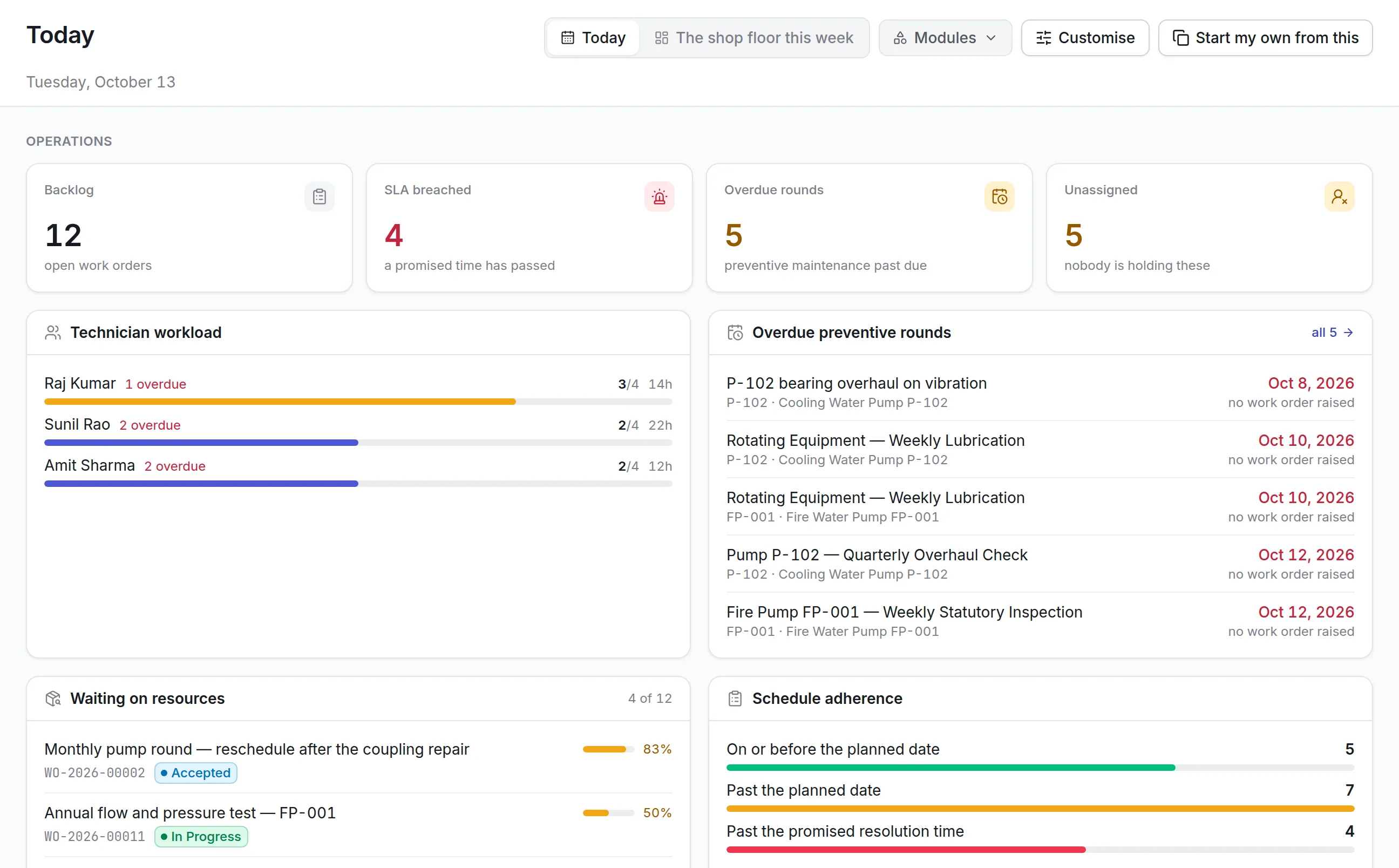
Each alarm is logged against its turbine with time, category, severity and technician notes, so clusters across turbines, farms and components stand out. (Work)
Root cause required for repeats
A standard root cause record is mandatory for repeated alarms, covering the alarm chain, conditions, PM status, component condition and spares used. (Maintenance)
Turbine health dashboard
Alarm frequency, downtime, PM compliance, ageing components and high-risk turbines are shown together, so teams start with the turbines costing the most generation. (Insight)
How it works day to day
Here is how alarms and maintenance are handled across the wind farms now.
- System: brings in the alarm. A SCADA alarm arrives through the API and is logged against the turbine with its time, category and severity.
- Supervisor: dispatches a technician. The supervisor turns the alarm into a work order and assigns it. The technician is notified in the mobile app.
- Technician: records the repair. Photos, vibration data, hydraulic pressure readings and replaced components are entered against the turbine before the job can close.
- Technician: completes root cause for repeats. If the alarm has happened before, a root cause record is required: alarm chain, conditions, PM status, component condition and spares used.
- System: keeps PM on schedule. Preventive plans raise lubrication, filter and torque work on time and escalate anything overdue to the supervisor.
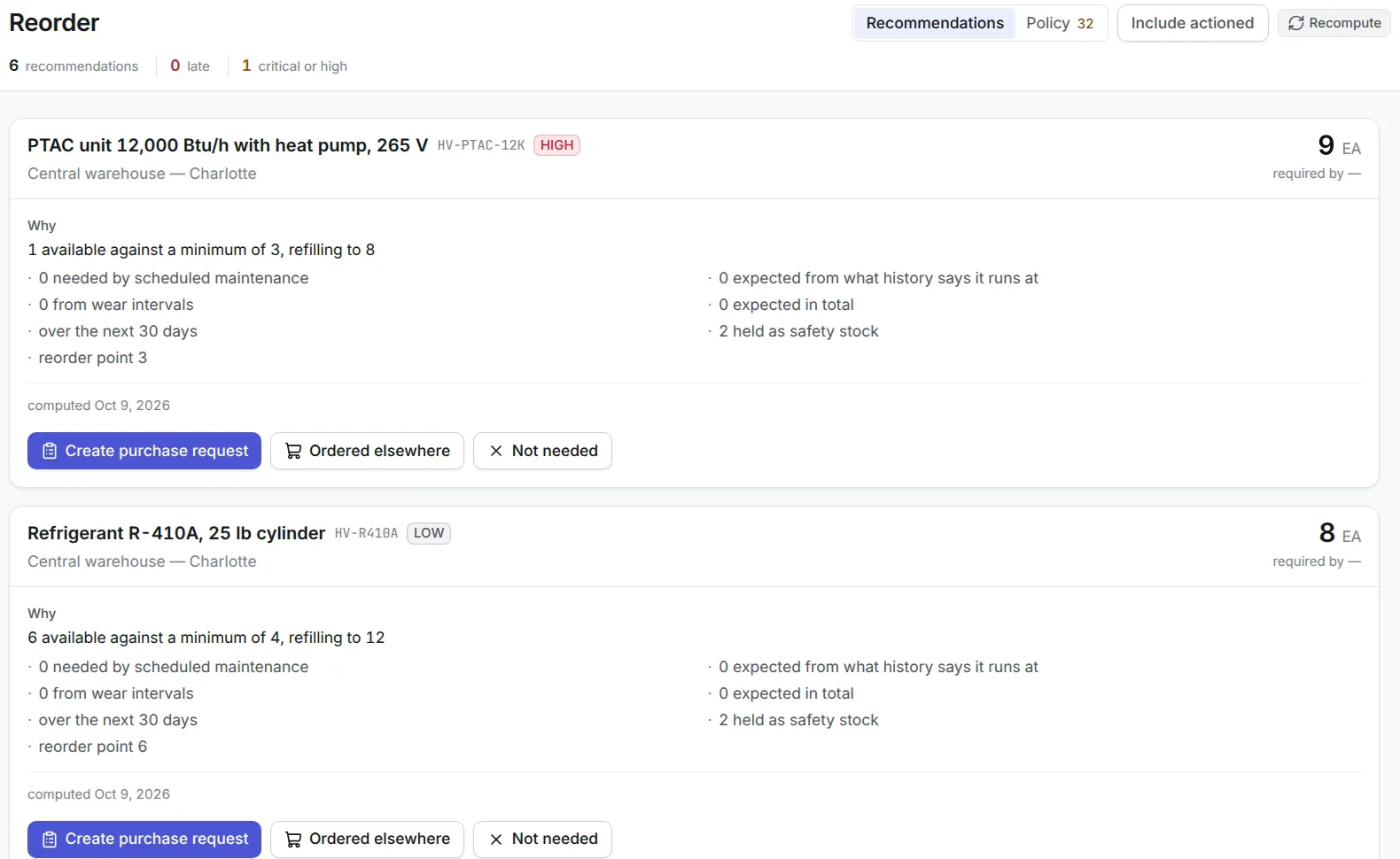
- Storekeeper: issues spares to the job. Parts are issued to the work order, so repeated replacements of the same component are visible.
- Engineering team: targets the worst turbines. Dashboards rank turbines by alarm frequency, downtime and PM compliance, so engineers remove systemic causes first.
Before and after
| Before | With Asset Infinity | |
|---|---|---|
| Alarm history | No unified log | Every alarm logged against its turbine |
| Preventive maintenance | Lubrication and filter checks missed | OEM-aligned checklists with escalation |
| Technician entries | Missing root cause or resolution | Required evidence and root cause records |
| Spare parts | Not linked to recurring alarms | Issued to each job and traceable |
| Prioritizing | Hard to see which turbines failed repeatedly | High-risk turbines ranked on a dashboard |
| Uptime | Lost to repeating alarms | 11% regained on high-priority turbines |
How it rolled out
- Phased by wind farm. The rollout moved farm by farm, with no interruption to turbine operations.
- Technicians trained. Teams learned the PM, root cause and alarm workflows in the mobile app.
- SCADA alarms connected. SCADA alarms were brought into Asset Infinity through the API.
The results
- 11% uptime regained across high-priority turbines
- Major drop in repeated alarms thanks to root cause visibility
- Better PM compliance stopped failures linked to skipped checks
- Fewer repeat tasks and emergency trips, lowering service costs
- A complete digital record for audits, OEM claims and SLA reporting
- Clear technician accountability and repair traceability
Why it worked
Alarms and PM side by side
Because alarms and maintenance sit on the same turbine record, teams can see when a skipped check led to a fault.
Root cause is required
A repeated alarm cannot close without a root cause record, so fixes address causes rather than symptoms.
One standard for all farms
The same checklists and categories run everywhere, which makes farms comparable and new sites quick to add.
Looking ahead
By centralizing preventive maintenance, digitizing alarm logs and making root cause records standard, the provider regained 11% uptime across its high-priority turbines.
The same structure scales. A new wind farm starts with the same checklists, alarm categories and root cause records, so reliability work does not have to be rebuilt site by site.