






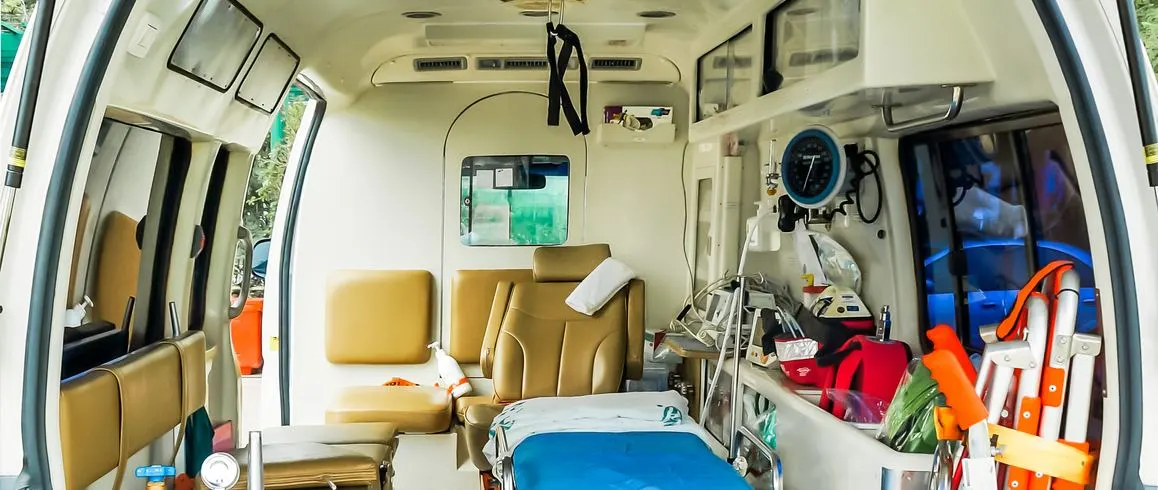
The client
The client is a busy urban ambulance service. Its fleet has to be ready around the clock, and every minute between a call and arrival matters to the patient.
Keeping each ambulance serviced, available and located is the core of its operation, and that had become hard to manage without a system.
The challenge
Vehicle availability was inconsistent, maintenance was delayed, and dispatchers could not see where ambulances were. Response times suffered, and so did patient care.
- No real-time view of ambulance locations.
- Maintenance delays led to breakdowns and vehicles off the road.
- Inconsistent availability made planning shifts and coverage hard.
- No organized data to guide resource decisions.
What they set up in Asset Infinity
The service set up its fleet in Asset Infinity, with a GPS tracker in every ambulance and maintenance planned from the vehicles’ own readings.
GPS tracker in each ambulance
Trackers show where every ambulance is and feed odometer and engine hours into its record, without anyone typing in readings. (Connected)
Servicing by mileage and date
Preventive plans schedule each vehicle’s servicing by date or meter, using the readings the trackers supply. (Maintenance)
Automated maintenance alerts
Due servicing raises a work order and alerts the fleet team, with reminders if it is left waiting. (Work)
Fleet performance reports
Dashboards show vehicle availability, utilization and maintenance history, so managers see which ambulances are ready and which need attention. (Insight)
How it works day to day
Here is how the ambulance fleet is kept ready now.
- System: tracks every ambulance. GPS trackers report each vehicle’s location, odometer and engine hours to its record throughout the day.
- Dispatcher: sees where vehicles are. With live locations on screen, the dispatcher can see which available ambulance is nearest to a call.
- System: raises servicing when due. When a vehicle reaches its mileage or date for servicing, a preventive work order is raised and the fleet team is alerted.
- Fleet manager: schedules the vehicle in. The manager assigns the work and plans the vehicle’s time off the road around shift coverage.
- Mechanic: services and records. The mechanic completes the checklist, records parts and notes, and closes the work order so the ambulance returns to service.
- Operations head: reviews fleet performance. Reports show availability, utilization and breakdowns by vehicle, pointing to the ambulances that need attention.
Before and after
| Before | With Asset Infinity | |
|---|---|---|
| Vehicle location | Unknown to dispatch | Live from GPS trackers |
| Maintenance | Delayed and unplanned | Scheduled by mileage and date with alerts |
| Breakdowns | Frequent | 20% fewer |
| Availability | Inconsistent | 30% higher |
| Response times | Delayed | 25% shorter on average |
How it rolled out
- Needs assessed. The service and Asset Infinity reviewed fleet workflows and pain points.
- Trackers installed. GPS devices were installed in each ambulance.
- Plans and alerts set. Maintenance schedules and alerts were set up for the whole fleet.
The results
- 25% shorter average response times
- 30% higher vehicle availability
- 20% fewer vehicle breakdowns
- 15% more efficient ambulance usage, with less unnecessary downtime
- Faster response and better availability contributed to better patient outcomes
- Clear data on response times, utilization and fleet performance
Why it worked
Readings without data entry
Trackers supply odometer and engine hours directly, so maintenance plans run on real use.
Location in one place
Seeing every ambulance on screen helps dispatch send the right vehicle.
Servicing never forgotten
Automated alerts make sure each vehicle is serviced before it breaks down on a call.
Looking ahead
With GPS trackers in every ambulance and maintenance driven by real readings, the service cut average response times by 25% and raised vehicle availability by 30%.
The same records now guide fleet decisions. Each vehicle’s mileage, servicing and breakdowns are in one place, which shows when to service it and when to replace it.