


The client
The client is a university that lends laptops to students and faculty for remote learning and research, runs laboratories, a library and a student bus fleet, and manages sports equipment and teaching rooms.
Behind all of this sit buildings, fixtures and furniture that need regular upkeep. Each category had been managed in its own way.
The challenge
The university had to manage a very wide range of assets, each used by different people. Without one system, laptops and equipment went unaccounted for, rooms were double-booked and maintenance happened after things broke.
- Laptops issued to students and teachers were hard to track through issue and return.
- Lab equipment needed calibration and maintenance records for safety compliance.
- Buses needed maintenance schedules and location tracking for student transport.
- Sports equipment was lost or stolen, and room bookings conflicted.
- Buildings, fixtures and furniture were repaired after breakdowns instead of on a plan.
What they set up in Asset Infinity
The university put all of these assets into Asset Infinity, with barcode labels for check-out, GPS on buses and preventive maintenance for its buildings.
Check-out and return by barcode
Laptops and sports equipment carry barcode labels, so issue and return to students, teams and staff take one scan and stay on the record. (Assets)
Preventive plans for buildings and labs
Buildings, fixtures, furniture and lab equipment have preventive plans, with maintenance history and costs recorded against each asset. (Maintenance)
GPS on the bus fleet
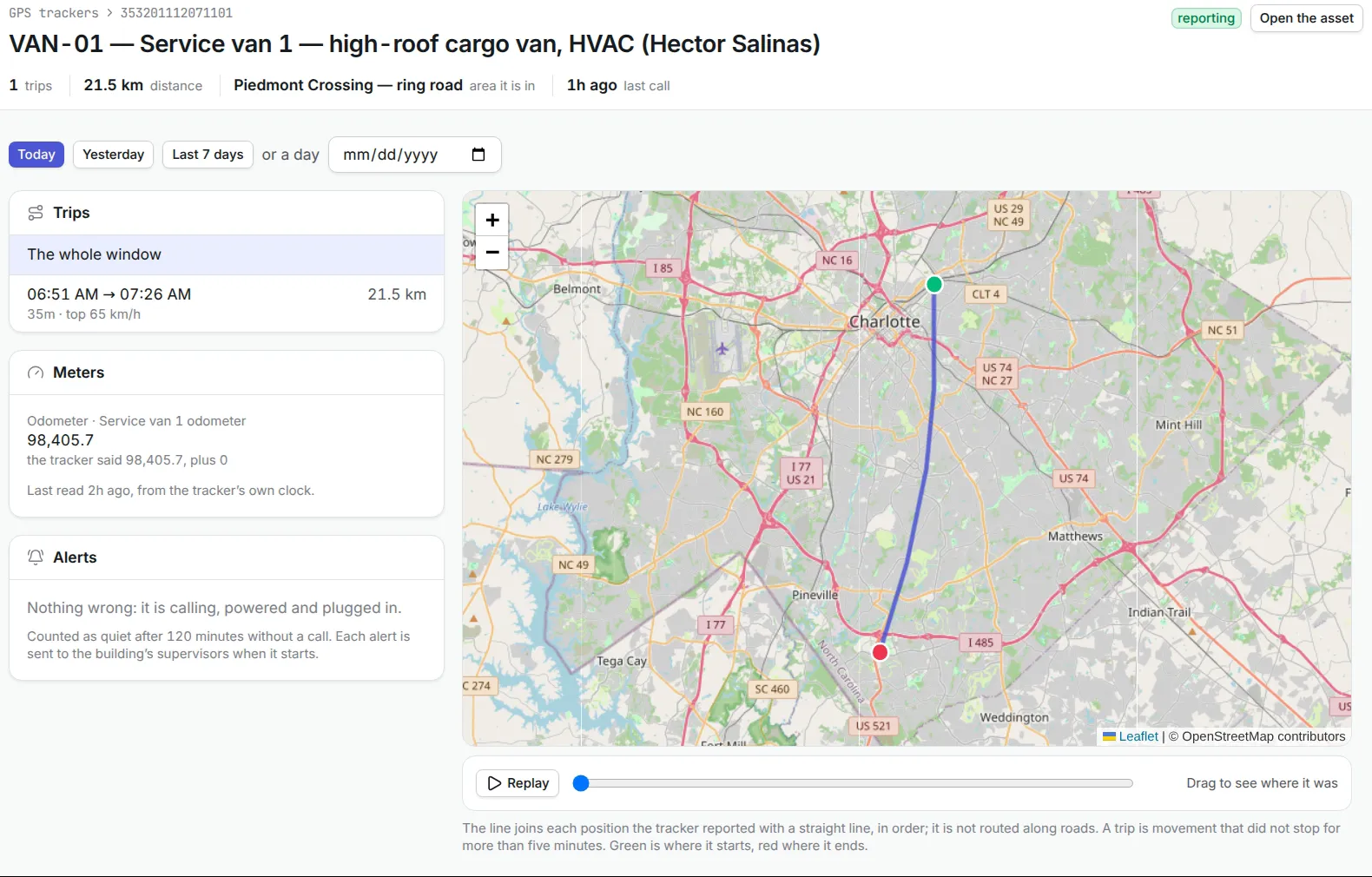
GPS trackers show each bus’s location and feed odometer and engine hours into meter-based maintenance plans. (Connected)
Room bookings
Students and staff book rooms and equipment in one place, and each room’s equipment is recorded, which cuts down on conflicts. (Site services)
How it works day to day
Here is how assets and spaces are now managed on campus.
- IT desk: issues a laptop. Staff scan the laptop’s barcode and check it out to a student or teacher. The return is one more scan, and the record shows who has what.
- Sports department: lends out equipment. Equipment issued to teams and students is checked out the same way, and its condition is noted when it comes back.
- Student or staff member: books a room. Rooms and their equipment are booked in the system, which shows what is free and avoids double bookings.
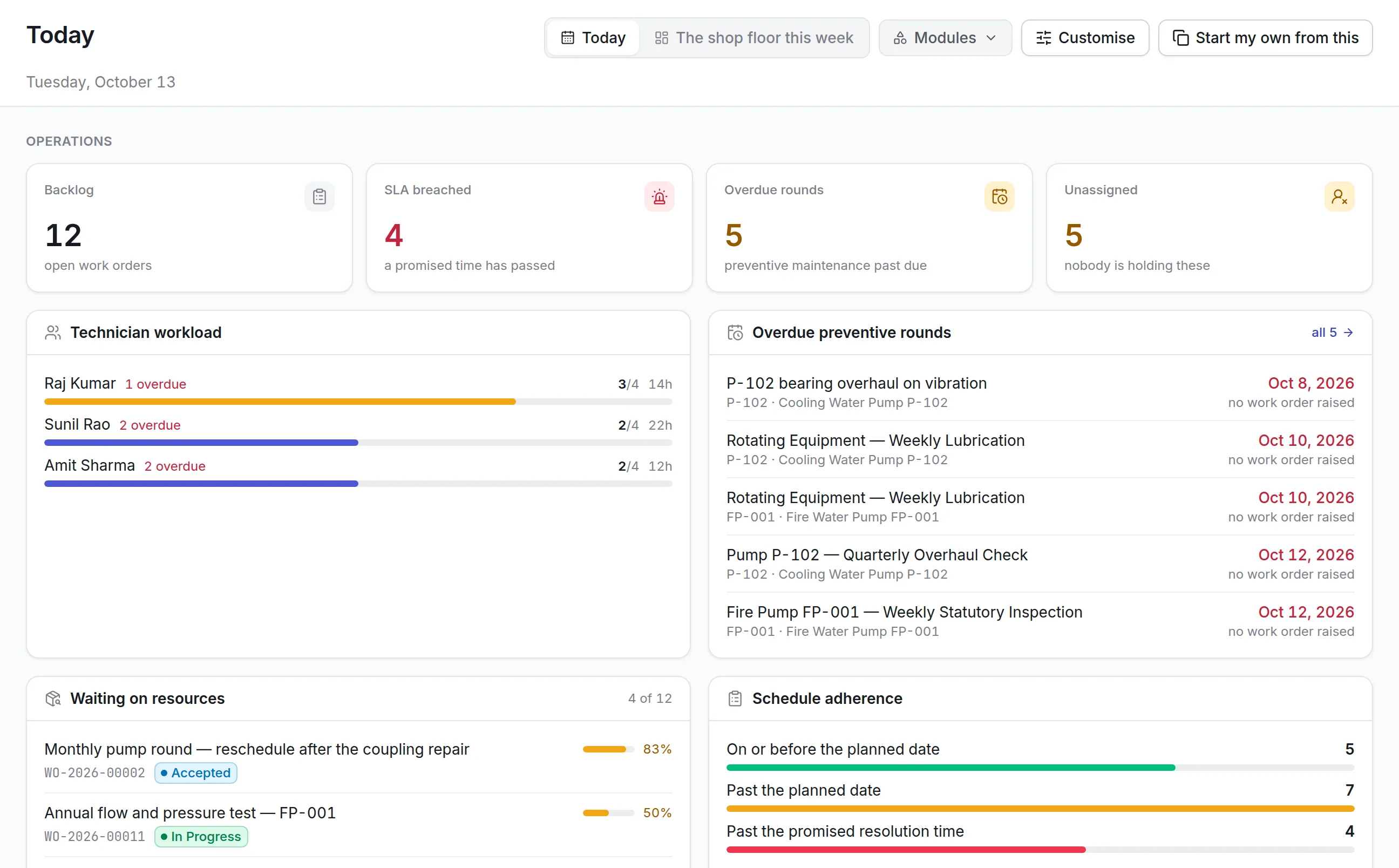
- System: raises preventive maintenance. Plans by date for buildings and labs, and by odometer or engine hours for buses, create work orders when service is due.
- Technician: completes the work. The technician records the work and costs on the mobile app, building each asset’s maintenance history.
- Facilities manager: reviews use and spend. Reports show equipment use, bus downtime and maintenance costs, which guide allocation and purchasing.
Before and after
| Before | With Asset Infinity | |
|---|---|---|
| Laptops | Issue and return hard to track | Barcode check-out and return |
| Lab equipment | Calibration and maintenance records scattered | Plans and history on each asset |
| Bus fleet | Maintenance and location hard to follow | GPS location and meter-based plans |
| Sports equipment | Lost and stolen items | Checked out by barcode |
| Rooms | Booking conflicts | Bookings in one place |
| Buildings | Repaired after breakdowns | Preventive maintenance by schedule |
How it rolled out
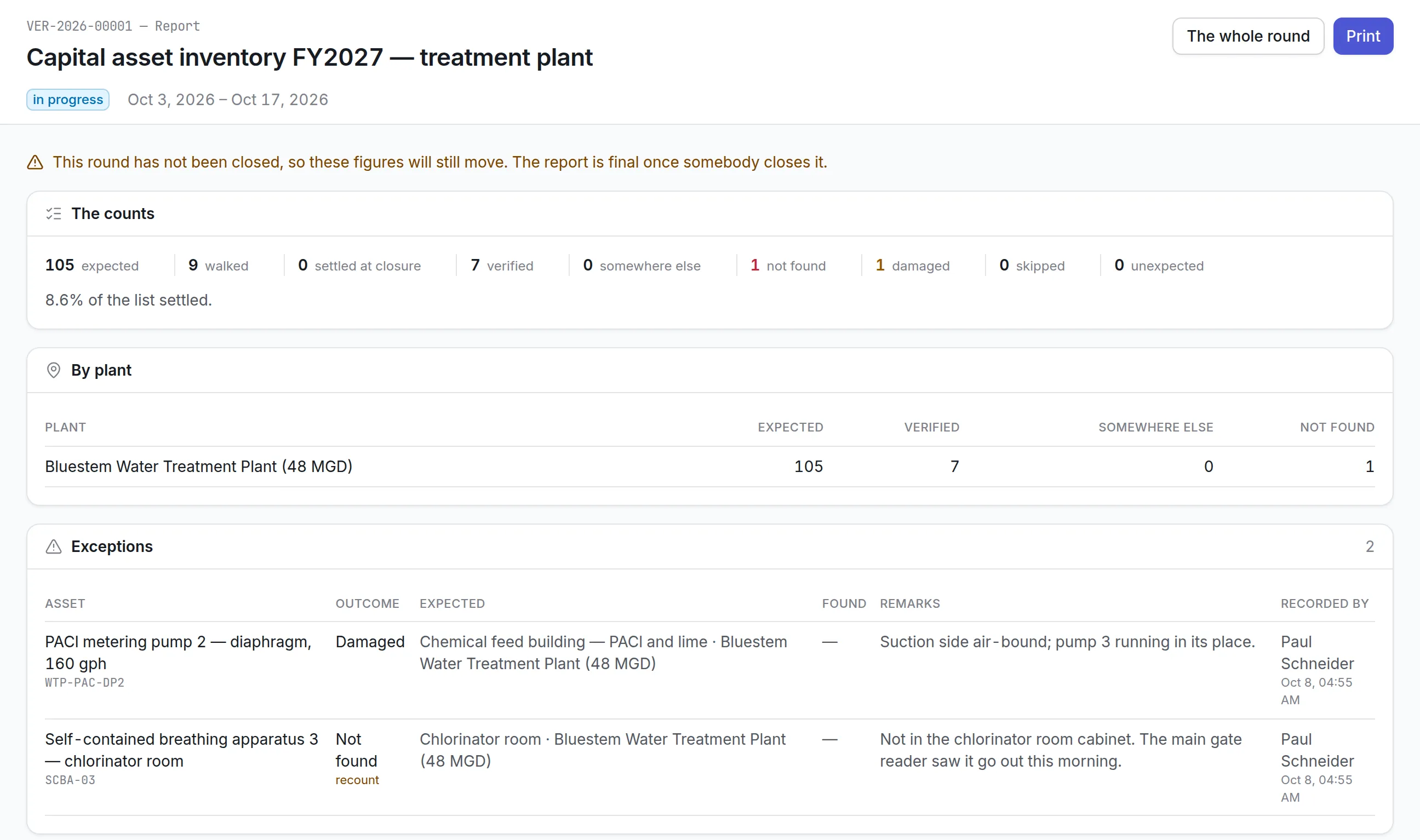
- Assets labeled. Laptops, sports equipment and other movable assets received barcode labels and records in the register.
- Buses fitted with GPS. GPS trackers went on the bus fleet so location and usage reach the system.
- Maintenance plans set up. Preventive plans were created for buildings, fixtures, furniture and lab equipment.
The results
- 20% higher laptop and lab equipment use
- 25% fewer room booking conflicts
- 15% less bus fleet downtime
- 10% lower maintenance costs for buildings and fixtures through scheduled maintenance
- 100% compliance with software licenses and lab equipment safety regulations
- Less loss and theft of sports equipment with barcode tracking.
- Utilization reports guide purchasing decisions.
Why it worked
One system for many assets
Laptops, lab equipment, buses, sports gear and rooms share one register, so the university does not run a separate tool for each.
Quick for the people lending
A barcode scan records each loan and return, so staff keep the record without slowing students down.
Maintenance before breakdowns
Preventive plans for buildings, labs and buses reduce surprises and keep safety records in order.
Looking ahead
By managing laptops, labs, buses, sports equipment, rooms and buildings in one system, the university allocates resources better, loses fewer assets and keeps maintenance on schedule.
Students and staff get equipment that works and rooms that are free when booked, and the university has the records it needs to show safety and license compliance.