


In this article
- What Is Manufacturing Inventory Management?
- Why Manufacturing Inventory Management Is Important
- Types of Manufacturing Inventory
- Manufacturing Inventory Management Process
- Benefits of Manufacturing Inventory Management
- Common Challenges in Manufacturing Inventory Management
- Inventory Control Techniques
- Best Practices for Manufacturing Inventory Management
- How Inventory Management Software Supports Manufacturing
- Industries That Benefit from Manufacturing Inventory Management
- Choosing Manufacturing Inventory Management Software
- Future Trends in Manufacturing Inventory Management
- Conclusion
- Frequently Asked Questions
Manufacturing businesses rely on inventory to keep production running smoothly. Every stage of the manufacturing process depends on having the right raw materials, components, and finished goods available at the right time. Even a small inventory shortage can stop production, delay customer deliveries, and increase operational costs.
At the same time, maintaining excessive inventory ties up working capital, consumes valuable warehouse space, and increases the risk of obsolete stock. Finding the right balance between inventory availability and inventory costs is one of the biggest challenges manufacturers face.
This is where manufacturing inventory management becomes essential. An effective inventory management strategy helps manufacturers maintain optimal inventory levels, improve production planning, reduce waste, and increase operational efficiency.
This complete guide explains manufacturing inventory management, inventory processes, benefits, challenges, best practices, and how inventory management software helps manufacturers streamline operations.
What Is Manufacturing Inventory Management?
Manufacturing inventory management is the process of planning, tracking, storing, controlling, and replenishing inventory used throughout the production process.
It ensures that manufacturers always have the right materials available to meet production schedules without maintaining unnecessary inventory.
Manufacturing inventory typically includes:
- Raw materials
- Components
- Work in progress inventory
- Finished goods
- Spare parts
- Maintenance supplies
- Packaging materials
Effective manufacturing inventory management improves production continuity while reducing operating costs.
Image Suggestion: Infographic showing Manufacturing Inventory Flow from Procurement → Raw Materials → Production → Work in Progress → Finished Goods → Distribution
Why Manufacturing Inventory Management Is Important
Manufacturers operate in highly competitive environments where inventory accuracy directly affects production efficiency and profitability.
Poor inventory management often results in:
- Production delays
- Material shortages
- Excess inventory
- Higher carrying costs
- Missed customer deadlines
- Increased waste
- Poor warehouse utilization
An effective manufacturing inventory management system helps businesses:
- Improve inventory accuracy
- Reduce production downtime
- Increase inventory turnover
- Improve demand planning
- Lower operating costs
- Enhance customer satisfaction
- Improve cash flow
Types of Manufacturing Inventory
Understanding different inventory categories helps manufacturers manage production more effectively.
Raw Materials
Raw materials are the basic inputs used during production.
Examples include:
- Steel
- Plastic
- Chemicals
- Wood
- Fabric
- Electronic components
Maintaining appropriate raw material inventory prevents production interruptions.
Work in Progress Inventory
Work in progress (WIP) includes partially completed products that are still moving through production.
Monitoring WIP inventory helps manufacturers identify production bottlenecks and improve workflow efficiency.
Finished Goods
Finished goods are completed products ready for storage, distribution, or customer delivery.
Managing finished goods inventory ensures customer orders can be fulfilled quickly.
Maintenance Inventory
Maintenance inventory includes spare parts, tools, lubricants, and repair materials required to maintain manufacturing equipment.
Packaging Materials
Packaging inventory includes cartons, labels, wrapping materials, pallets, and shipping supplies used to prepare finished goods for delivery.
Image Suggestion: Illustration showing the five inventory categories in manufacturing
Manufacturing Inventory Management Process
An efficient manufacturing inventory system follows several interconnected steps.
Demand Forecasting
Manufacturers estimate future customer demand using historical sales data, seasonal trends, and production plans.
Procurement Planning
Purchase orders are created based on inventory requirements, supplier lead times, and production schedules.
Inventory Receiving
Incoming materials are inspected, verified, and recorded before entering warehouse inventory.
Inventory Storage
Materials are organized according to usage frequency, product category, and production requirements.
Production Inventory Tracking
Raw materials are issued to production while work in progress inventory is continuously monitored.
Finished Goods Management
Completed products are stored, tracked, and prepared for customer delivery.
Inventory Replenishment
Inventory levels are continuously monitored, and replenishment is triggered before stock reaches critical levels.
Benefits of Manufacturing Inventory Management
Improved Production Efficiency
Production teams always have access to required materials without unnecessary delays.
Reduced Inventory Costs
Maintaining optimal stock levels minimizes storage costs and excess inventory.
Better Inventory Visibility
Real time inventory tracking provides complete visibility into raw materials, WIP, and finished goods.
Reduced Production Downtime
Timely replenishment prevents material shortages that interrupt manufacturing operations.
Improved Demand Planning
Accurate forecasting helps manufacturers align inventory purchases with production schedules.
Better Customer Satisfaction
Finished products are available for timely delivery, improving customer service and order fulfillment.
Improved Cash Flow
Reducing excess inventory frees working capital for other business investments.
Common Challenges in Manufacturing Inventory Management
Manufacturers often face several inventory related challenges.
Inaccurate Inventory Records
Manual inventory tracking leads to stock discrepancies and production delays.
Material Shortages
Insufficient raw materials can halt production and delay customer orders.
Excess Inventory
Overstocking increases warehouse costs and creates obsolete inventory.
Supplier Delays
Late deliveries disrupt production schedules and inventory planning.
Demand Fluctuations
Unexpected changes in customer demand make inventory planning more difficult.
Warehouse Inefficiencies
Poor warehouse organization slows material handling and inventory retrieval.
Inventory Control Techniques
Manufacturers use several inventory control methods to improve efficiency.
ABC Analysis
Classify inventory according to value and business importance.
- A Items: High value and highly critical.
- B Items: Moderate value.
- C Items: Lower value and higher volume.
FIFO
First In, First Out ensures older inventory is consumed before newer inventory.
This is especially important for perishable or shelf life sensitive materials.
Safety Stock
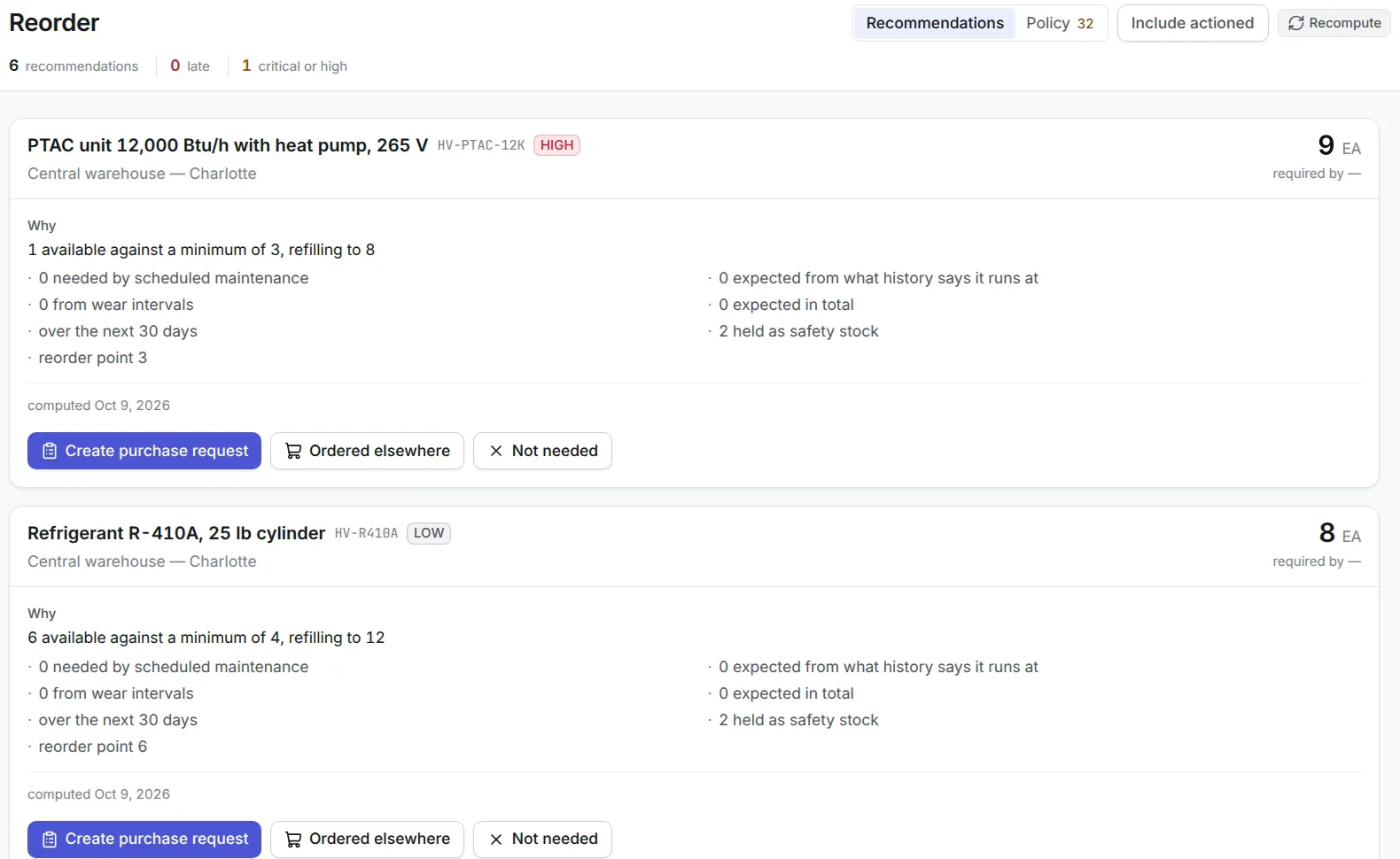
Maintain buffer inventory to prevent production interruptions during unexpected demand or supplier delays.
Reorder Point
Automatically trigger replenishment when inventory reaches predefined minimum levels.
Economic Order Quantity
Determine the optimal purchase quantity that minimizes ordering and holding costs.
Cycle Counting
Conduct regular inventory counts without stopping production to maintain inventory accuracy.
Best Practices for Manufacturing Inventory Management
Manufacturers can improve inventory performance by following these proven practices.
Implement Inventory Management Software
Modern inventory systems provide:
- Real time inventory tracking
- Production inventory visibility
- Automated stock alerts
- Purchase order management
- Inventory forecasting
- Reporting dashboards
Use Barcode or RFID Tracking
Automated identification improves inventory accuracy while reducing manual errors.
Forecast Demand Accurately
Analyze sales history, production schedules, and seasonal demand to improve purchasing decisions.
Strengthen Supplier Relationships
Reliable suppliers improve replenishment speed and production continuity.
Optimize Warehouse Layout
Store frequently used materials close to production lines to reduce handling time.
Monitor Inventory KPIs
Track important performance metrics such as:
- Inventory turnover
- Stockout rate
- Order fulfillment rate
- Production downtime
- Carrying cost
- Inventory accuracy
- WIP inventory levels
How Inventory Management Software Supports Manufacturing
Modern manufacturing inventory management software automates inventory processes from procurement to production.
Key capabilities include:
- Raw material tracking
- Work in progress management
- Finished goods inventory
- Barcode and RFID support
- Multi warehouse management
- Production planning integration
- Automated replenishment
- Inventory forecasting
- Mobile inventory management
- Reporting and analytics
Automation reduces manual work while improving inventory accuracy and production efficiency.
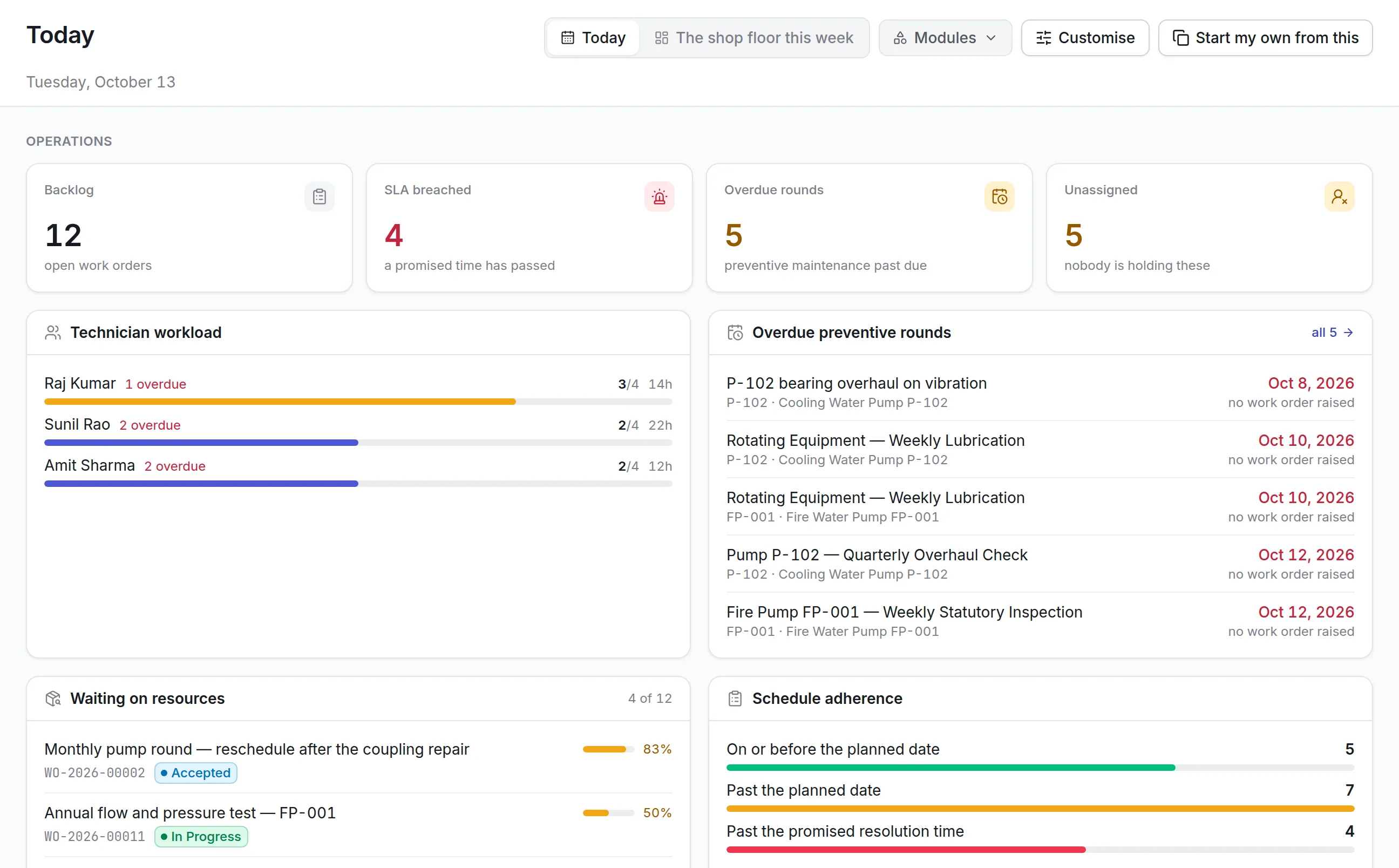
Image Suggestion: Dashboard displaying Raw Materials, WIP Inventory, Finished Goods, Production Status, and Inventory Alerts
Industries That Benefit from Manufacturing Inventory Management
Manufacturing inventory management supports businesses across various sectors.
Automotive Manufacturing
Track vehicle components and production inventory.
Food and Beverage Manufacturing
Manage ingredients, packaging materials, and finished products while reducing waste.
Pharmaceutical Manufacturing
Control raw materials, batch tracking, and regulatory compliance.
Electronics Manufacturing
Monitor electronic components and production inventory.
Textile Manufacturing
Manage fabrics, dyes, accessories, and finished garments.
Chemical Manufacturing
Track raw chemicals, production batches, and finished inventory safely.
Industrial Equipment Manufacturing
Manage large inventories of components, spare parts, and assembled products.
Image Suggestion: Industry illustration featuring Automotive, Food, Pharmaceuticals, Electronics, Textile, Chemical, and Industrial Manufacturing
Choosing Manufacturing Inventory Management Software
When evaluating inventory software, manufacturers should prioritize features such as:
- Raw material management
- Work in progress tracking
- Finished goods inventory
- Barcode and RFID integration
- Multi warehouse management
- Production planning support
- Automated stock replenishment
- Inventory forecasting
- Reporting dashboards
- ERP and accounting integrations
Choosing scalable software ensures manufacturing operations remain efficient as production grows.
Future Trends in Manufacturing Inventory Management
Manufacturing inventory management continues to evolve with digital technologies.
Emerging trends include:
- AI powered demand forecasting
- Predictive inventory optimization
- Smart factory integration
- IoT enabled inventory monitoring
- Cloud based inventory management
- Digital production analytics
- Automated warehouse systems
- Real time inventory visibility
These technologies help manufacturers reduce costs, improve production planning, and increase operational efficiency.
Conclusion
Effective manufacturing inventory management is essential for maintaining uninterrupted production, controlling inventory costs, and meeting customer demand. By managing raw materials, work in progress, finished goods, and maintenance inventory efficiently, manufacturers can reduce waste, improve productivity, and increase profitability.
Modern inventory management software further strengthens manufacturing operations through real time visibility, automation, intelligent forecasting, and production integration. Whether you operate a small manufacturing facility or a large industrial plant, implementing the right inventory management strategy helps build a more efficient, resilient, and scalable manufacturing operation.
Frequently Asked Questions
1. What is manufacturing inventory management?
Manufacturing inventory management is the process of managing raw materials, work in progress, finished goods, and maintenance inventory to ensure efficient production while minimizing inventory costs.
2. Why is manufacturing inventory management important?
It helps prevent production delays, reduce inventory costs, improve inventory accuracy, optimize warehouse operations, and ensure products are available to meet customer demand.
3. What types of inventory are managed in manufacturing?
Manufacturers typically manage raw materials, work in progress inventory, finished goods, maintenance inventory, and packaging materials.
4. What challenges do manufacturers face in inventory management?
Common challenges include inaccurate inventory records, material shortages, excess inventory, supplier delays, demand fluctuations, and warehouse inefficiencies.
5. What features should manufacturing inventory management software include?
The software should provide raw material tracking, work in progress management, barcode and RFID support, production planning, automated replenishment, inventory forecasting, reporting, multi warehouse management, and ERP integration.