
.webp)
.webp)
.webp)
.webp)



.webp)

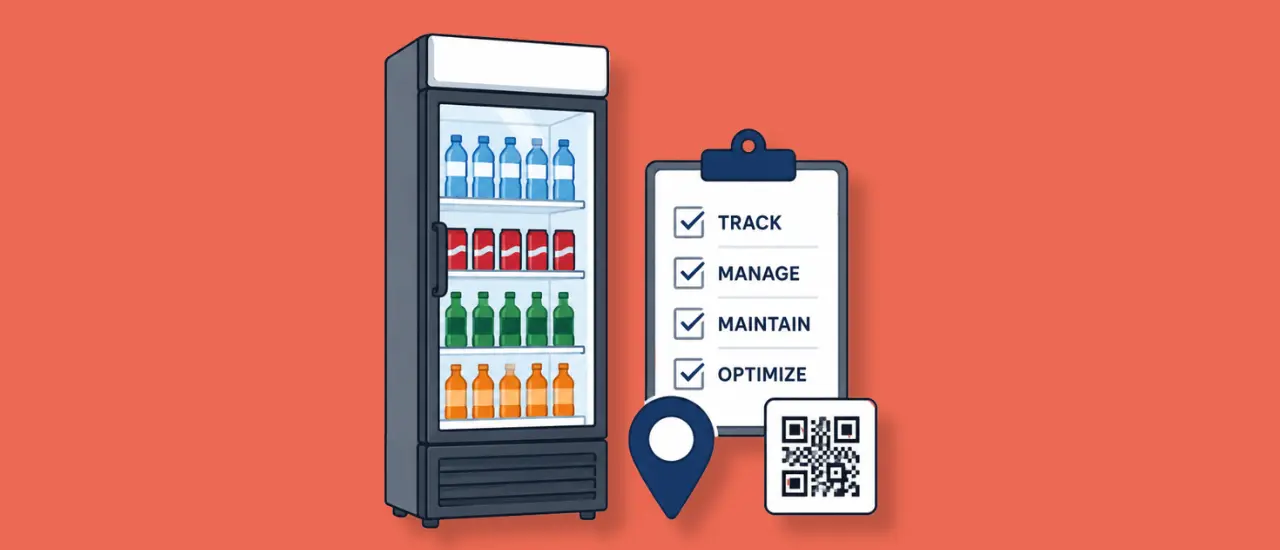
For beverage companies, deploying a cooler at a retailer, restaurant, supermarket, or distributor is only the beginning of the asset lifecycle. Once coolers move outside company facilities, maintaining visibility becomes far more difficult.
Operations teams need to know where each cooler is located, who is responsible for it, whether it has been transferred, if maintenance is required, and whether the equipment is being used effectively.
When hundreds or thousands of coolers are managed through spreadsheets, emails, phone calls, and physical verification, asset information can quickly become fragmented.
Cooler Management Software helps beverage companies create a centralized system for tracking, maintaining, transferring, and monitoring coolers across their distribution network. It gives teams greater control over assets that remain company-owned but operate across external locations.
Why Cooler Management Software Matters for Beverage Companies
Coolers are important field assets because they support product visibility, availability, and retail execution.
However, managing a cooler inside a warehouse is very different from managing one placed at a retailer several hundred kilometres away.
A cooler may move through multiple stages during its lifecycle:
- Requested by a retailer or field representative
- Approved for deployment
- Allocated from available inventory
- Delivered to the outlet
- Assigned to a retailer or distributor
- Verified during field visits
- Serviced when maintenance is required
- Transferred to another location
- Recovered, replaced, or retired
Without structured Cooler Asset Management, each stage may be recorded in a different place.
A centralized system connects these activities so operations teams can understand the current status and history of individual assets.
Common Challenges in Managing Coolers Across Retail Networks
The larger the retail network becomes, the more difficult manual cooler tracking becomes.
1. Inaccurate Location Information
A spreadsheet may initially show the correct location, but coolers are often relocated between retailers, warehouses, distributors, or service locations.
If transfers are not recorded immediately, the digital record may no longer match the actual location.
2. Unclear Asset Accountability
Several parties may interact with the same cooler, including field representatives, warehouses, logistics providers, distributors, retailers, and maintenance teams.
Without clear assignment records, determining who is responsible for an asset can take significant time.
3. Maintenance Delays
Coolers need to remain operational to support effective product placement.
When maintenance requests and service information are maintained separately from asset records, teams may struggle to identify recurring problems or understand previous repair activity.
4. Poor Utilization
Some outlets may have more cooling capacity than required while other locations request additional equipment.
Without reliable Beverage Asset Management, companies may purchase new assets while usable coolers remain underutilized elsewhere.
Create a Unique Digital Record for Every Cooler
Accurate tracking starts with identifying every cooler individually.
A company should know more than the total number of coolers deployed in a particular territory. It should know exactly which physical units are located there.
Cooler Tracking Software can assign every cooler a unique digital identity using an asset ID, QR code, barcode, or another identification method.
Each record can contain information such as:
- Asset ID and serial number
- Cooler model and capacity
- Current location
- Assigned retailer
- Assigned distributor
- Deployment date
- Current status
- Maintenance history
- Transfer history
- Supporting documents
This provides operations teams with one reliable record for each asset instead of maintaining generic quantities by location.
Track Cooler Deployment From Request to Delivery
Cooler tracking should begin before equipment leaves the warehouse.
A field representative or retailer may identify a need for a specific cooler type or capacity. That request may then require approval before equipment can be allocated.
A structured Cooler Tracking System can connect the request, approval, allocation, dispatch, delivery, and assignment stages.
This helps answer important operational questions.
- Which outlet requested the cooler?
- Which asset was allocated?
- Who approved the request?
- When was the cooler dispatched?
- Where was it ultimately assigned?
Connecting these activities reduces dependence on disconnected communication between sales teams, warehouses, distributors, and logistics providers.
Improve Field Verification With Mobile Tracking
Centralized asset data is valuable only when it reflects what actually exists in the field.
This is where Field Asset Management Software becomes especially useful.
Field representatives visiting retail locations can verify cooler information directly at the outlet. Depending on the company's process, they may scan the cooler, confirm its location, update its condition, record assignment information, or report discrepancies.
Regular field verification can help identify situations where:
- A cooler is missing from the expected location
- An asset has been moved without an updated record
- Equipment requires maintenance
- The assigned retailer has changed
- A cooler is no longer being used
This gives businesses more reliable information between formal asset audits.
Maintain Cooler Movement and Transfer History
Coolers may move several times during their operational life.
A retail outlet may close, demand may decrease, another location may need additional capacity, or equipment may need to be returned for servicing.
Simply replacing the current location in a spreadsheet removes valuable historical information.
Good Equipment Tracking Software should retain movement history.
Teams should be able to see where a cooler was previously located, when it moved, where it was reassigned, and what its current location is.
This provides stronger traceability and makes investigations easier when equipment cannot be immediately located.
Connect Maintenance With Cooler Asset Management
Tracking location is only one part of managing a cooler effectively.
Equipment must also remain operational.
When maintenance information is linked with Cooler Asset Management, teams gain a more complete view of each asset.
They can review previous maintenance activity, identify recurring faults, understand the condition of older equipment, and make better repair or replacement decisions.
For example, if a cooler requires frequent service visits, continuing to repair the same unit may eventually cost more than replacing it.
Maintenance history gives teams the information needed to evaluate that decision using actual asset records.
Improve Cooler Utilization Before Purchasing More Equipment
One of the most important benefits of Asset Tracking Software is better utilization visibility.
Consider a beverage company receiving requests for additional coolers from several territories.
Without accurate information, purchasing more units may appear necessary.
However, better tracking may reveal that some existing coolers are:
- Sitting unused
- Assigned to low-demand locations
- Waiting for reassignment
- Stored in warehouses
- Recoverable from closed outlets
- Suitable for transfer to another retailer
This allows management teams to review existing capacity before approving new purchases.
Better utilization does not simply reduce unnecessary procurement. It also helps organizations place equipment where it can deliver greater operational value.
What Should Beverage Companies Look for in Cooler Management Software?
Choosing Cooler Management Software should involve more than comparing basic asset register features.
The system needs to support how coolers actually move through field operations.
Important capabilities include:
1. Centralized Asset Records
Cooler identity, location, assignment, status, maintenance, and historical information should be accessible from one system.
2. QR Code or Barcode Tracking
Unique identification makes cooler verification, audits, transfers, and field updates easier.
3. Location and Assignment Tracking
Teams should know which retailer, distributor, territory, or responsible party is associated with each cooler.
4. Movement History
Historical transfer information provides greater visibility into how equipment has moved over time.
5. Maintenance Tracking
Service records should remain connected with the individual asset.
6. Mobile Field Access
Field teams should be able to verify and update relevant asset information while visiting external locations.
7. Workflow Automation
Requests, approvals, deployments, transfers, returns, and other activities should follow structured processes.
The best Cooler Tracking Software is therefore not simply a digital list of equipment. It should help control the complete operational lifecycle of distributed assets.
How Asset Infinity Supports Cooler Management
Asset Infinity provides a centralized asset management platform for businesses managing equipment across multiple locations.
For beverage companies, the platform can support cooler identification, location tracking, assignments, movement history, maintenance information, workflows, field verification, and reporting.
Instead of maintaining separate spreadsheets across regions or departments, organizations can manage cooler information within a structured system.
This can help businesses strengthen Field Equipment Tracking as their retail network, distributor base, and cooler fleet continue to grow.
Better Cooler Management Starts With Better Visibility
Managing a large cooler network requires more than knowing how many units the business owns.
Beverage companies need visibility into where each cooler is located, who is responsible for it, how it has moved, whether it requires maintenance, and whether it is being used effectively.
Cooler Management Software brings these activities together.
With better Cooler Tracking Software, companies can improve accountability, simplify field verification, maintain clearer movement and maintenance records, reduce asset visibility gaps, and make more informed decisions about equipment allocation.
For beverage organizations managing a growing field asset network, structured Beverage Asset Management provides the visibility and control required to manage coolers throughout their complete lifecycle.
Frequently Asked Questions
What is Cooler Management Software?
Cooler Management Software helps beverage companies track and manage company-owned coolers across retailers, distributors, restaurants, warehouses, and other locations. It centralizes asset location, assignment, movement, maintenance, and lifecycle information.
How does Cooler Tracking Software work?
Cooler Tracking Software creates a unique digital record for each cooler. QR codes, barcodes, or similar identification methods can support field verification, location updates, transfers, audits, and asset tracking.
Why do beverage companies need a Cooler Tracking System?
Beverage companies often manage large numbers of coolers outside their own facilities. A Cooler Tracking System helps maintain better visibility and accountability across distributed retail and distributor locations.
Can cooler management software help improve asset utilization?
Yes. Better visibility can help businesses identify idle or underutilized coolers that may be reassigned before additional equipment is purchased.
How can Asset Infinity help with cooler management?
Asset Infinity can centralize cooler identification, location information, assignments, transfers, maintenance records, workflows, and field activity, helping beverage companies manage distributed equipment through a more structured system.







.png)

