






The client
The client is a large energy company headquartered in Abu Dhabi, with operations across remote field locations and a central team monitoring how resources are used.
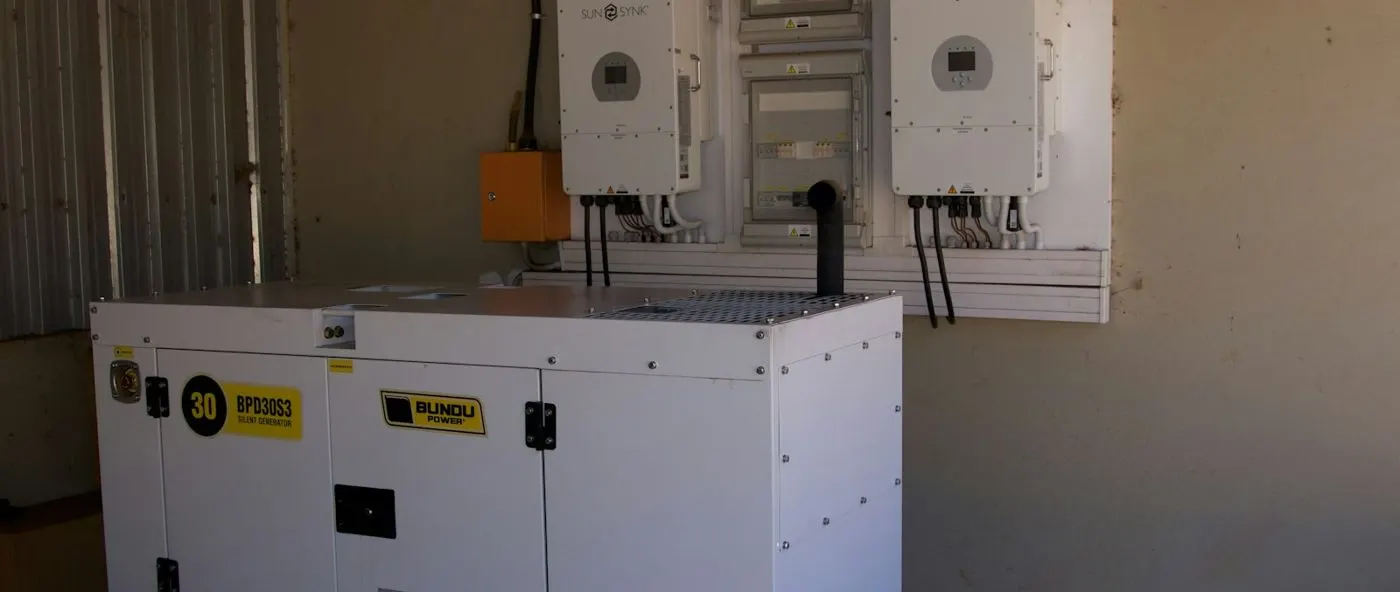
Many of its field camps and work sites are off the grid. Diesel generators supply power for accommodation, workshops and site equipment, and every liter is trucked in. Fuel is one of the largest running costs in the field.
The challenge
Fuel deliveries and dispensing were noted in camp logbooks, each kept differently. Nobody could tell how much a generator should have used, so overuse and loss were invisible.
- Delivery, tank and dispensing records did not agree from one site to the next.
- Fuel issued was never compared with how long a generator actually ran.
- Oversized or idling generators burned fuel without anyone noticing.
- Central planners had no reliable figures to plan deliveries or budgets.
What they set up in Asset Infinity
The company treated diesel as a tracked consumable in Asset Infinity, issued to each generator, and recorded generator run hours as meter readings on the same assets.
Deliveries received against orders
Each tanker delivery is received against its purchase order into the camp’s fuel store, so what was ordered and what arrived can be compared. (Suppliers)
Diesel issued to each generator
Every top-up is recorded as an issue from the camp’s fuel store to a named generator, so consumption builds up per machine. (Stores)
Run hours on every generator
Hour-meter readings are entered for each generator, which also drive its servicing plan by runtime. (Maintenance)
Fuel per hour by site
Reports set diesel issued against hours run for each generator and camp, showing which machines and sites use more than they should. (Insight)
How it works day to day
Diesel at a remote camp is now accounted for at each step.
- Logistics coordinator: orders the delivery. Fuel for each camp is ordered on a purchase order to the fuel supplier, based on recent use at that camp.
- Camp storekeeper: receives the tanker. The delivered quantity is received against the order into the camp’s fuel store, and any shortfall is visible immediately.
- Generator operator: refuels and records. Each top-up is issued to the generator it went into, by scanning that generator’s label in the mobile app.
- Generator operator: reads the hour meter. On the daily round, the operator enters each generator’s run-hour reading against its record.
- System: schedules the service. Run hours count toward each generator’s runtime-based service plan, which raises the work order when it is due.
- Energy analyst: compares fuel with hours. Reports show fuel issued per hour run for each generator. A machine well above its peers gets a work order to inspect it.
- Field operations manager: reviews camps side by side. Dashboards compare fuel use and cost by camp, guiding generator changes and delivery planning.
Before and after
| Before | With Asset Infinity | |
|---|---|---|
| Fuel records | Logbooks kept differently at each camp | Received and issued in one system |
| Deliveries | Tanker quantities taken on trust | Each tanker booked in against its order |
| Consumption | Known only per camp, roughly | Recorded per generator |
| Efficiency | Never measured | Fuel per hour run, by machine |
| Servicing | Loosely tied to use | Planned on actual run hours |
| Planning | Unreliable figures | Consistent usage data by site |
How it rolled out
- Usage practices reviewed. The team reviewed how fuel was recorded at each site, and moved legacy usage records into one place.
- Tracking configured. Usage categories, tracking rules and site-wise workflows were set up for each camp and generator.
- Field teams trained. Operations and field staff had hands-on sessions, then a support plan with monitoring and regular reviews.
The results
- 35% better resource utilization
- Diesel tracked from delivery to the generator at every camp
- Fuel use compared with run hours, machine by machine
- Less repetitive manual monitoring at field sites
- Better planning of fuel deliveries from consistent usage data
- Generators serviced on actual runtime
Why it worked
Fuel and hours meet
Recording both against the same generator turns two logbooks into one efficiency measure.
One reading, two uses
Hour-meter readings feed the efficiency reports and the service plan at the same time.
Every camp counts the same way
A common method across remote sites makes camps comparable and loss easier to spot.
Looking ahead
Linking every liter issued to a generator and every generator to its run hours has given the company a measure it never had: how efficiently each machine and each camp uses fuel.
The same figures help the field team match generator sizes to site loads, plan fuel deliveries with fewer surprises and keep servicing in step with how hard each machine works.