






The client
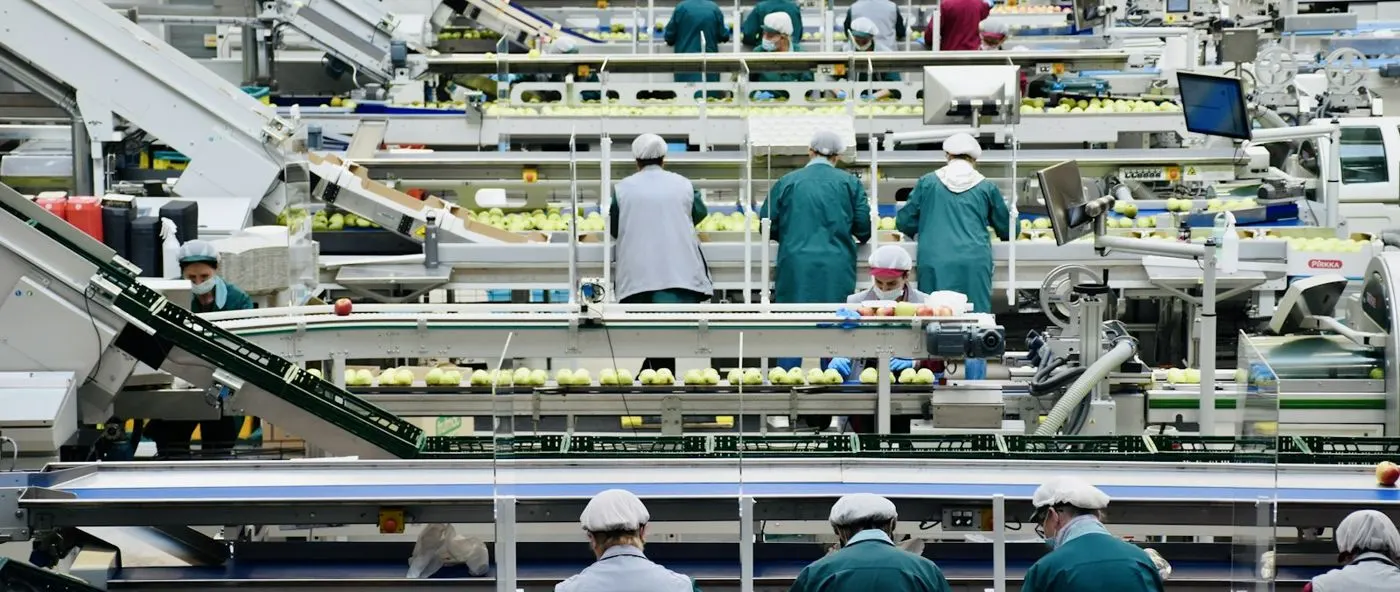
The client is a large FMCG company in India, producing in high volume at several regional plants, with a central team monitoring material usage.
Each packing line consumes packaging film, labels, cartons and ingredients by the pallet. At that volume a small loss per run adds up quickly, and each plant had been recording its usage its own way.
The challenge
Consumption was recorded inconsistently, so the company could not see how much material each plant or line used, or where it was wasted. Planners worked from unreliable figures, and monitoring took repeated manual effort.
- Material issued to lines was recorded differently at every plant.
- Leftover and scrapped material went unaccounted for.
- Usage could not be compared between plants or lines.
- Production planning relied on estimates of consumption.
- Monitoring usage meant repeated manual work at each site.
What they set up in Asset Infinity
The company tracked every material issue to its packing and production lines in Asset Infinity, with usage categories and tracking rules shared by all plants.
Issues to a named line
Film, labels, cartons and ingredients are issued from the plant store to a specific line, recording the quantity and batch. (Stores)
Counts after the run
Line-side and store counts show what is left, so the gap between material issued and material accounted for is visible. (Stores)
Common usage categories
Usage categories and tracking rules are the same at every plant, configured without code, with plant-wise workflows for each monitoring function. (Platform)
Usage by line and plant
Reports compare material issued per line and plant over time, so the lines losing the most stand out. (Insight)
How it works day to day
Material for a production run is tracked from store to line like this.
- Storekeeper: issues to the line. Film, labels, cartons and ingredients are issued to the line in the app, by quantity and batch.
- Storekeeper: counts what comes back. After the run, material returned from the line is counted and recorded back into stock.
- System: builds usage history. Issues and returns are stored by line, material and usage category, so each line’s net usage builds up over time.
- Plant manager: spots a wasteful line. Comparing lines that pack the same product shows which one consumes more material than the others.
- Plant manager: gets the cause fixed. If the cause is equipment, such as a misaligned labeler, a maintenance request goes to the engineering team.
- System: reports to the center. A scheduled usage report by plant and line goes to the central monitoring team.
- Central team: plans material needs. Material requirements for the next production plan are based on recorded usage per line.
Before and after
| Before | With Asset Infinity | |
|---|---|---|
| Consumption records | Inconsistent between plants | Issued and returned by line |
| Usage visibility | Poor | Reports by plant, line and material |
| Waste control | Limited | Losses traced to the line |
| Planning | Disrupted by unreliable data | Based on recorded consumption |
| Monitoring | Repetitive manual effort | Shared rules in one system |
| Material wastage | High | 27% lower |
How it rolled out
- Unrecorded usage found. A review of each plant’s usage records found where material left the store without a trace.
- Categories and history. Usage categories and tracking rules were set up, plant operations connected, and legacy usage records migrated.
- Store and line teams trained. Operational and inventory teams were trained hands-on, with process reviews afterwards.
The results
- 27% reduction in material wastage
- Material usage visible across plants and lines in one place
- Consumption planning built on recorded usage
- Losses traced to the line where they happen
- Less repeated manual monitoring
- Steadier production through organized usage tracking
Why it worked
Recorded where material changes hands
Usage is captured at the store counter, so the figures need no separate collection afterwards.
Lines compared fairly
Shared categories let the team compare lines and plants packing the same product.
Machine causes get fixed
When waste comes from equipment, the request to repair it starts in the same app.
Looking ahead
By recording what each line takes from the store and what comes back, the company traced its material losses to specific lines and reduced material wastage by 27%.
Recorded usage now drives consumption planning, and the best-performing lines set the standard for the rest.