






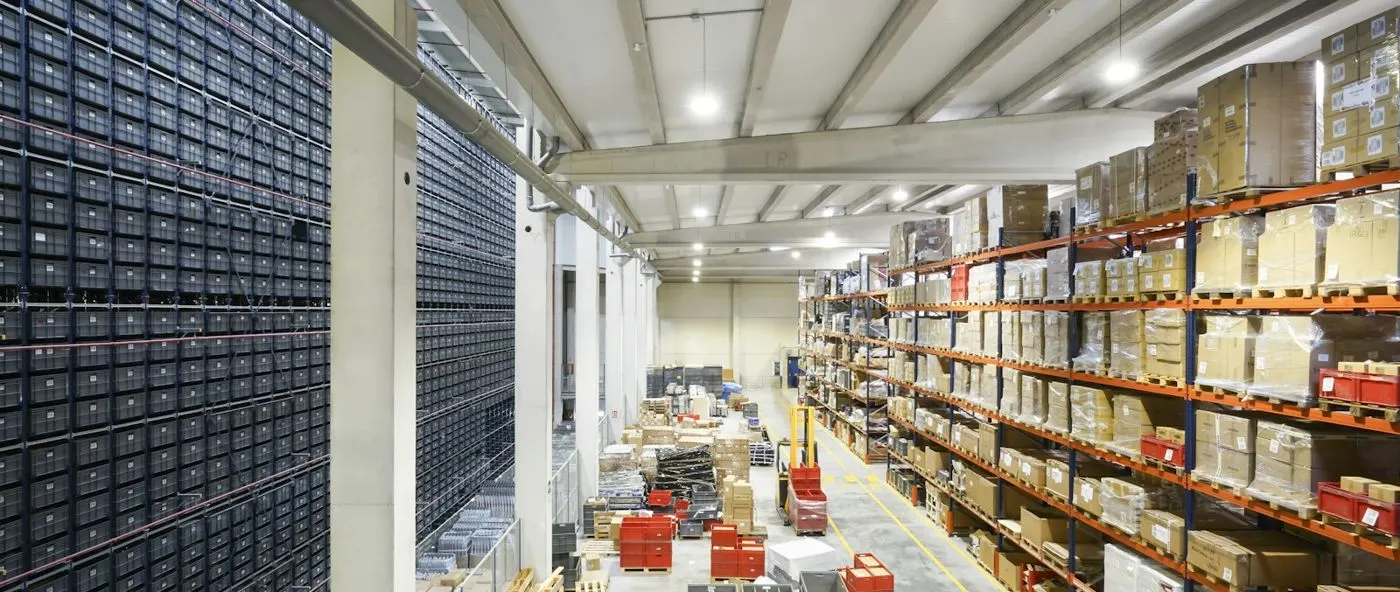
The client
The client is a large logistics enterprise headquartered in Singapore, running fulfillment from several warehouses and regional hubs, with a central team responsible for stock.
Every order that leaves a warehouse needs cartons, void fill, tape, labels and stretch film, and every packing line depends on conveyors, label printers and forklifts that need spare parts. When any of these run short, orders wait.
The challenge
Each warehouse counted its own stock in its own way, and updates lagged behind what was actually on the shelves. Packing supplies and spares ran out without warning, and fulfillment slowed while teams found more.
- Stock updates were inconsistent from one warehouse to the next.
- Nobody could see which site had spare cartons or parts to lend another.
- Shortages were noticed only when a packing line ran out.
- Issues from stock were not recorded against the line or job that used them.
- Picking and packing were delayed by stock-related disruptions.
What they set up in Asset Infinity
The company ran its warehouse storerooms in Asset Infinity’s Stores feature, with stock levels and reorder points set for each location.
A storeroom in every warehouse
Each warehouse has its own storeroom for packing materials and spares, so stock levels are known by location and can be compared across sites. (Stores)
Reorder points per site
Every item has a reorder point for each storeroom, and reorder advice lists what to buy before a line runs short. (Stores)
Transfers between warehouses
A warehouse short of film or a conveyor belt can draw from another site’s storeroom, with the transfer recorded at both ends. (Stores)
Spares issued to repairs
Parts for conveyors, label printers and forklifts are issued to the work order that uses them, so equipment costs and stock stay accurate. (Maintenance)
How it works day to day
Here is how packing supplies and spares stay on the shelf through a busy week.
- Packing team lead: draws supplies for the shift. The lead collects cartons, tape and stretch film from the warehouse storeroom, and the storekeeper records the issue so the stock level drops.
- System: flags items below reorder point. When film or a carton size falls below its reorder point for that storeroom, it appears on the reorder advice list.
- Inventory controller: checks other warehouses first. The controller looks at the same item across sites and, where another warehouse has plenty, moves stock across with a transfer.
- Inventory controller: raises the purchase request. Anything no site can spare is raised as a purchase request from the reorder advice, with the quantity suggested.
- Technician: takes a part for a conveyor repair. A worn conveyor belt is replaced under a work order, and the belt is issued from stores against that order.
- Storekeeper: counts the storeroom. Regular stock counts compare the shelf with the record and correct any difference, so reorder advice stays reliable.
Before and after
| Before | With Asset Infinity | |
|---|---|---|
| Stock updates | Inconsistent, varied by warehouse | Recorded as items are issued, moved or received |
| Visibility | Each site saw only its own shelves | Stock by storeroom across all warehouses |
| Shortages | Found when a packing line ran out | Reorder advice before the item runs short |
| Spare parts | Not tied to repairs | Issued to the work order that used them |
| Fulfillment | Slowed by stock-related disruptions | 35% faster |
How it rolled out
- Stock gaps assessed. The team reviewed how each warehouse recorded stock and where shortages started.
- Legacy stock moved. Existing stock records came across, with item categories, storerooms and movement rules for each warehouse.
- Warehouse teams trained. Storekeepers and warehouse supervisors were trained to issue, transfer, count and reorder stock.
The results
- 35% faster fulfillment across warehouse operations
- Stock levels for packing materials and spares are visible across all warehouses.
- More accurate stock records by location.
- Fewer stoppages on packing lines caused by missing supplies or parts.
- Better control of stock movement between warehouses.
Why it worked
Stock tied to its location
Each warehouse’s storeroom is tracked on its own, so a shortage at one site is seen before it stops a line.
Sites help each other
Transfers between storerooms use stock already owned before anyone places a rush order.
Parts and repairs together
Spares issued to work orders keep both the stock count and equipment history accurate.
Looking ahead
With every warehouse storeroom on one system and reorder advice running ahead of demand, packing lines keep their supplies and spares, and the company fulfills orders 35% faster.
Seeing stock across all sites also means one warehouse can help another in a peak week, instead of each one buying in a hurry.