






The client
The client is a large hospitality company headquartered in Dubai, operating several hotel properties with a central support operation.
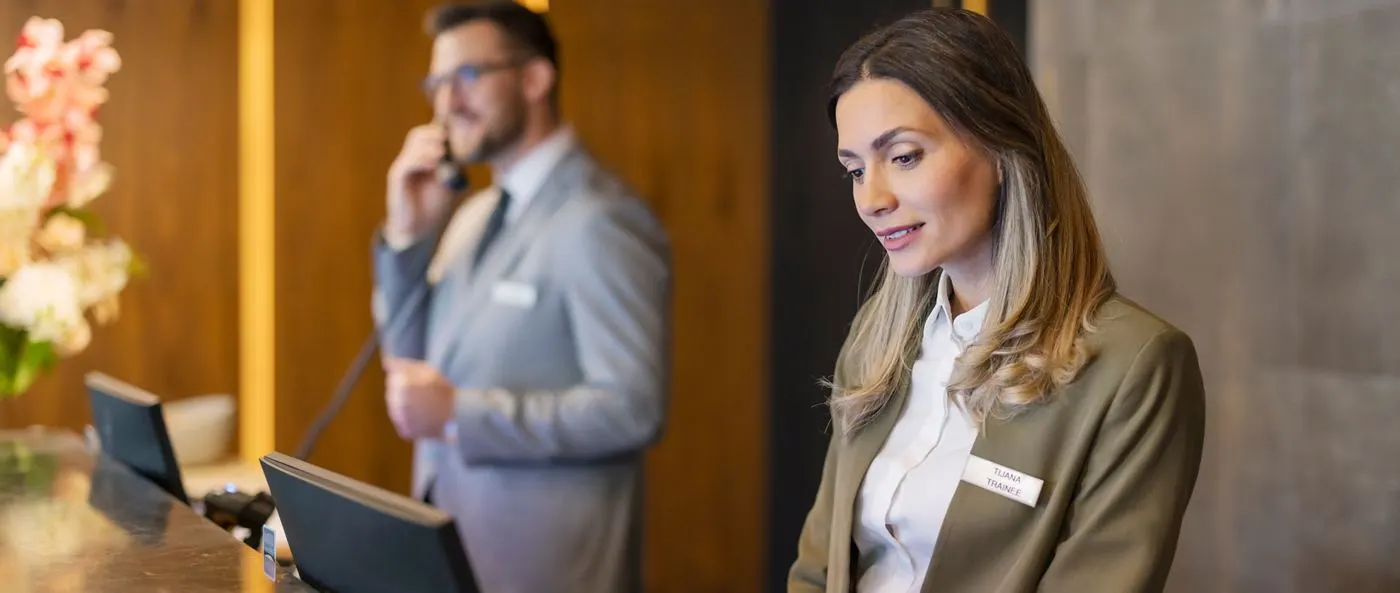
Most guest complaints start in the room: air conditioning that will not cool, a blocked drain, a television with no signal, a safe that will not open. The guest calls the front desk and expects someone at the door soon.
The challenge
Front desk agents passed complaints to engineering and housekeeping by radio and in a handwritten log. Calls were missed at shift change, and each property kept its own log in its own way.
- A guest could call twice about the same fault because the first call was lost.
- Nobody knew which technician had a job or when it was promised.
- Rooms taken out of order for repairs were not tracked back into service.
- Head office had no view of complaints across properties.
What they set up in Asset Infinity
The group gave every property one request queue in Asset Infinity, with each guest room set up as a location so complaints, repairs and inspections attach to the room.
Complaints logged against the room
The front desk records the guest’s complaint on the room it concerns, with a category such as air conditioning, plumbing, electrical or in-room technology. (Work)
Time targets by category
Each category routes to engineering or housekeeping with its own SLA. A complaint that is not picked up in time is escalated to the duty manager. (Work)
Room inspection before resale
A room taken out of order is inspected with a checklist and photos before front office is told it can be sold again. (Maintenance)
Guest issues by property
Dashboards compare open complaints and resolution time across properties, and show the rooms and categories that come up again and again. (Insight)
How it works day to day
From the guest’s phone call to the room going back on sale.
- Front desk agent: logs the complaint. The agent records the guest’s complaint against the room number, picks the category and notes anything the guest said about timing.
- System: routes it to the right team. The category sends the request to the engineer or housekeeper on duty at that property and starts the clock for its target time.
- Duty engineer: accepts on the phone. The engineer accepts the job in the mobile app, so the front desk can tell the guest someone is on the way.
- Duty engineer: fixes or flags the room. Most faults are fixed on the visit. If not, the guest is moved, the job stays open and the room is marked out of order on the work order.
- System: escalates a slow response. If a complaint runs past its target, the duty manager is alerted to step in.
- Housekeeping supervisor: inspects the room. Once repairs are done, the supervisor works through a room checklist with photos and signs it off.
- Front office manager: puts the room back on sale. With the inspection passed and the work order closed, the room can be sold again.
Before and after
| Before | With Asset Infinity | |
|---|---|---|
| Taking the complaint | Radio call and a handwritten log | Logged against the room with a category |
| Assignment | Lost at shift change | Sent to the person on duty, accepted on mobile |
| Follow-up | Guests called again | Escalated to the duty manager when late |
| Out-of-order rooms | Not tracked back into service | Inspected and signed off before resale |
| Across properties | Each hotel kept its own log | One queue and one way of working |
| Head office view | None | Resolution time by property and category |
How it rolled out
- Rooms and records set up. Each property’s rooms and public areas were loaded as locations, and existing complaint logs were moved across.
- Routing by property. Complaint categories, routing rules and time targets were configured property by property.
- Front office and engineering trained. Front desk, housekeeping and engineering teams had hands-on training, then regular reviews of how the queue was working.
The results
- 30% faster guest issue resolution
- Every guest complaint has an owner, a target time and a status
- Fewer repeat calls from guests chasing the same fault
- Rooms return to sale only after a recorded inspection
- Escalations reach the duty manager before a guest has to ask again
- Faster, more organized responses improve guest satisfaction
Why it worked
The room is the record
Because complaints attach to the room, a second call about the same fault is visible straight away.
Handover built in
Front desk, engineering and housekeeping each see the same job, so nothing depends on a radio call being heard.
Quality checked before resale
The inspection step means the next guest does not inherit a fault the last one reported.
Looking ahead
Logging complaints against the room has given each property one list of what guests are waiting for, and a clear handover between front desk, engineering and housekeeping.
The record built up per room now shows which rooms and which systems generate the most complaints, so engineering can plan their attention before the next guest notices.