







In this article
An eCommerce business is a business model that lets organizations sell their products to individuals and to other businesses. eCommerce can take place over computers, phones, tablets and so on. A large eCommerce business can have millions of inventory items to sell and many assets of its own. That is why it is important to do asset tracking properly. This asset tracking guide covers the aspects of asset tracking that will help you in an eCommerce business.
What Is Asset Tracking?
Asset tracking is a technique that lets you monitor your assets and inventory. It comes in handy when there are lots of assets and inventory items.
When an asset’s barcode tag, QR code (Quick Response code) tag or RFID (radio-frequency identification) tag is scanned, you can see where it is located along with all the other information about the asset.
Asset tracking is an important part of asset management.
Also read: Why Asset Tracking System Is Essential in Every Industry?
What Are the Benefits of Asset Tracking?
The benefits of asset tracking are discussed below:
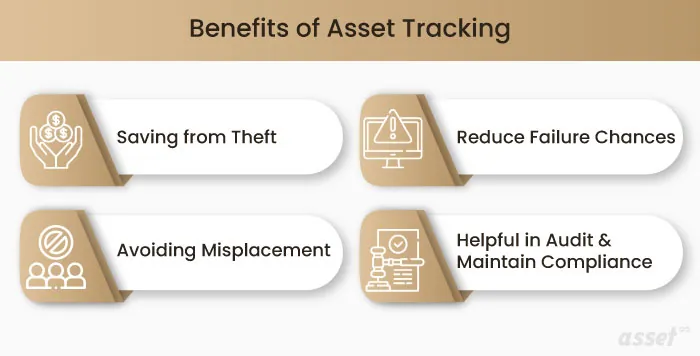
1. Saving from Theft
Theft is one of the main issues in all organizations, and especially in eCommerce businesses, because they hold inventory of all sizes. Small items can be easily hidden in pockets.
Theft also hurts productivity and makes the organization less efficient. When an asset is stolen, it directly affects the bottom line.
Organizations lose a great deal of money to asset theft every year, yet many of them do not pay attention to the issue.
When you use asset tracking, you can protect assets from theft much more easily.
2. Avoiding Misplacement
Misplacement is similar to theft: the asset is not found where it was left. It happens when employees use assets and leave them anywhere, and other employees’ time is wasted as a result.
Searching for assets makes employees less efficient. In the worst case, an asset is purchased unnecessarily. Asset tracking helps you avoid misplacement because it tells you where each asset is located.
This saves employees time and removes the chance of buying assets unnecessarily, which matters a great deal for eCommerce businesses.
3. Reduce Failure Chances
Maintenance is a major concern in any organization, and when an asset fails, the repair can be expensive. Proper tracking and monitoring help you avoid asset failure.
You can see when the asset last had maintenance and when maintenance is due next. With asset tracking, you can keep track of maintenance and reduce maintenance expenses as well.
Also read: How Asset Tracking & Management Helps in Improving Hotel Revenue?
4. Helpful in Audit & Maintain Compliance
The audit is an important process in any organization. It tells you the condition of your assets and helps in calculating their actual value. However, it can be a long and hectic process because assets are in different locations.
With asset tracking, you can easily bring assets back before the audit begins, and auditing them becomes simple. You can also easily verify assets physically.
In some industries, asset tracking is important for maintaining regulatory compliance. If an organization is found not following the rules, it may have to pay heavy penalties. These are a few of the important benefits of asset tracking.
Any asset tracking guide should also cover asset tracking techniques.
Below are a few of the techniques:
Barcodes, QR codes (Quick Response codes), RFID (radio-frequency identification) and NFC (near-field communication) are used for asset tracking. Each technology has its advantages and disadvantages.
For example, the barcode is simple and cost-effective, while the QR code is a more advanced version of the barcode.
RFID is more expensive than barcodes and QR codes, but an RFID reader can scan multiple tags at a time, so it is more productive. NFC is read quickly by tapping a phone against the tag at close range.
What Is the Role of Mobile and Cloud Computing Technology in Asset Management?
Mobile plays an important role in asset tracking because you can make changes from your phone without coming to the office, which helps you make quick decisions.
Mobile applications and cloud computing let you work from anywhere in the world. You can get to your files on a business trip, and you are no longer bound to your office.
With cloud technology, data is stored securely by the provider and kept encrypted, though you should still check how any provider protects your data.
Asset tracking with a mobile app gives you notifications and alerts when you need them, such as when inventory falls below a defined level or when something changes in the procurement and requisition process.
With a smartphone, you can scan asset tags and labels, which comes in handy when you are on the move.
Technology Makes Asset Tracking Practical at eCommerce Scale
To track assets well, use current technology: asset tracking software, mobile technology, good asset tracking techniques and cloud computing.
Put these technologies to use. Once you implement them, you will see the positive impact and your eCommerce business will be in a better position to grow.
Also read: What Are Trends to Know About Equipment Maintenance?
Frequently Asked Questions (FAQs)
What is an asset tracking application? How does asset tracking work?
Tracking is done with an asset tracking label attached to the asset. Whenever you scan the label, you see the asset’s information and location. When equipment cannot be found, it leads to costly delays in production work and disappoints customers. Asset tracking solves many of these problems.
Asset management software is one of the best options you have for asset tracking. It plays a crucial role in effective asset management and can help extend asset life. With this software you can see who has the asset, who is using it and when it will be returned, along with its current location and status and when its maintenance is due.
Which asset tracking technology is useful for the transport and logistics industry?
GPS is very useful in transport and logistics because it provides live location. It helps drivers save time by avoiding traffic jams and helps reduce expenses. On-time delivery is crucial in transport and logistics, and GPS helps with that as well. It has several other benefits too.
Why is asset tracking important?
Below are a few of the reasons why asset tracking is important: 1. Asset tracking helps in tracking and evaluating asset performance. 2. You can gather data on each asset to get the most out of it. 3. Asset tracking software alerts you in advance when maintenance is due, so you can carry out preventive maintenance. 4. With asset tracking, you can easily identify each asset, even when there are lots of similar assets.